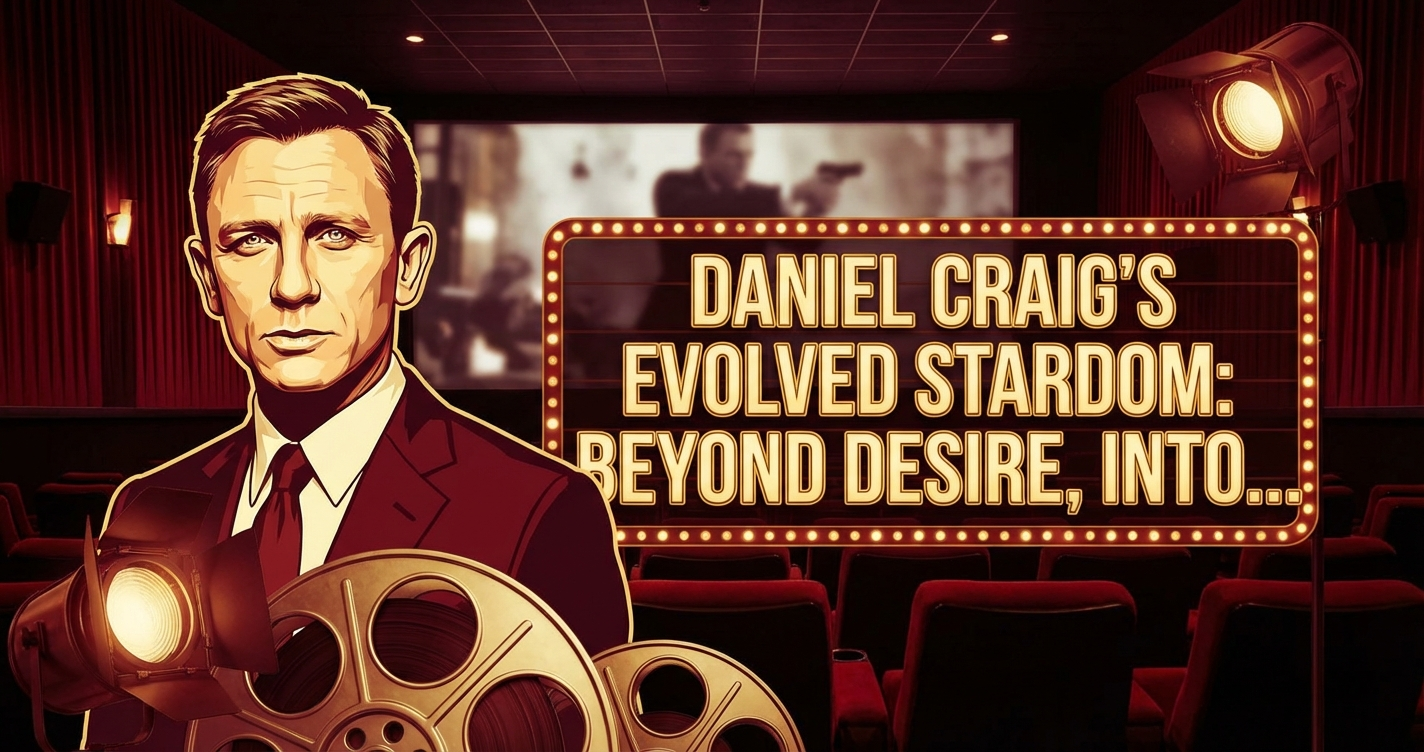
Daniel Craig’s Evolved Stardom: Beyond Desire, Into Authenticity
In an industry often obsessed with superficiality and public adoration, a recent sentiment attributed to Daniel Craig cuts through the noise like a well-aimed punch from 007 himself. The actor, known globally for his steely portrayal of James Bond, reportedly shared that he “stopped worrying about being desired a long time ago.” For anyone who’s followed Craig’s fascinating career arc, from his early days “hustlin’” on stage to becoming one of the most recognizable faces in cinema, this isn’t just a throwaway line – it&rsquos a profound statement on artistic integrity, career longevity, and the true nature of Hollywood stardom in the 21st century.
Craig’s journey is a masterclass in defying expectations and carving out a path paved with substance rather than fleeting popularity. Before the global spotlight of Bond, he was a respected, intense actor known for gritty British dramas like Layer Cake and compelling turns in films such as Steven Spielberg’s Munich. These were roles chosen for their depth, not their box office potential or widespread appeal. It’s this foundation that makes his later comments so resonant; the desire to be an actor, to embody characters, always seemed to supersede the desire to be a “star” in the traditional sense.
The Weight of the World’s Most Desired Spy
The announcement of Craig as the sixth official James Bond in 2005 was met with a significant – and often vitriolic – backlash. Fans clamored for a more “traditional” Bond, often citing his blonde hair or “rougher” look. Yet, Craig, with characteristic resolve, simply put his head down and delivered. Casino Royale didn’t just redefine Bond; it reinvented the franchise, bringing a grittiness and emotional depth that hadn’t been seen before. He was still undeniably desirable as Bond – a different kind of desired, perhaps, one rooted in strength and vulnerability – but the initial pushback likely solidified his internal compass: focus on the work, not the noise.
Five films, billions at the box office, and countless critical accolades later, Craig’s tenure as Bond is often regarded as one of the most impactful. But it came at a cost. The physical toll was immense, as was the pressure of living up to such an iconic character. One could argue that stepping away from Bond allowed Craig the ultimate liberation, freeing him to pursue projects purely on artistic merit, without the inherent pressure of embodying a global icon or maintaining a certain public image.
Post-Bond Liberation: Craft Over Charisma
Craig’s post-Bond choices are telling. While still involved in the franchise, he took on roles like Joe Bang in Steven Soderbergh’s delightful heist film Logan Lucky, a character as far removed from Bond as possible. Then came Benoit Blanc in Rian Johnson’s wildly successful Knives Out and its sequel, Glass Onion. As the eccentric, Southern-fried detective, Craig shed all vestiges of Bond’s suave machismo, embracing a theatricality and charm that surprised many. These weren’t roles chosen to be “desired” by the masses in the same way Bond was; they were chosen because they were interesting, challenging, and allowed him to flex different acting muscles.
This pivot reflects a broader industry trend. Many actors, once they’ve achieved a certain level of success or recognition through a blockbuster franchise, often seek out smaller, character-driven projects. Think of Robert Pattinson, who after Twilight, consciously pursued challenging indie films before his acclaimed turn as Batman. Or Christian Bale, whose chameleon-like transformations for roles are legendary. For these actors, the craft is paramount, and the “desire” of the audience becomes a secondary, if welcome, byproduct of good work, rather than the primary goal.
Authenticity in the Age of Instant Fame
Craig’s sentiment about not worrying about being desired speaks volumes in an era saturated with social media and influencer culture, where public perception and curated images often overshadow genuine talent. For a performer who started on the stage – an arena where immediate, visceral connection to an audience is everything, but personal adoration is less the point than shared experience – the shift to film and its attendant pressures must have been stark. His statement is a testament to prioritizing the work, the integrity of the performance, and the satisfaction of a challenge met, over the ephemeral pursuit of public approval.
It’s a lesson many rising stars could heed: true longevity in Hollywood often comes from focusing on the art, building a diverse body of work, and maintaining a sense of self beyond the characters portrayed. Daniel Craig isn’t just an actor; he’s an institution, and his recent reflections offer a valuable glimpse into the mindset of a performer truly at peace with his journey, and more importantly, with his craft.
What to Watch For Next:
With his Bond days firmly in the rearview, expect Craig to continue exploring diverse and challenging roles. We’ll likely see more of Benoit Blanc, but also anticipate him returning to the stage or taking on smaller, impactful film projects that allow him to delve into complex characters without the weight of global expectation. His career will remain defined by quality, not simply by what the audience “desires.”