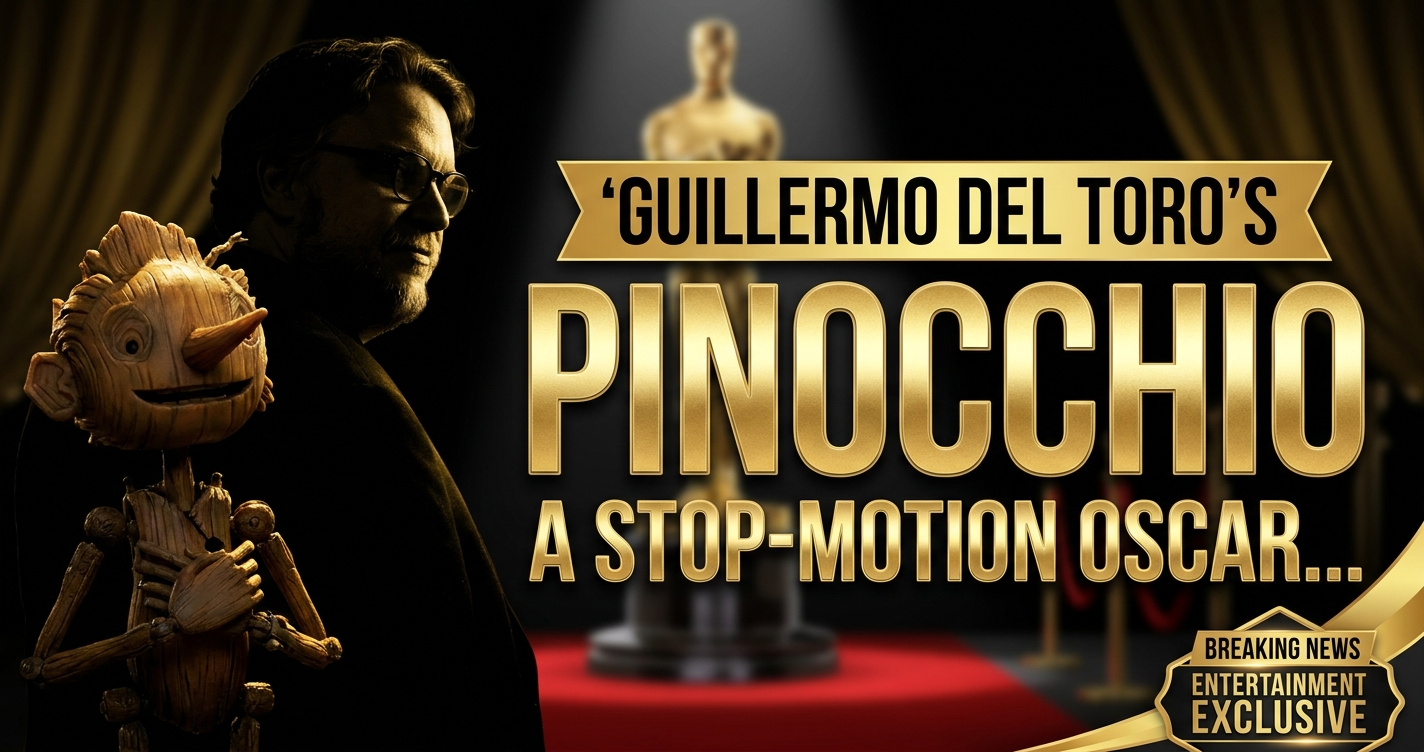
Hollywood loves a comeback story, but sometimes, the greatest triumphs aren’t about a person, but an entire art form. At this year’s Academy Awards, when Guillermo del Toro’s Pinocchio was crowned Best Animated Feature, it wasn’t just a win for the visionary director; it was a thunderous validation for stop-motion animation, a meticulous, handcrafted craft often overshadowed by its flashier CGI counterparts.
For years, the animation category at the Oscars has felt like a two-horse race, primarily between Disney/Pixar and whatever groundbreaking film Laika managed to produce. Yet, del Toro’s dark, poignant take on the classic tale, brought to life frame by painstaking frame by the artisans at ShadowMachine, shattered that perception. It proved, definitively, that there’s still an insatiable appetite for storytelling told with tangible puppets, miniature sets, and the unmistakable texture of human touch.
The Handcrafted Heart of a Modern Masterpiece
Del Toro, a master of blending beauty with the macabre, had harbored the dream of making his Pinocchio for over a decade. This wasn’t just another retelling; it was a deeply personal, politically charged fable set against the backdrop of fascist Italy. Such an ambitious, nuanced narrative found its perfect medium in stop-motion, allowing for a tactile reality that CGI often struggles to replicate, especially when dealing with the grotesque, the fantastical, and the deeply human.
The sheer dedication involved in a stop-motion production like this is staggering. Directors Mark Gustafson and Brian Leif Hansen, alongside del Toro, oversaw a monumental effort. Every flicker of an eyelid, every subtle gesture, every movement was painstakingly manipulated, photographed, and pieced together. It’s a labor of love that demands immense patience and an almost obsessive attention to detail, resulting in a film that vibrates with a unique, almost palpable energy.
A Nod to History: Stop-Motion’s Enduring Legacy
While Pinocchio’s win feels revolutionary, stop-motion has a rich, albeit often unsung, history in cinema. From the pioneering work of Willis O’Brien in King Kong (1933) to the fantastical creatures of Ray Harryhausen in films like Jason and the Argonauts (1963), it laid the groundwork for visual effects long before computers entered the frame. More recently, studios like Aardman Animations (Wallace & Gromit, Chicken Run) and Laika (Coraline, Kubo and the Two Strings) have kept the flame alive, consistently pushing the boundaries of the art form.
However, an Oscar win for a stop-motion feature outside of these established animation powerhouses, especially one with such a distinct, mature voice, is monumental. It’s a reminder that animation isn’t just for children, and that its technical diversity is its greatest strength. Del Toro himself has often championed the idea that animation is not a genre, but an art form, capable of expressing the full spectrum of human experience. This victory is a testament to that belief.
Guillermo del Toro: Champion of the Unconventional
It’s no surprise that Guillermo del Toro is at the helm of this stop-motion resurgence. The acclaimed filmmaker, who already has Best Director and Best Picture Oscars for The Shape of Water, has built a career on celebrating the monstrous, the misunderstood, and the marginalized. His films, whether live-action or animated, share a common thread: a profound empathy for outsiders and a visual style that is both gorgeous and unsettling.
Del Toro, in accepting his award, spoke passionately about animation’s power, reminding audiences that it’s a medium for profound storytelling, not just a genre for kids. His influence extends beyond just directing; he acts as a curator and mentor, often using his platform to elevate projects that might otherwise struggle for funding or recognition. This win isn’t just a personal triumph; it’s a strategic move in his ongoing campaign to expand how Hollywood views animation.
What This Means for the Future of Animation
The success of Guillermo del Toro’s Pinocchio could signal a fascinating shift in the animation landscape. While CGI will undoubtedly remain dominant due to its efficiency and versatility, this Oscar win might encourage more studios to invest in alternative animation techniques. It demonstrates that critical acclaim and audience engagement aren’t solely dependent on hyper-realistic digital renders.
However, the financial realities of stop-motion remain challenging. It is an expensive, time-consuming process. Yet, the artistic freedom and unique aesthetic it offers are invaluable. One can hope this victory inspires a new generation of animators and producers to explore the vast, untapped potential of stop-motion, claymation, and other tangible forms of animation. Imagine a world where the artistry of films like Marcel the Shell with Shoes On or even independent shorts get more mainstream attention because of Pinocchio’s groundbreaking success.
This win also reinforces the idea that unique, director-driven visions can cut through the noise of franchise fatigue. Del Toro’s Pinocchio stands as a bold, beautiful anomaly in a landscape often dominated by sequels and reboots. It’s a powerful reminder that originality, paired with masterful execution, will always find its audience and earn its accolades.
What to Watch For Next
The question now isn’t if stop-motion will disappear, but how its newfound spotlight will shape future productions. Will we see more adult-oriented animated features embracing the form? Will smaller studios find it easier to secure funding for their ambitious stop-motion projects? Keep an eye on upcoming animated film announcements and independent festival darlings. The echoes of Pinocchio’s Oscar triumph are likely to reverberate for years to come, promising a more diverse and exciting future for animation.