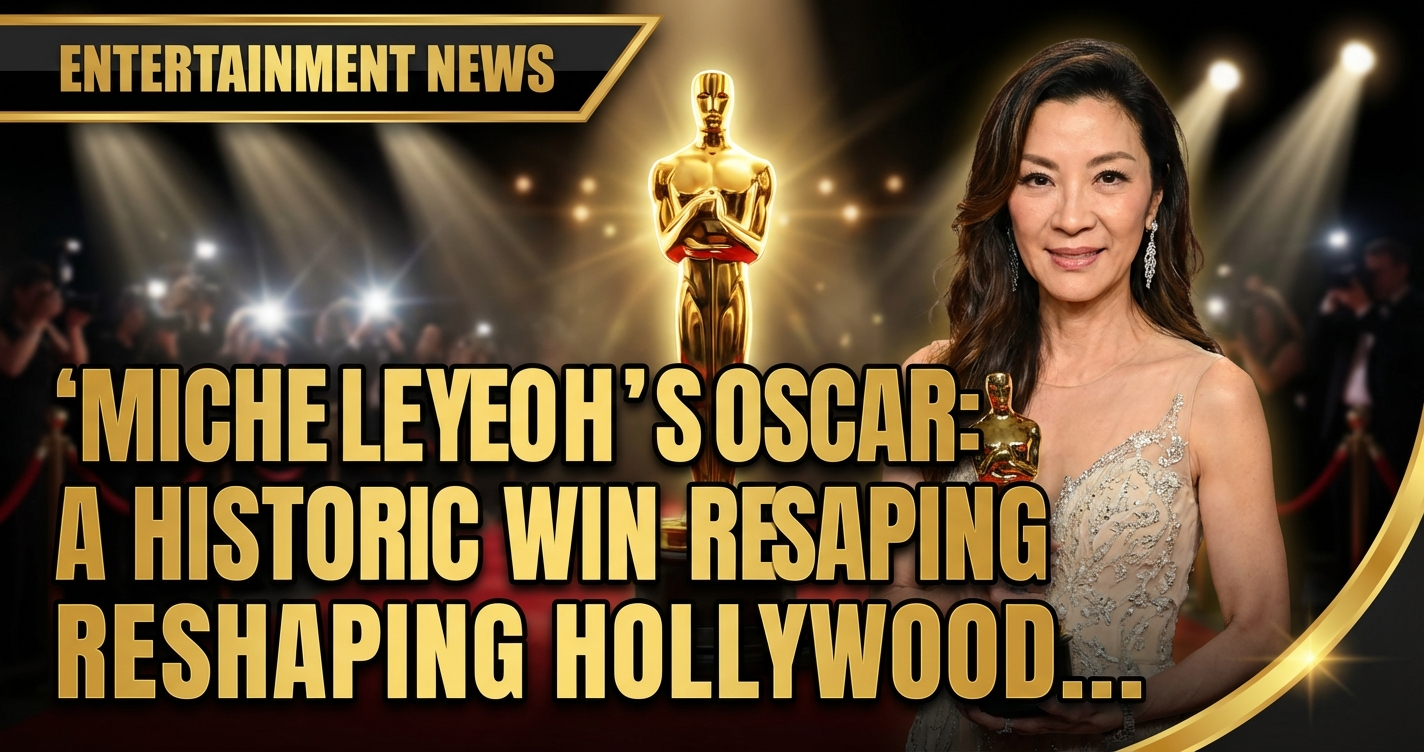
Michelle Yeoh’s Oscar: A Historic Win Reshaping Hollywood’s Future
Michelle Yeoh’s historic Academy Award win for Everything Everywhere All at Once wasn’t just a moment for her; it was a seismic shift for Hollywood. After decades gracing screens worldwide, from high-octane martial arts epics to elegant period dramas, her turn as Evelyn Wang cemented her status not just as a global icon, but as an undeniable force in American cinema. Her Golden Globe and SAG Award triumphs paved the way, but that Oscar night was the crescendo of a truly extraordinary career finally receiving its due, rewriting what’s possible for actors of color and women over 60 in Tinseltown.
The Unstoppable Ascent: From Hong Kong Legend to Global Icon
Long before she was battling interdimensional threats and tax forms, Michelle Yeoh carved out an unparalleled career in Hong Kong cinema. Films like Yes, Madam! and Police Story 3: Supercop showcased a physical prowess and magnetism that few could rival. Hollywood eventually came calling, though often in roles that, while significant, didn’t fully harness her immense talent. Her scene-stealing turn as Wai Lin opposite Pierce Brosnan in Tomorrow Never Dies (1997) proved she could hold her own on the global stage. Then came Ang Lee’s Crouching Tiger, Hidden Dragon (2000), a film that not only redefined wuxia for Western audiences but earned Yeoh widespread critical acclaim and an international following. Yet, despite these landmark achievements, a leading role of the caliber she was destined for remained elusive in the American mainstream for years. She continued to deliver memorable performances in diverse projects like Memoirs of a Geisha (2005) and Crazy Rich Asians (2018), each a building block, each a reminder of her enduring star power. Industry insiders often lamented the missed opportunities, wondering aloud when Hollywood would truly wake up to the full scope of her abilities.
The Everything Everywhere Phenomenon: A Role for the Ages
Then came Everything Everywhere All at Once. Penned and directed by the visionary duo Daniel Kwan and Daniel Scheinert, often simply known as ‘The Daniels,’ this A24-backed indie sensation was a whirlwind of genre-bending absurdity, profound emotional depth, and spectacular visual storytelling. At its heart was Yeoh’s Evelyn Wang, a laundromat owner facing an audit, a failing marriage, and a strained relationship with her daughter, all while being thrust into a multiverse-spanning quest to save reality. It was a role that demanded everything: comedy, drama, martial arts, vulnerability, and sheer, unadulterated star power. Yeoh didn’t just meet the challenge; she obliterated it. The film became a sleeper hit, captivating audiences and critics alike with its originality and heart. Her performance garnered near-universal praise, culminating in a string of historic wins: the Golden Globe for Best Actress in a Motion Picture – Musical or Comedy, the SAG Award for Outstanding Performance by a Female Actor in a Leading Role, and finally, the ultimate prize, the Academy Award for Best Actress. She made history as the first Asian woman to win in that category, a moment that resonated far beyond the Dolby Theatre.
Beyond the Gold: A Legacy Redefined and Doors Opened
Michelle Yeoh’s Oscar wasn’t just a personal triumph; it was a powerful statement from an industry often slow to change. For decades, opportunities for Asian actors, particularly older women, have been tragically limited, often relegated to stereotypes or supporting roles. Yeoh’s win unequivocally shattered that ceiling. It sent a clear message: talent knows no age, no ethnicity, and no genre. Her acceptance speech, urging women to believe in their dreams and reminding them they are "proof that dreams do come true," struck a chord globally. It’s a win that will undoubtedly open doors for a new generation of diverse talent, much like Halle Berry’s historic win did for Black actresses in 2002. It also highlighted the growing influence of independent studios like A24, which consistently champion original, boundary-pushing cinema that Hollywood’s traditional powerhouses might shy away from. Their success with films like EEAAO and Minari proves that unique stories with diverse casts aren’t just critically acclaimed; they can also be box office hits.
What’s Next for Michelle Yeoh and Hollywood’s Evolving Landscape
The question now isn’t if Michelle Yeoh will continue to shine, but how brightly. Her post-Oscar slate is already looking robust and diverse. She’s set to appear in Jon M. Chu’s highly anticipated Wicked films, the upcoming Disney+ series American Born Chinese (reuniting her with EEAAO co-star Ke Huy Quan), and James Cameron’s Avatar sequels. These projects showcase her range and her continued demand across different platforms and genres. Her win has undoubtedly shifted the landscape, encouraging studios to cast more broadly and to invest in narratives that reflect the global audience. DailyDrama.com sources suggest that scripts previously deemed ‘too niche’ or ‘too risky’ are now being re-evaluated, with a greater emphasis on authentic storytelling and diverse talent both in front of and behind the camera. The industry, it seems, is finally catching up to what fans worldwide have known for decades: Michelle Yeoh is, and always has been, a superstar.
Michelle Yeoh’s journey to the pinnacle of Hollywood is a testament to perseverance, undeniable talent, and the power of a story that resonated universally. Her Oscar win for Everything Everywhere All at Once isn’t merely an award; it’s a landmark moment, a beacon of hope, and a powerful indicator of a slowly but surely evolving industry. What to watch for next is not just Yeoh’s next incredible performance, but how Hollywood continues to embrace the groundbreaking path she’s so brilliantly illuminated.