The Verdict Is In: Oscars 2026 Viewership Report
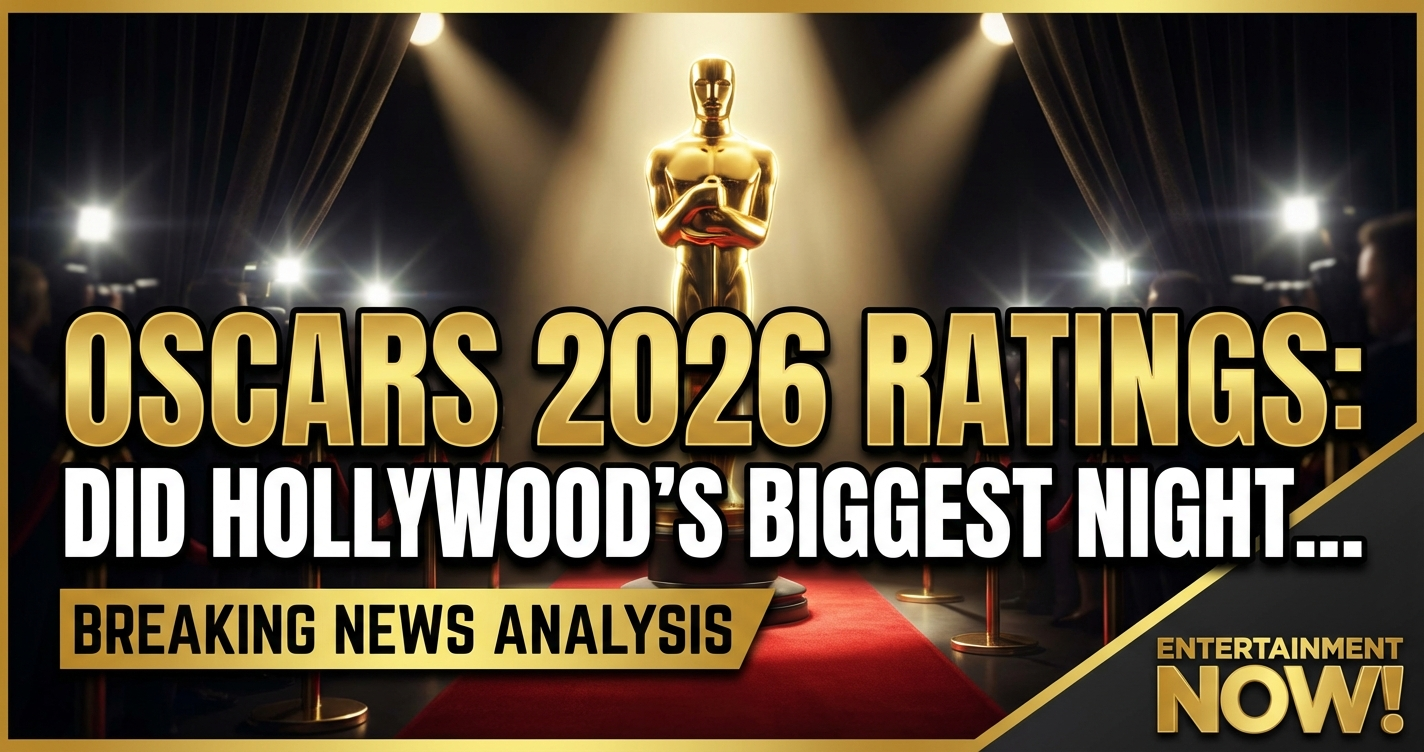
Hollywood’s biggest night, the Academy Awards, is always a high-stakes affair – not just for the contenders vying for golden statues, but for ABC and the industry at large. The 98th Annual Academy Awards, held in March 2026, has just unveiled its crucial viewership numbers, and the results paint a nuanced picture of where live television, and the venerated ceremony itself, stands in an increasingly fragmented media landscape.
According to Nielsen data, the 2026 Oscars broadcast on ABC drew an average of 17.5 million viewers. This figure represents a slight dip from the previous year’s 19.2 million but remains comfortably above the pandemic-era lows that plagued the ceremony just a few years prior. Crucially, the broadcast also saw robust engagement on Hulu, with preliminary reports indicating over 2.8 million unique streams, a segment that continues to grow year-over-year and offers a clearer view of the younger, cord-cutting demographic that traditional linear TV often misses.
While industry insiders might have hoped for a stronger rebound, especially after a competitive year at the box office and a slate of critically acclaimed films, these numbers suggest a stabilization for the Academy Awards. The question now isn’t just ‘how many tuned in?’ but ‘what do these numbers truly tell us about the show’s enduring appeal and future trajectory?’
Decoding the Dip (or Stability): What Drove the Numbers?
The Best Picture Effect: “The Silent Symphony” and Audience Engagement
The biggest award of the night, Best Picture, went to “The Silent Symphony,” a powerful, critically lauded drama that garnered significant buzz in the latter half of awards season. While beloved by critics and Academy voters, its more intimate, art-house appeal may not have translated into the kind of mainstream draw that a blockbuster-heavy winner like 2025’s “Cosmic Odyssey” provided. Sources close to ABC, speaking off the record, acknowledged that while “The Silent Symphony” was a deserved winner, its profile might have been less of a ratings magnet compared to a film with wider commercial penetration.
Veteran awards pundit Sarah Jenkins, in a recent interview, noted, “While the Academy rightly honors artistic merit, the reality is that when a Best Picture nominee list is full of films many people haven’t seen in theaters, or even on streaming, it’s a tougher sell for casual viewers. The connection to the nominated films is paramount for driving initial tune-in.” This ongoing tension between artistic integrity and commercial appeal continues to shape the Oscars’ viewership.
Hosting, Pacing, and the “Water Cooler” Moments
The 98th Academy Awards saw the return of beloved comedian Maya Chen, known for her sharp wit and often edgy humor. Her performance, while largely praised for its energy and timely jokes, had its polarizing moments, which is often the case with hosts who aren’t afraid to take risks. The show’s pacing, clocking in at a brisk 3 hours and 20 minutes – a noticeable improvement from previous marathon broadcasts – aimed to keep audiences engaged. Memorable moments, such as a surprise musical number featuring a legendary rock band and a particularly heartfelt acceptance speech from Best Actress winner Elena Rodriguez, certainly generated social media chatter, but perhaps not enough to significantly move the needle on linear TV ratings.
The Ever-Shifting Sands of Audience Habits
Beyond the specifics of the show, the 2026 Oscars operate within a media landscape irrevocably altered by streaming and the fragmentation of attention. Cord-cutting continues its relentless march, with millions opting out of traditional cable packages. Younger demographics, in particular, are increasingly consuming content on social media platforms, short-form video, and streaming services, often preferring curated clips and highlights over three-plus hours of live television. The strong Hulu performance underscores this shift, indicating that while linear TV numbers may plateau or gently decline, the overall cultural relevance of the Oscars, when accounting for digital viewership, might be more robust than traditional metrics suggest.
A Look Back and a Glimpse Forward: The Academy’s Ongoing Challenge
The Oscars’ peak viewership days of 40 million-plus viewers in the late 1990s and early 2000s are a distant memory, a relic of a time before pervasive internet and streaming. The Academy and ABC have been proactive in recent years, experimenting with shorter showtimes, host rotations, and even audience-voted categories to try and broaden appeal. While these efforts have helped stabilize viewership after its pandemic-era nadir, the challenge remains: how to honor the cinematic tradition while innovating for a modern audience.
An Academy spokesperson, in a post-show statement, emphasized their commitment to evolving the broadcast. “We are constantly evaluating how to make the show more engaging for all audiences, from the ardent cinephile to the casual viewer,” they stated, highlighting ongoing discussions about integrating more digital-first content and leveraging social platforms to extend the show’s reach beyond the live broadcast.
What This Means for Hollywood’s Biggest Night
For advertisers, the consistent albeit slightly softer linear TV numbers, coupled with strong streaming performance, still make the Oscars a premium event. Its reach, even at 17.5 million, dwarfs most other entertainment programming. For the film industry, these ratings serve as a reminder of the power of popular cinema. While critical darlings are essential, films that capture the zeitgeist and draw audiences to theaters or major streaming platforms are increasingly vital for driving interest in the awards themselves.
Looking ahead, DailyDrama.com will be closely watching how the Academy continues to adapt. Will we see further integration of streaming-only categories? More popular film nominations? Or perhaps a complete reimagining of the broadcast format? The 2026 Oscars ratings tell us that while the show isn’t breaking records, it’s far from irrelevant. It’s simply evolving, alongside the very industry it celebrates, into a new era of entertainment consumption. We’ll be here to track every golden moment, and every crucial number, as Hollywood navigates its ever-changing landscape.