Oscars 2026: Viewership Dip Sparks Fresh Debate for Academy’s Future
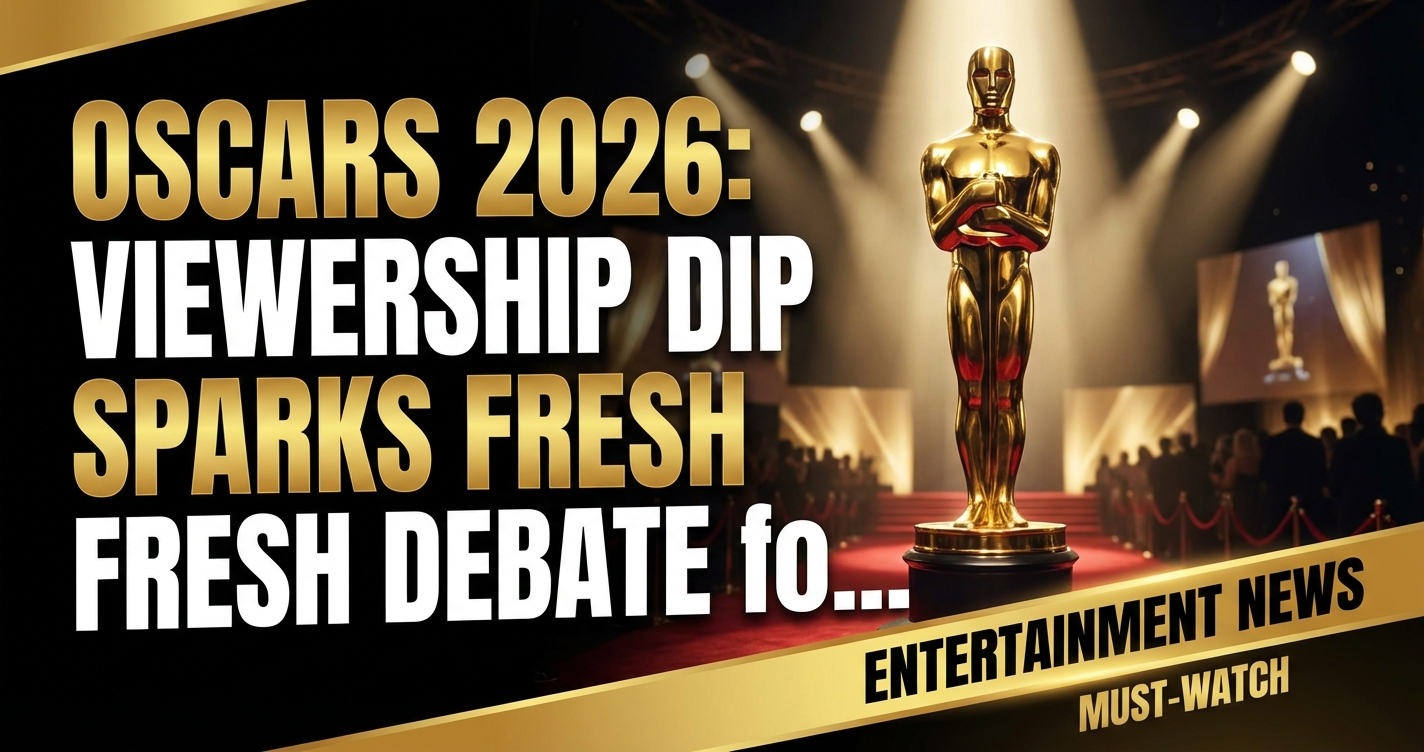
Hollywood is once again grappling with its biggest night’s diminishing appeal. The 98th Academy Awards, celebrating the best of cinema from 2025, drew 17.86 million viewers, marking a significant 9% drop from the previous year. While individual triumphs like Jessie Buckley’s poignant Best Actress win for Hamnet and Michael B. Jordan’s commanding Best Actor performance were celebrated, the overall numbers paint a familiar, concerning picture for the Academy.
For DailyDrama, this isn’t just a statistic; it’s a flashing neon sign demanding introspection from an industry in flux. The annual spectacle, once a guaranteed ratings juggernaut, continues its slow but steady descent, prompting urgent questions about the show’s format, the visibility of nominated films, and the very definition of cinematic relevance in the streaming age.
The Lingering Question: What’s Driving the Decline?
The 2026 figures are a stark reminder that the post-pandemic bounce for the Oscars was perhaps an anomaly rather than a genuine recovery. After hitting an all-time low of 10.4 million in 2021, the show had seen modest gains, peaking at 19.5 million for the 2025 ceremony. Now, the trend is once again heading south. Industry insiders point to a confluence of factors, none easily remedied.
One perennial complaint is the length of the telecast. At roughly three-and-a-half hours, many viewers find it a test of endurance. “The show needs to be tighter, more dynamic,” one veteran awards producer confided to DailyDrama. “We’re competing with TikTok and short-form content now. You can’t ask an audience to commit for that long unless every single moment is absolutely electric.”
Another critical issue remains the disconnect between critically acclaimed films and mainstream audience awareness. While prestige dramas dominate the nominations, many are seen by a relatively small slice of the movie-going public, often through niche streaming platforms or limited theatrical runs. This creates a situation where viewers tune in to see awards handed out for films they haven’t seen, diminishing engagement.
Buckley and Jordan: Individual Brilliance Shines Through
Despite the broader viewership concerns, the night was undoubtedly a personal career pinnacle for several artists. Jessie Buckley’s Best Actress win for Hamnet was widely predicted and deeply felt. Her portrayal of Agnes Hathaway (Shakespeare’s wife), a woman of fierce spirit and profound grief, resonated with critics and audiences alike. Buckley, known for her intense, transformative performances in films like The Lost Daughter and television’s Fargo, delivered an emotionally raw and captivating turn.
Accepting her award, a visibly moved Buckley reportedly spoke of the power of storytelling to connect us to history and humanity, dedicating her win to “all the unsung women whose stories deserve to be told.” Her win solidifies her status as one of her generation’s most compelling talents, a performer who consistently chooses challenging, character-driven roles that push boundaries.
On the Best Actor front, Michael B. Jordan’s triumph for his celebrated dual performance in the historical epic The Janus Paradox was a testament to his expanding dramatic range and undeniable star power. In the film, Jordan masterfully portrayed two estranged twin brothers – one a visionary but morally compromised tech mogul, the other a reclusive historian uncovering their family’s complex legacy. Critics lauded his ability to inhabit two distinct, complex characters with such nuance and conviction.
Jordan, a household name thanks to blockbusters like Black Panther and the Creed franchise, has consistently balanced commercial success with artistic ambition. His win marks a significant moment, showcasing his ability to lead a complex, character-driven drama while maintaining a strong box office presence. “This isn’t just for me, it’s for every storyteller who dares to dream beyond the headlines,” Jordan reportedly stated, emphasizing the importance of diverse narratives in Hollywood.
The Academy’s Next Act: Adapting to a Changing Landscape
The 2026 numbers are not just a blip; they’re a continuation of a long-term trend that the Academy has been wrestling with for years. The challenge is immense: how to honor artistic achievement while simultaneously attracting a broad television audience in an era where traditional linear TV is losing ground to streaming and digital content.
Suggestions range from radical overhauls – like introducing a ‘fan-favorite’ category or significantly shortening the show by presenting craft awards outside the live telecast – to more subtle tweaks, such as diversifying hosts and presenters to appeal to a younger demographic. The Academy has tried some of these tactics before, often to mixed results and considerable backlash from within the industry.
What’s clear is that simply hoping for a blockbuster year of nominated films isn’t a sustainable strategy. The cultural conversation around cinema has fragmented, and the Oscars need to find a way to re-establish their central role, not just as an awards show, but as a vibrant celebration that captivates a global audience.
What to Watch For Next
The pressure is now squarely on the Academy leadership and ABC, the broadcast partner, to rethink the strategy for the 2027 Oscars. Will they opt for a bolder, more experimental approach, or will they continue to tweak around the edges? The future of Hollywood’s biggest night may depend on their willingness to truly innovate, rather than merely react, to the evolving entertainment landscape.