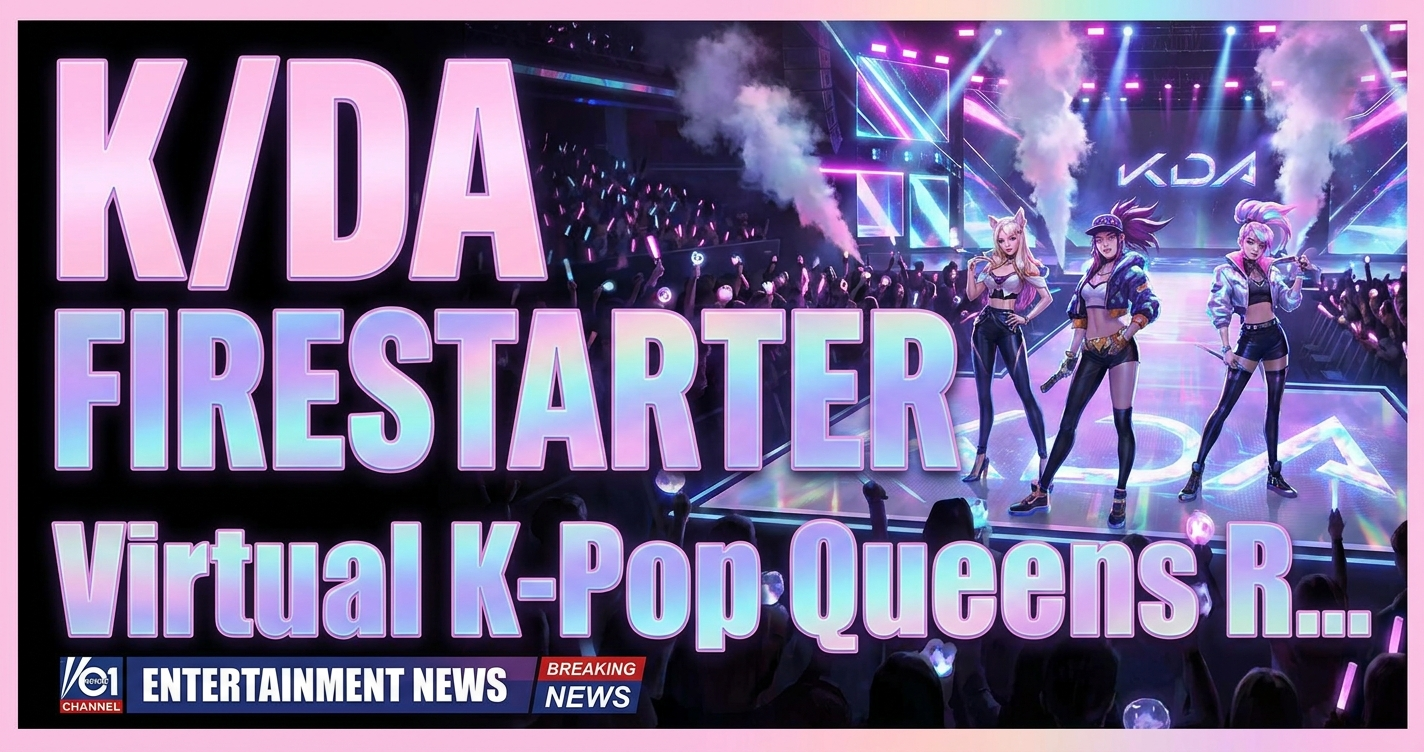
After six long years of silence, the digital queens of K-Pop, K/DA, have officially announced their triumphant return, sending ripples of excitement through both the gaming and music industries. Riot Games’ groundbreaking virtual girl group, born from the lore of League of Legends, is set to unleash their new single, ‘FIRESTARTER,’ marking the end of what felt like an eternity for their dedicated global fanbase. This isn’t just a comeback; it’s a strategic re-entry into a vastly evolved entertainment landscape, signaling Riot’s continued ambition beyond the gaming screen.
The Firestarter Returns: A Six-Year Symphony of Silence Broken
The announcement of ‘FIRESTARTER’ and the forthcoming album, ‘OUT,’ featuring tracks like ‘WATCH ME,’ ‘NEVER GOING BACK,’ and ‘GIRLS,’ has been met with a fervent response. K/DA, comprised of League of Legends champions Ahri, Akali, Evelynn, and Kai’Sa, first exploded onto the scene in 2018 with their electrifying debut at the League of Legends World Championship, delivering the global smash ‘POP/STARS.’ That performance didn’t just break the internet; it shattered preconceived notions of what virtual artists could achieve, blending cutting-edge animation with genuine musical talent.
For this highly anticipated return, Riot Games is bringing back familiar voices while introducing fresh talent. Mi-yeon and Soyeon of the popular K-pop group (G)I-DLE will reprise their roles as the singing voices of Ahri and Akali, respectively, a move that will undoubtedly appease long-time fans. However, the group will also see Canadian singer Sophie Powers stepping in as Evelynn and British singer Mimi Webb lending her vocals to Kai’Sa. This change in vocalists, while not unprecedented in the world of virtual groups, adds an intriguing layer to K/DA’s evolution, promising a potentially refreshed sound while striving to maintain the group’s iconic identity.
Beyond the Rift: Riot Games’ Musical Empire
Riot Games has long been more than just a video game developer; they are an entertainment powerhouse with a surprisingly robust and successful music division. K/DA isn’t an anomaly but a flagship in a growing fleet of musical projects. From the heavy metal stylings of Pentakill to the hip-hop swagger of True Damage, and most recently, the vibrant pop-punk energy of HEARTSTEEL, Riot has consistently demonstrated a unique ability to translate their game’s vast lore and character appeal into chart-topping music. This isn’t merely a marketing gimmick; it’s a calculated strategy to deepen fan engagement and extend their intellectual properties into mainstream culture.
Industry observers note that Riot’s commitment to high-quality music production, often collaborating with established artists, sets them apart. Their projects frequently involve complex narrative arcs and meticulously crafted aesthetics that resonate far beyond the gaming community. K/DA’s initial success, including hitting Billboard charts and accumulating hundreds of millions of streams, proved the commercial viability of this hybrid approach. Their return now solidifies Riot’s position as a serious player in the music industry, not just a tangential contributor.
The Virtual Vanguard: K/DA’s Enduring Legacy and the Evolving Industry
K/DA’s 2018 debut was a watershed moment for virtual artists, pushing the concept far beyond what many thought possible for a gaming-rooted project. While pioneers like Gorillaz and Hatsune Miku laid the groundwork, K/DA showcased a level of integration with contemporary pop music trends and real-world K-Pop aesthetics that felt fresh and immediately accessible. Their success paved the way for a surge in virtual idols and digital personalities across various platforms, from Vtubers to other gaming-adjacent musical acts.
The six-year hiatus, while agonizing for fans, also allowed the virtual idol space to mature. Now, K/DA re-enters a more crowded, yet more accepting, landscape. The challenge for ‘FIRESTARTER’ and ‘OUT’ will be to not only recapture their initial magic but also to innovate and demonstrate why they remain at the forefront of this digital frontier. Sources close to the project indicate a desire to push K/DA’s sound in fresh directions, perhaps reflecting the evolution of K-Pop itself over the past half-decade.
The Pressure of Reinvention: New Voices, New Era?
The introduction of Sophie Powers and Mimi Webb as the new voices for Evelynn and Kai’Sa is a particularly interesting development. For virtual groups, the vocal talent is the human anchor to the digital persona. While Mi-yeon and Soyeon’s return offers continuity, the new additions present both an opportunity and a challenge. Can the new vocalists seamlessly blend into K/DA’s established sound while bringing their own unique flair? Will fans embrace these new interpretations of beloved characters?
This move highlights the fluid nature of virtual groups, where the visual identity of the characters remains constant, but the human collaborators can evolve. It allows for creative flexibility and the potential for the group to adapt to changing musical tastes. It also places a significant amount of creative pressure on Riot’s music team to ensure the new lineup feels authentic and cohesive, satisfying both long-time devotees and attracting new listeners.
K/DA’s return with ‘FIRESTARTER’ is more than just a new song; it’s a statement. It’s a testament to the enduring power of virtual artists, Riot Games’ visionary approach to IP expansion, and the ever-blurring lines between gaming, music, and mainstream entertainment. As the digital stage is set for their comeback, all eyes will be on K/DA to see if they can once again ignite the charts and redefine what it means to be a global pop sensation. What’s next? We’ll be watching closely to see how ‘OUT’ performs and if this signals a more consistent output from the virtual queens, perhaps even leading to live virtual concerts that push technological boundaries even further.