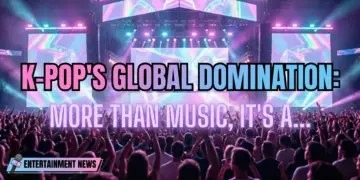
K-Pop’s Big Four Forge Unprecedented Alliance for Global Festival Domination
In a move that could reshape the entire global music festival landscape, K-pop’s undisputed giants – Hybe Corporation, JYP Entertainment, SM Entertainment, and YG Entertainment – are reportedly joining forces to establish a joint venture focused on large-scale concert planning. This isn’t just another collaboration; it’s an unprecedented consolidation of power, signaling a bold ambition to create a ‘Korean Coachella’ that could firmly cement K-pop’s place at the pinnacle of live entertainment.
Sources close to the matter indicate that the ‘Big Four’ recently submitted a business combination report to South Korea’s Fair Trade Commission, a necessary step for such a significant alliance. While details remain under wraps, the industry is buzzing with speculation about what this powerhouse quartet could achieve together. Imagine a festival featuring BTS, BLACKPINK, Stray Kids, NCT, TXT, aespa, ITZY, TREASURE, TWICE, and dozens more, all under one meticulously planned roof. It’s a fan’s dream and a rival promoter’s nightmare.
The ‘Korean Coachella’ Dream: More Than Just a Festival
The moniker ‘Korean Coachella’ isn’t just hyperbole; it speaks to the scale of ambition. Coachella, a cultural touchstone for global music fans, has demonstrated the immense power of a destination festival. It’s not merely about the music; it’s about the experience, the fashion, the influencer culture, and the global pilgrimage. K-pop, with its fervent and highly organized global fandoms, is uniquely positioned to replicate and even surpass this model.
For years, K-pop has seen success with events like KCON and the MAMA Awards, which serve as showcases for the genre. However, these have largely been industry-led or broadcast-centric. This new venture, backed by the very agencies that cultivate and manage K-pop’s biggest stars, represents a fundamental shift. It’s about owning the entire ecosystem, from talent to production, ticketing to merchandising, ensuring a seamless, high-quality experience designed explicitly for K-pop fans worldwide.
An industry veteran, speaking off the record, noted, “This isn’t about simply booking acts; it’s about creating an institution. These agencies control the vast majority of K-pop’s global market share. By pooling resources, they can create a festival brand that is unassailable, a must-attend event that solidifies South Korea as the undisputed capital of pop music.”
A United Front: K-Pop’s New Power Bloc
Individually, Hybe, JYP, SM, and YG are behemoths. Hybe, home to global sensations BTS, has pioneered new fan engagement models through Weverse. JYP boasts a roster of internationally successful groups like Stray Kids and TWICE. SM Entertainment has been an innovator for decades, responsible for defining K-pop’s idol system with groups like NCT and aespa. And YG Entertainment, with BLACKPINK, has carved out a distinct, trendsetting niche with unparalleled global fashion influence.
Collectively, their market capitalization runs into the tens of billions of dollars, and their combined artist roster represents an astronomical concentration of talent and global reach. This joint venture isn’t just a collaboration; it’s a strategic consolidation, creating a near-monopoly on the most sought-after K-pop acts for a dedicated festival. This kind of unified front is almost unheard of in the cutthroat entertainment industry, suggesting a shared vision for global expansion that transcends individual corporate rivalries.
Navigating the Regulatory Maze and Industry Impact
The submission to the Fair Trade Commission is a critical hurdle. Regulators will undoubtedly scrutinize such a massive alliance for potential monopolistic practices. Concerns about market dominance, pricing power, and the impact on smaller agencies or independent promoters are valid. However, proponents could argue that the venture aims to boost South Korea’s cultural exports and attract significant international tourism, positioning it as a national asset rather than a restrictive cartel.
The ripple effects of this alliance will be profound. For fans, it promises an unprecedented lineup and potential for never-before-seen cross-agency collaborations. For artists, it creates a new, incredibly high-profile platform. For the broader industry, it could set a new standard for festival production and fan engagement, potentially forcing smaller players to adapt or find their own niche. It also sends a clear message to Western festival organizers: K-pop is no longer just a guest genre; it’s building its own empire.
What to Watch For Next
All eyes will now be on the Fair Trade Commission’s decision. Should it receive approval, the next steps will involve securing a suitable venue – likely a massive, purpose-built space – and the official announcement of the festival’s brand, dates, and, most importantly, the inaugural lineup. The ticketing strategy alone will be a masterclass in managing unprecedented demand. This isn’t just a concert; it’s the dawn of a new era for K-pop, poised to become an immovable force in the global festival circuit.