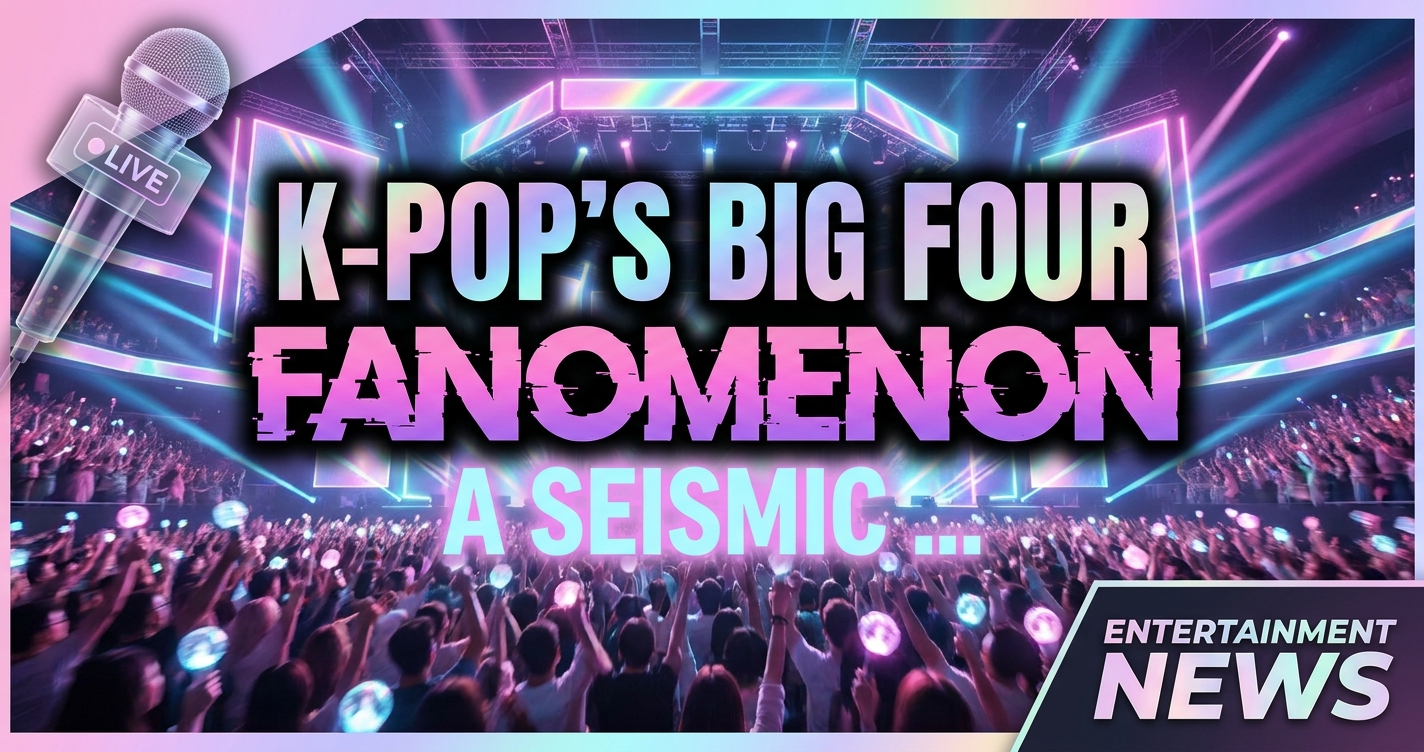
In a move that has sent ripples of excitement and speculation across the global entertainment industry, K-pop’s veritable ‘Big Four’ – Hybe, SM Entertainment, JYP Entertainment, and YG Entertainment – have officially joined forces. DailyDrama.com has learned that these titans of Hallyu have formed a joint venture to operate Fanomenon, a government-backed K-pop festival slated for December 2027. This isn’t just another festival; it’s an unprecedented alliance that could redefine the very landscape of K-pop.
For years, these agencies have been fierce rivals, battling for chart dominance, rookie breakthroughs, and market share. Their individual ‘family’ concerts – from SM Town Live to YG Family Concerts and JYP Nation – have been celebrated events, but the idea of a truly unified, cross-company mega-festival on this scale was, until now, a distant dream. The news that each of these powerhouses will hold board seats in the Fanomenon operating company underscores the strategic depth and long-term commitment behind this collaboration.
The Unprecedented Alliance: K-pop’s Powerhouses Join Forces
The Fanomenon festival, set to debut in December 2027, isn’t merely an industry initiative; it carries the significant weight of government backing. This immediately elevates its status from a commercial venture to a national cultural project. South Korea has long recognized the immense soft power and economic impact of Hallyu, and its direct involvement in fostering such a large-scale, collaborative event signals a renewed commitment to bolstering K-pop’s global reach.
Sources close to the negotiations suggest that the government’s role was instrumental in bringing these competitive entities to the table. An unnamed official reportedly emphasized the desire to present a unified front of Korean cultural power, leveraging the collective might of its top agencies rather than showcasing them in isolation. This synergy is intended to create an unparalleled spectacle that can further cement K-pop’s position as a dominant force in global music.
Beyond Rivalries: The Strategic Imperative for a Unified Front
So, why now? K-pop’s global expansion has been nothing short of meteoric, yet the landscape is ever-evolving. With increasing competition from other global music scenes and the continuous need to innovate, a collective approach offers several strategic advantages. By pooling resources, expertise, and, most importantly, their unparalleled roster of artists, the Fanomenon joint venture can achieve a scale and impact that individual agencies might struggle to replicate alone.
This move can be seen as a proactive measure to future-proof K-pop’s global dominance. It allows for the creation of a premium, unified brand experience that can attract new fans while deeply satisfying existing ones. An industry insider noted, “This isn’t just about putting on a show; it’s about solidifying K-pop as a global cultural institution. When Hybe, SM, JYP, and YG collaborate, the world takes notice.” It also potentially offers a more streamlined approach to intellectual property management and global distribution for a mega-event, cutting through the usual red tape of inter-company dealings.
Fanomenon: A Promise of Dream Stages or a Brand Consolidation?
For the millions of K-pop fans worldwide, the prospect of a festival featuring artists from all four major agencies is nothing short of a dream come true. Imagine the potential for cross-group collaborations, never-before-seen stages, and a lineup that transcends company loyalties. The sheer spectacle of artists from BTS, aespa, Stray Kids, and TREASURE potentially sharing a stage is enough to send shivers down any fan’s spine.
However, seasoned observers at DailyDrama.com also ponder the underlying motivations. While the fan experience is undoubtedly a key driver, this is also a significant business play. Is Fanomenon primarily about celebrating K-pop’s diversity and artistry, or is it a sophisticated strategy to consolidate K-pop’s brand power, expand global reach, and optimize revenue streams? The answer, most likely, is both. The challenge will be to balance artistic integrity and fan satisfaction with the commercial imperatives of such a colossal undertaking. There’s always a risk that too much corporate influence could dilute the unique flavors that each agency’s artists bring to the table.
Navigating the Future: Challenges and the Road to 2027
While the announcement is exciting, the road to December 2027 will undoubtedly be fraught with challenges. The logistical complexities of organizing an event of this magnitude, involving multiple top-tier agencies and government oversight, are immense. Scheduling conflicts, creative differences over stage concepts, and the delicate balance of equitable artist representation will require meticulous planning and diplomacy.
Furthermore, the K-pop landscape itself is ever-changing. Which groups will be headlining in 2027? How will the industry evolve? The joint venture will need to be agile and forward-thinking to ensure Fanomenon remains relevant and captivating years down the line. The success of this inaugural festival could set a precedent for future collaborations, or, if mismanaged, serve as a cautionary tale.
This unprecedented alliance represents a bold gamble and a potentially transformative moment for K-pop. It’s a clear signal that the industry is looking beyond individual rivalries to secure its collective future on the global stage. DailyDrama.com will be watching closely as the ‘Big Four’ navigate this ambitious journey towards Fanomenon 2027. What to watch for next: early details on the festival’s creative direction, potential artist lineups, and how this collaboration might influence other aspects of the K-pop industry.