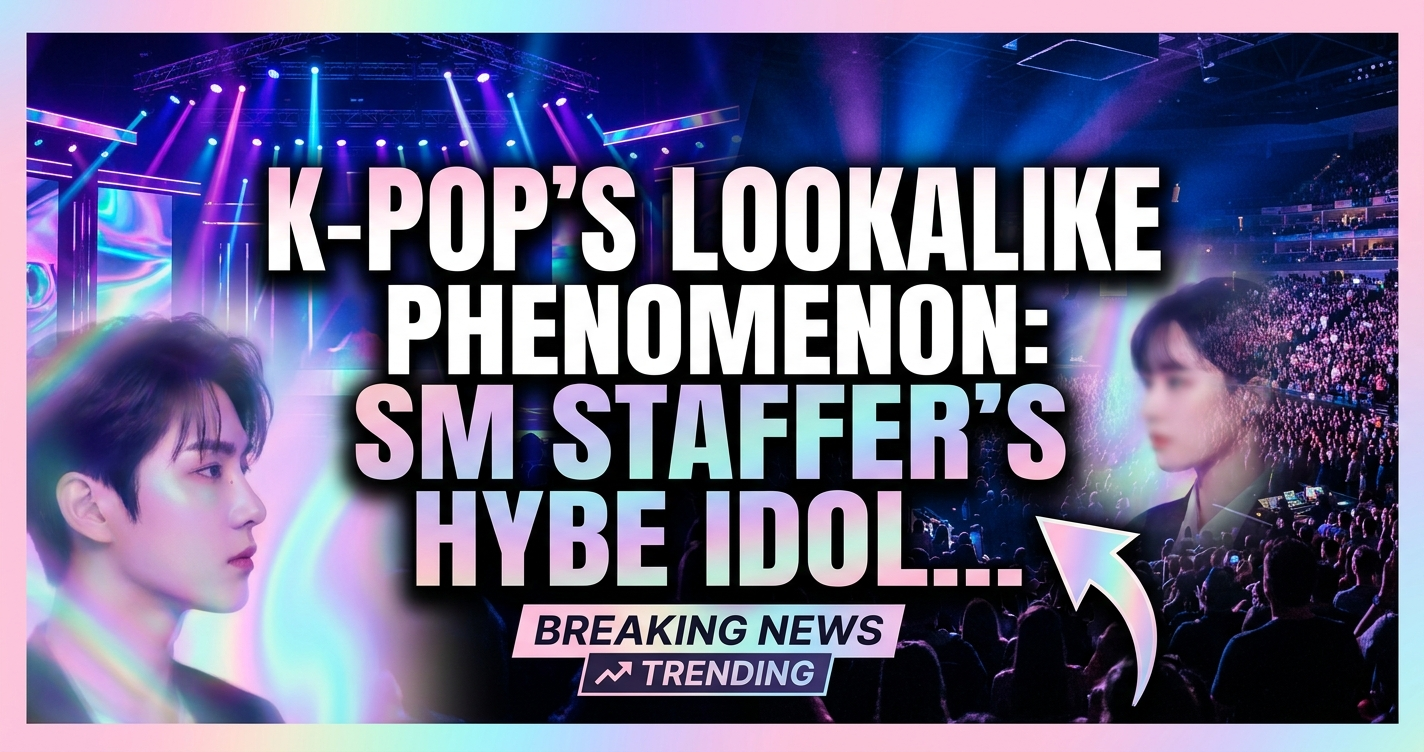
The Uncanny Resemblance That Broke the Internet: SM Staffer’s HYBE Idol Twin
In the fast-paced, visually-driven world of K-Pop, it takes a lot to truly capture collective attention outside of a comeback. Yet, that’s precisely what happened recently when an SM Entertainment staff member, working security at an NCT 127 concert, became an unexpected viral sensation. The reason? His striking, almost uncanny resemblance to a prominent idol from rival agency, HYBE.
It began, as most modern K-Pop sagas do, with a flurry of fan-taken photos and videos uploaded to social media platforms like X (formerly Twitter) and TikTok. During a recent NCT 127 performance, eagle-eyed NCTzens (NCT fans) noticed one particular bodyguard who looked suspiciously like a top-tier visual from a HYBE group. The side-by-side comparisons quickly flooded feeds, sparking a wave of shock, amusement, and fervent debate across global K-Pop communities.
Fans online were quick to point out the shared features: the sharp jawline, the distinct eye shape, even a similar aura that many associate with the idol in question. One netizen reportedly quipped, “Is HYBE secretly loaning out their visuals to SM for security detail?” The sentiment perfectly captured the incredulity and playful rivalry inherent in the K-Pop fandom landscape. This wasn’t just a casual resemblance; it was a doppelganger moment that seemed almost too perfect to be true, given the intense competition and distinct branding between the industry’s biggest players, SM Entertainment and HYBE.
The K-Pop “Doppelganger Effect”: A Fan Obsession
The K-Pop industry has always placed immense value on visuals. From pre-debut buzz to meticulously curated concepts, an idol’s appearance is often as central to their appeal as their talent. This emphasis naturally fuels a fan culture fascinated by resemblances, whether it’s an idol looking like a famous senior actor, a popular cartoon character, or, most intriguingly, another idol.
This isn’t the first time the K-Pop world has been captivated by a celebrity lookalike. We’ve seen countless instances over the years, from idols being dubbed the “second coming” of legendary visuals from previous generations to comparisons between contemporary stars across different agencies. Remember the buzz when certain rookie idols were noted for resembling senior group members? Or the ongoing discussions about celebrity siblings who share an uncanny likeness but have chosen different career paths? These moments tap into a fundamental human fascination with recognition and connection.
What makes this particular incident stand out, however, is the clear agency divide. SM Entertainment and HYBE represent two titans of the industry, each with their own distinct visual aesthetics and talent development philosophies. For a staff member from one to so closely resemble a top idol from the other adds a layer of unexpected narrative that fuels fan engagement and discussion.
Beyond the Hype: Industry Implications and Agency Dynamics
While this viral moment is largely a lighthearted spectacle for fans, it subtly highlights several underlying aspects of the K-Pop industry. First, the sheer power of social media in amplifying even the most niche observations into global trends. A few well-placed photos can launch an unknown individual into temporary internet stardom, regardless of their profession.
Second, it underscores the constant scrutiny idols and, by extension, those around them, face. Every concert, every public appearance, is documented by thousands of cameras. Security personnel are crucial for an idol’s safety and privacy, yet in these moments, they too become part of the spectacle. Agencies like SM and HYBE pour immense resources into protecting their artists, but they can’t control every angle or every viral screenshot.
Industry insiders often note how crucial visual branding is, not just for the idols themselves but for the overall image of the company. While the bodyguard’s resemblance is purely coincidental, it inadvertently draws a curious connection between two rival powerhouses. It’s a testament to the pervasive nature of K-Pop’s aesthetic standards that even a staff member can inadvertently embody the “idol visual” archetype.
The Blurry Lines of K-Pop Fandom
This incident also speaks to the evolving nature of K-Pop fandom. Fans are not just consumers of music; they are active participants, cultural commentators, and often, digital detectives. They pore over every detail, creating content, memes, and theories that shape the narrative around their favorite groups. The viral bodyguard isn’t just a passing anomaly; he’s become a fleeting character in the ongoing, fan-driven drama of the K-Pop universe.
It’s a reminder that in the age of hyper-connectivity, the lines between idol, staff, and fan can blur in unexpected ways. While the bodyguard’s primary role is professional security, for a brief moment, he transcended that role to become a symbol of K-Pop’s visual allure and the boundless enthusiasm of its global fanbase. It offers a fascinating glimpse into how even an accidental similarity can generate significant buzz and cross-agency chatter in an industry built on carefully constructed images.
What to Watch For Next:
Will the “HYBE idol lookalike” bodyguard maintain his newfound, albeit accidental, fame? Or will he quietly return to the vital, behind-the-scenes work of keeping idols safe? This incident undoubtedly adds another curious footnote to the annals of K-Pop’s rich and often unpredictable history. It also serves as a subtle reminder to agencies: in the digital age, every public interaction, every face in the crowd, has the potential to become a story.