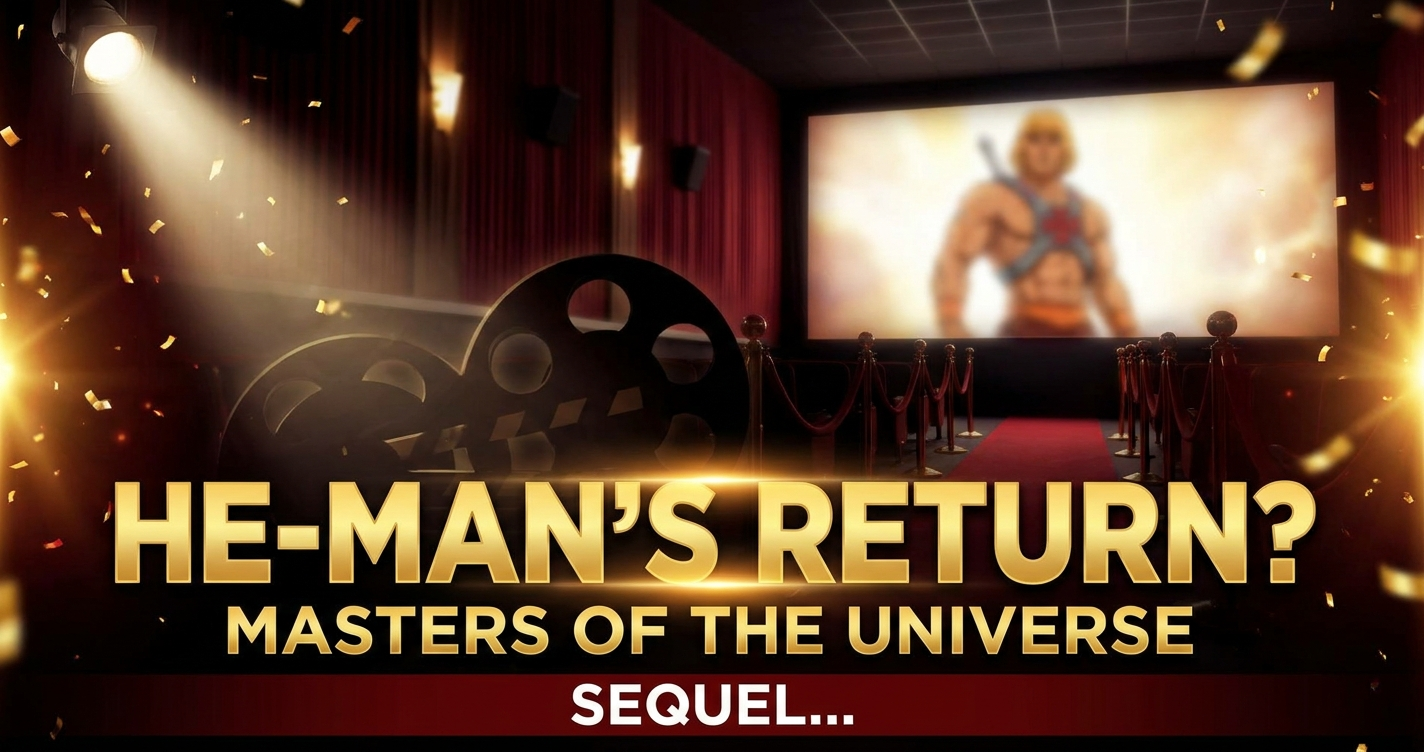
He-Man’s Return? Why Masters of the Universe Sequel May Defy Box Office Logic
In Hollywood, the box office report has long been the ultimate arbiter of a film’s fate. A dazzling opening weekend means greenlights and sequels; a dismal one often spells the end of a franchise before it even begins. But what if the rules are changing? Whispers from industry insiders suggest that a Masters of the Universe sequel is not just a possibility, but a strong likelihood, even if its initial theatrical performance isn’t a blockbuster hit. This isn’t just wishful thinking from Eternia superfans; it’s a calculated gamble by studios that understand the evolving landscape of entertainment.
For decades, the journey of He-Man and the fight for Grayskull has captivated generations, from the iconic 1980s cartoon and toy line to Dolph Lundgren’s 1987 live-action film. Now, with Amazon MGM Studios at the helm, the stakes are different, and the metrics for success have expanded far beyond mere ticket sales. This new era values long-term IP cultivation over instant theatrical gratification, a strategic shift that could see Prince Adam unsheathing his Power Sword for years to come.
The New Metrics of Success: Beyond the Box Office Curtain
The traditional theatrical model, where a film lives or dies by its opening weekend, is increasingly giving way to a more nuanced, multi-platform approach. For a project like Masters of the Universe, especially under the Amazon MGM banner, success isn’t solely defined by how many tickets are sold in its first few weeks. Instead, a host of other factors come into play:
- Streaming Engagement: How many subscribers watch the film? Do they complete it? Do they re-watch it? Does it drive new subscriptions to Prime Video? These are critical data points for a streaming giant. An executive source, speaking off the record, noted that for Amazon, “a tentpole like He-Man is less about the P&L of a single theatrical run and more about its gravitational pull for the entire Prime ecosystem.”
- Ancillary Revenue: Think merchandise, video games, comics, and future animated series. A film can be a loss leader if it significantly boosts sales in these highly profitable areas.
- Global Reach: A moderate domestic box office might be offset by strong international performance, particularly in territories where the IP has a dedicated following.
In this environment, a film with a cult following or strong nostalgic appeal can build momentum over time on a streaming platform, finding its audience gradually rather than needing an immediate theatrical explosion. It’s a marathon, not a sprint, and Amazon has the infrastructure to support that long-game strategy.
The Enduring Power of IP and the Merchandise Machine
Let’s not forget the origins of Masters of the Universe. It began as a toy line from Mattel, created to capitalize on the burgeoning fantasy craze of the early 80s. This history is crucial. For Mattel, a film is a massive, multi-million dollar commercial for its entire product ecosystem. The recent phenomenal success of Barbie, another Mattel IP, has profoundly underscored the value of turning beloved toy lines into cinematic events.
While Barbie was a box office juggernaut, its primary goal, beyond critical acclaim, was to re-energize the brand and sell more dolls. For Masters of the Universe, the strategy is similar. Even if the film doesn’t smash box office records, if it reignites interest in He-Man action figures, boosts sales of collectibles, or spawns new animated series on Prime Video, it will have served its purpose. A marketing insider for a major toy company recently reiterated that “these films aren’t just movies; they’re brand activations. The ROI extends far beyond the ticket booth.”
The acquisition of the Masters of the Universe rights by Amazon MGM means that the studio now controls a highly valuable, multi-generational IP. Their goal isn’t just one film; it’s to build a robust, interconnected universe that can deliver content and merchandise for years to come. Actor Kyle Allen, cast as the new He-Man, represents a fresh face for a potentially long-running franchise, signaling a commitment that goes beyond a single picture.
Building a Universe, One Film at a Time
Hollywood’s obsession with cinematic universes shows no signs of slowing down. From Marvel to Star Wars, and even Universal’s attempts at a Dark Universe, studios are desperate to establish long-running, interconnected narratives that can generate consistent content and revenue. Masters of the Universe, with its rich lore, diverse characters (Skeletor, Teela, Man-At-Arms, Evil-Lyn), and vast world of Eternia, is ripe for such an expansion.
A first film, even if it struggles theatrically, can serve as an expensive but necessary proof-of-concept and an introduction to the world and characters. It lays the groundwork for future installments that might find their footing, especially if they transition more heavily to a streaming-first model after the initial theatrical window. This “universe-building” approach prioritizes the long-term health of the IP over the short-term theatrical performance of a single entry. It’s a calculated risk that many studios, particularly those with deep pockets and streaming platforms, are willing to take.
What to Watch For Next
The potential for a Masters of the Universe sequel, despite traditional box office concerns, highlights a fascinating evolution in the entertainment industry. It underscores the immense value of intellectual property, the strategic importance of streaming platforms, and the willingness of studios to play the long game. DailyDrama.com will be keeping a close eye on any official announcements regarding the film’s release strategy and its performance metrics post-launch. If the whispers hold true, He-Man’s battle for Eternia is far from over, and the future of franchise filmmaking might just be forged in the streaming wars, not the box office reports.