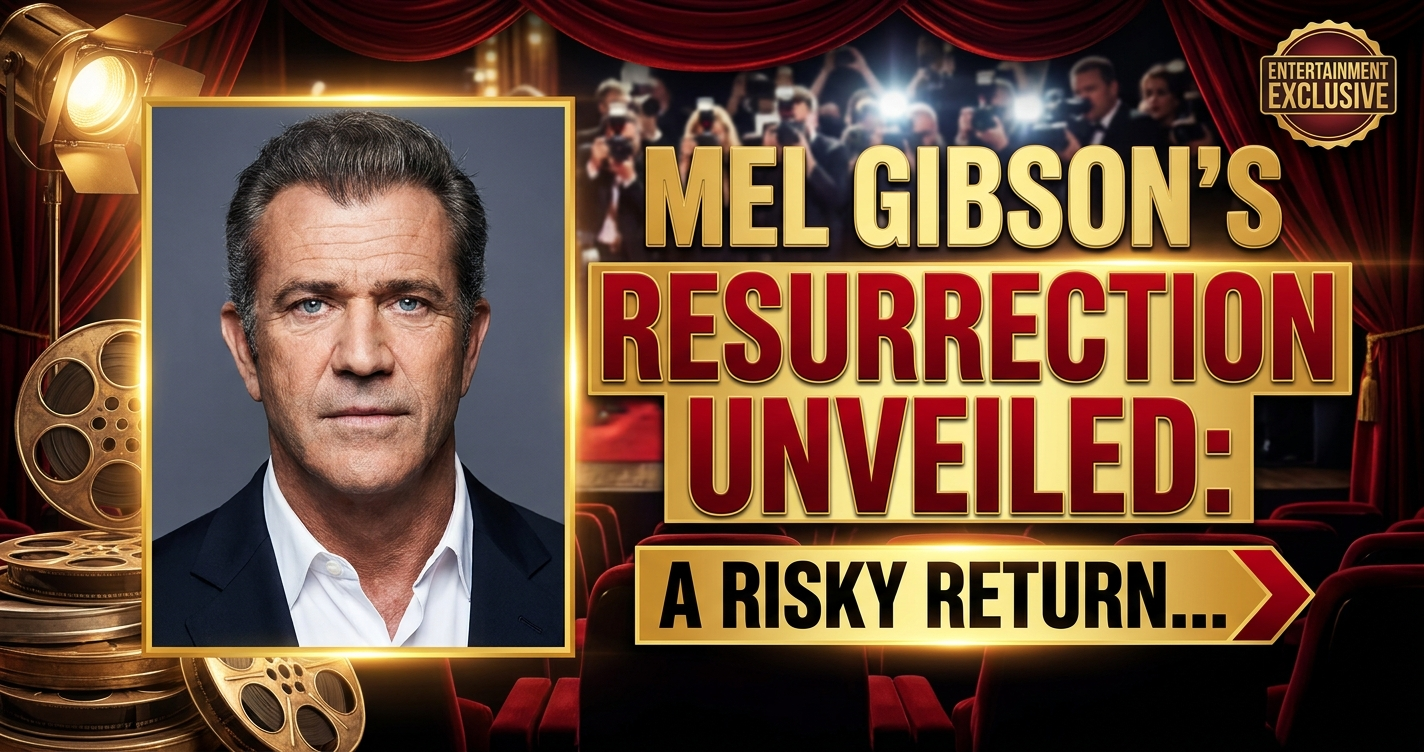
Mel Gibson’s ‘Resurrection’ Unveiled: A Risky Return to Faith’s Epic Scale
It’s been two decades since Mel Gibson stunned the world – and the box office – with The Passion of the Christ. Now, the director is finally pulling back the veil on its long-awaited follow-up, The Resurrection of the Christ, revealing a first look that has set the entertainment industry abuzz. However, alongside this tantalizing glimpse, comes news of a delayed release, signaling that this ambitious project is still very much a journey in progress. For DailyDrama.com, this isn’t just a headline; it’s a deep dive into one of the most intriguing, and potentially controversial, cinematic undertakings in recent memory.
The original Passion, released in 2004, was a phenomenon. Shot almost entirely in Aramaic, Hebrew, and Latin, it defied conventional wisdom to gross over $600 million worldwide on a relatively modest $30 million budget. It wasn’t just a film; it was a cultural event, sparking intense debate and solidifying Gibson’s reputation as a director unafraid to tackle grand, visceral narratives. The expectation for The Resurrection of the Christ isn’t just high; it’s stratospheric, burdened by the legacy of its predecessor and the weight of its profoundly significant subject matter.
The First Look: A Glimpse into the Aftermath
While details of the “first look” remain guarded, industry insiders suggest it hints at a visually intense and emotionally charged narrative, picking up precisely where The Passion left off. Sources close to the production, speaking on background, describe the initial imagery as focusing on the immediate aftermath of the crucifixion, setting a somber yet hopeful tone. Reprising his role as Jesus, Jim Caviezel, who famously endured significant physical discomfort during the first film’s production, is reportedly as committed as ever to portraying this pivotal spiritual moment with profound authenticity.
For Gibson, this project is more than just a sequel; it’s a passion project in the truest sense, one he has spoken about for years. He has reportedly poured immense personal conviction into the script, co-written with Randall Wallace (who also penned Braveheart), aiming to explore not just the resurrection itself, but the events leading up to it and its transformative impact on the apostles. This isn’t just a story about one man’s return, but about the genesis of an entire faith, offering a potentially sweeping historical and theological epic.
Gibson’s Vision: Controversy, Comebacks, and Cinematic Scale
Mel Gibson’s career has been a rollercoaster of critical acclaim, box office triumph, and personal controversy. Yet, through it all, his directorial prowess has remained largely undeniable. From the gritty realism of Braveheart to the breathtaking intensity of Apocalypto and the impactful war drama Hacksaw Ridge (which earned him an Oscar nomination for Best Director), Gibson consistently delivers films of immense scale and unflinching intensity. His signature style – a blend of brutal realism, emotional depth, and often graphic depiction – is perfectly suited to the gravitas required for The Resurrection of the Christ.
The delay in release, while disappointing for eager fans, isn’t entirely unexpected for a project of this magnitude and Gibson’s meticulous approach. Large-scale historical epics, especially those with significant visual effects and a commitment to authenticity, often require extensive post-production. It could also be related to securing the right distribution deal, a crucial step for a film that, like its predecessor, might opt for an independent release strategy to maintain creative control and maximize profits.
The Evolving Landscape of Faith-Based Films
When The Passion of the Christ hit theaters, the faith-based film market was nascent. Its success, however, undeniably paved the way for a boom in Christian-themed cinema, from smaller independent features to studio-backed releases. Today, films like Miracles from Heaven, I Can Only Imagine, and Jesus Revolution have demonstrated a consistent, dedicated audience for stories rooted in faith.
However, The Resurrection of the Christ is poised to operate on a different plane entirely. It’s not just a faith-based film; it’s a Mel Gibson epic, promising a cinematic experience far grander and potentially more challenging than many of its contemporaries. It will likely face intense scrutiny from both religious scholars and film critics, navigating the delicate balance between theological reverence and dramatic interpretation. Its success will be measured not just in box office numbers, but in its cultural resonance and its ability to reignite the kind of widespread conversation that defined its predecessor.
What’s Next for the ‘Resurrection’ Saga?
With the first look now out and the release delayed, the industry’s attention turns to the next steps. When will we see a teaser trailer? What will be the chosen distribution model? And perhaps most importantly, how will Gibson and Caviezel tackle a narrative that transcends earthly bounds?
For DailyDrama.com, The Resurrection of the Christ remains one of the most compelling stories on the cinematic horizon. It’s a test of Gibson’s enduring vision, Caviezel’s commitment, and the appetite of audiences for a spiritual epic on a truly grand scale. Stay tuned as we continue to track every development of this monumental project.