Pixar’s ‘Hoppers’ Soars, ‘The Bride!’ Stumbles: The Auteur vs. IP Divide Deepens
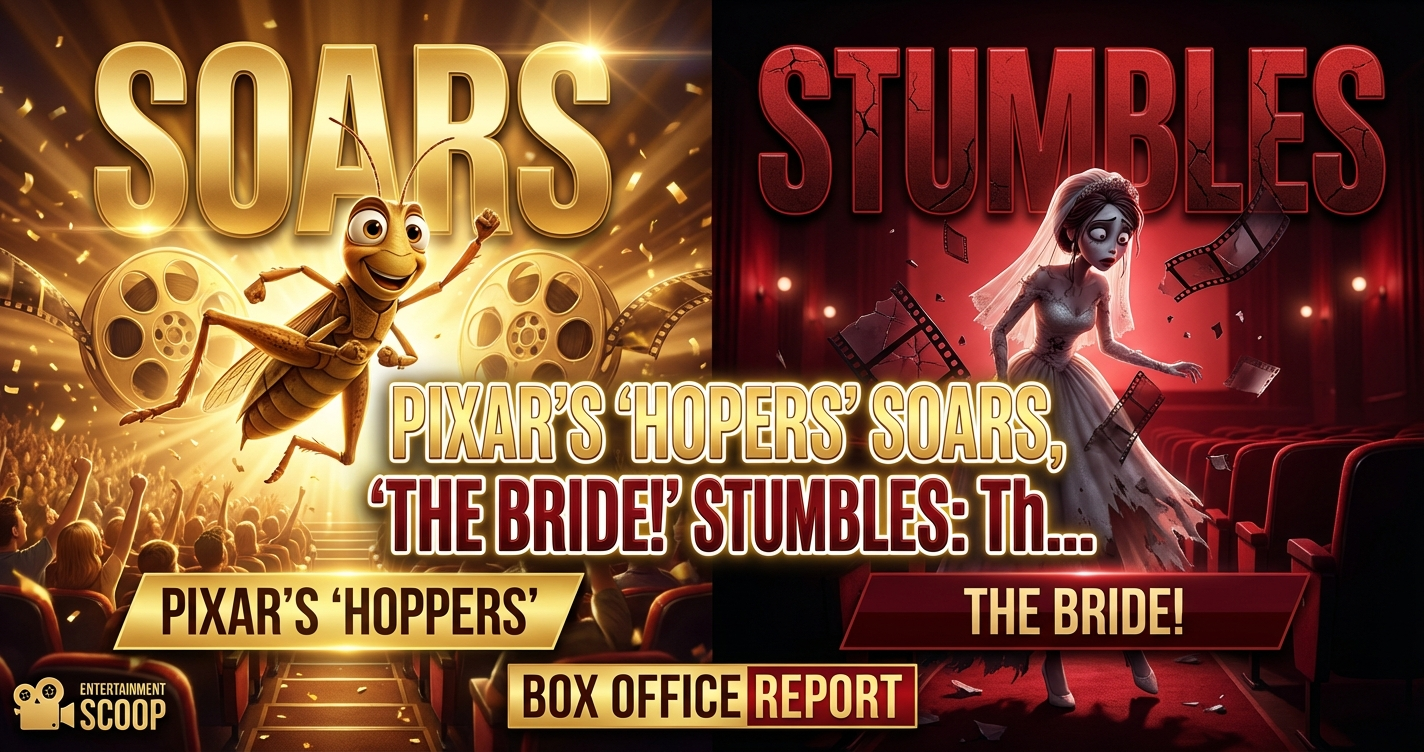
The latest weekend box office results painted a stark picture of modern Hollywood, a tale of two vastly different cinematic fortunes that underscores the deepening chasm between sure-fire IP and ambitious original visions. On one side, Pixar’s latest original offering, Hoppers, not only captivated audiences but also emphatically ended a concerning cold streak for the animation giant’s non-sequel ventures. On the other, Maggie Gyllenhaal’s highly anticipated, auteur-driven The Bride!, a bold reimagining of a classic monster, barely registered a pulse, signaling the perilous tightrope walk for mid-budget, original live-action features in today’s market.
For Pixar, the success of Hoppers is a much-needed breath of fresh air. After a period marked by the underperformance of films like Lightyear and the initial slow burn of Elemental, coupled with several acclaimed originals (Soul, Luca, Turning Red) being shunted directly to Disney+ during the pandemic, questions lingered about the studio’s theatrical viability for new concepts. Hoppers, with its vibrant world and universal appeal, has proven that the magic is still very much alive. Industry insiders suggest the film recaptured the quintessential Pixar charm, blending humor, heart, and stunning animation in a way that resonated broadly with families and critics alike, signaling a strategic return to form for the studio.
The High Cost of Vision: ‘The Bride!’ and the Auteur Dilemma
Contrast this with The Bride!. Directed by acclaimed actor-turned-filmmaker Maggie Gyllenhaal, whose directorial debut The Lost Daughter earned critical accolades and Oscar nominations, the film promised a daring, punk-rock infused take on Frankenstein’s monster’s mate. With a reported opening weekend gross of a meager $7 million, however, its theatrical run looks grim. This isn’t a reflection of Gyllenhaal’s talent, but rather a harsh spotlight on the financial realities facing original, mid-budget projects, particularly those that defy easy categorization.
A studio executive, speaking anonymously on background, noted the “inherent gamble” in greenlighting original mid-budget features, even with acclaimed talent attached. “The market is so bifurcated now,” they explained. “You either have a massive IP tentpole that can draw billions, or a micro-budget horror or indie drama that finds its niche. The films in the middle, especially original ones, are struggling to find an audience willing to pay theatrical prices.”
This isn’t an isolated incident. We’ve seen similar struggles with ambitious, star-studded originals from revered directors in recent years. Martin Scorsese’s Killers of the Flower Moon, while critically lauded, relied heavily on Apple’s deep pockets to achieve its theatrical release and reach profitability. Ridley Scott’s historical epics, The Last Duel and Napoleon, also faced uphill battles at the box office despite their grand scale and artistic merit. These films, like The Bride!, are often too niche for a blockbuster audience but too expensive for a pure art-house run, leaving them in a perilous no-man’s-land.
The Shrinking Middle: Where Do Original Live-Action Films Go?
The problem is systemic. The rise of streaming services has accustomed audiences to consuming a vast array of content from the comfort of their homes, often for a single monthly subscription. This has particularly impacted the adult drama and genre-bending original film market, which once thrived in multiplexes. Why pay for a ticket, popcorn, and a babysitter for a film like The Bride! when similar quality, though perhaps less visually ambitious, content is available at home?
Film economists point to a continued bifurcation of the market: event films or niche indies, with little room in between. The studios, increasingly risk-averse, naturally gravitate towards properties with built-in fanbases – comic book adaptations, video game movies, established franchises, and animated sequels. Original animated films like Hoppers, while still a risk, benefit from Pixar’s brand recognition and a reliably family-friendly audience that still prioritizes the communal theatrical experience.
Lessons Learned and the Path Forward
The contrasting fortunes of Hoppers and The Bride! offer clear, if challenging, lessons. For Pixar, it’s a validation of their enduring creative vision and a testament to the power of a well-executed original concept. For the wider industry, it’s a stark reminder of the hurdles facing filmmakers who dare to venture beyond established IP, even with critical acclaim and artistic integrity on their side.
Studios will need to re-evaluate how they support and market original live-action features. Is a limited theatrical release followed by a rapid streaming debut the only viable path? Can they find new ways to connect these unique stories with an audience increasingly inundated with content? For auteurs like Gyllenhaal, the challenge will be to balance artistic ambition with commercial viability, potentially by seeking alternative funding models or embracing the direct-to-streaming pathway for projects that don’t fit the blockbuster mold.
What to watch for next: Will Hoppers usher in a new era of original animation at Pixar, or will studios double down on sequels and adaptations? And how will the industry adapt to ensure that daring, original live-action visions like The Bride! don’t become an endangered species in the cinematic ecosystem?