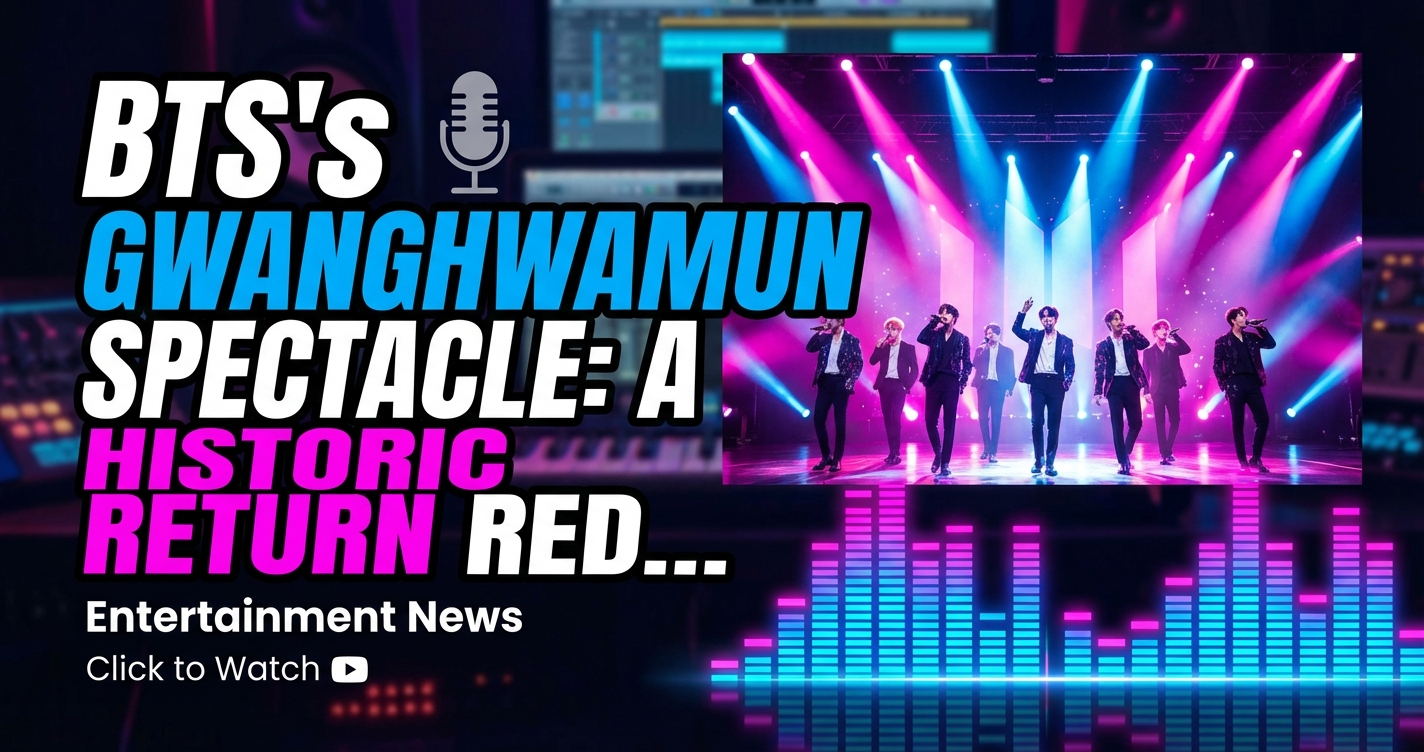
BTS’s Gwanghwamun Spectacle: A Historic Return Redefining Live Music
Seoul’s historic Gwanghwamun Square recently transformed into the epicenter of the music world, hosting a spectacle that wasn’t just a concert, but a cultural phenomenon. Global titans BTS made their much-anticipated collective return to the stage with “BTS THE COMEBACK LIVE | ARIRANG,” drawing an astonishing 100,000+ physical attendees to the heart of the South Korean capital. Broadcast globally on Netflix, this wasn’t merely a performance; it was a powerful statement, an emotional reunion, and a new benchmark for live entertainment.
For an industry constantly grappling with evolving consumption habits and the delicate balance between digital and physical experiences, BTS has, once again, provided a masterclass. The scale of this event — a free public concert in one of Seoul’s most significant historical sites — is virtually unprecedented in modern K-Pop history, solidifying the group’s unparalleled status not just as musical artists, but as cultural institutions.
A Stage Steeped in History: Gwanghwamun’s Symbolic Power
Choosing Gwanghwamun Square as the venue was a stroke of genius, resonating deeply with both Korean citizens and fans worldwide. This isn’t just a vast public space; it’s a site of immense historical and national significance, flanked by the majestic Gyeongbokgung Palace and iconic statues of King Sejong the Great and Admiral Yi Sun-sin. To host a contemporary music concert of this magnitude here is to imbue the performance with a layer of national pride and cultural weight rarely seen.
“It’s more than just a concert; it’s a national event,” observed one veteran music critic. “By choosing Gwanghwamun, BTS elevated their performance beyond mere entertainment, connecting it directly to Korea’s identity and showcasing it to the world. It’s a powerful statement of their role as cultural ambassadors.” This deliberate choice echoes their past engagements, from speaking at the United Nations to performing at the Grammys, always intertwining their artistic endeavors with a broader cultural narrative.
The Hybrid Frontier: Netflix and the Global Audience
While 100,000 people in physical attendance is a staggering figure, the true reach of “THE COMEBACK LIVE | ARIRANG” was exponentially amplified by its global broadcast on Netflix. This hybrid model – a massive live public event combined with a premium streaming partnership – represents the cutting edge of entertainment distribution. It’s a strategy perfected by BTS during the pandemic with their record-breaking online concerts like ‘BANG BANG CON’ and ‘Map of the Soul ON:E,’ which demonstrated their ability to command millions of simultaneous viewers worldwide.
This Netflix collaboration takes that blueprint and supercharges it. It ensures high-quality production, accessibility, and a massive global footprint, allowing fans who couldn’t be in Seoul to share in the communal experience. For streaming platforms, securing such exclusive content from an act of BTS’s caliber is a significant coup, driving subscriptions and solidifying their position in the live music space. It also sets a new bar for how artists can leverage digital partners to transcend geographical limitations and connect with their entire fanbase, rather than just those who can afford tickets to a stadium tour.
Beyond the Music: Economic and Cultural Ripple Effects
The economic impact of such an event cannot be overstated. A free concert drawing 100,000 people to central Seoul translates to a substantial boost for local businesses, tourism, and hospitality. Hotels, restaurants, merchandise vendors, and transportation services all experience a significant surge. Beyond the immediate economic benefits, the global exposure from the Netflix broadcast acts as an invaluable advertisement for South Korea itself, further fueling the ‘Hallyu’ or Korean Wave phenomenon.
Industry insiders have long noted BTS’s immense contribution to South Korea’s GDP and cultural soft power. This Gwanghwamun performance is a stark reminder of that power, showcasing a vibrant, modern Korea to an eager international audience, reinforcing its status as a global cultural trendsetter. It’s a testament to how popular culture, when wielded by artists of BTS’s magnitude, can be a potent force for national branding and economic growth.
What This Means for BTS’s Future & K-Pop’s Trajectory
The “hiatus” period, marked by members exploring solo ventures, fueled much speculation about the group’s future. This Gwanghwamun spectacle emphatically puts those doubts to rest, reaffirming BTS’s collective power and magnetic appeal. It demonstrates that even as individual members pursue successful solo careers (think Jung Kook’s collaborations or V’s OSTs), their synergy as a group remains unparalleled and their fanbase’s devotion undimmed.
For the broader K-Pop industry, BTS continues to be the North Star. Their ability to innovate with hybrid events, command global attention in iconic locations, and seamlessly integrate digital and physical fan engagement sets a formidable precedent. Other groups will undoubtedly study this model, but replicating the sheer scale and cultural significance will be a Herculean task.
What’s next? While specific tour dates remain elusive, this performance strongly suggests that BTS is far from done with large-scale collective endeavors. Expect more strategic digital partnerships, perhaps another groundbreaking album announcement, and continued individual artistic growth from the members. The Gwanghwamun comeback wasn’t just a record-breaker; it was a powerful statement: the kings of K-Pop are back, and they’re still writing the rules.