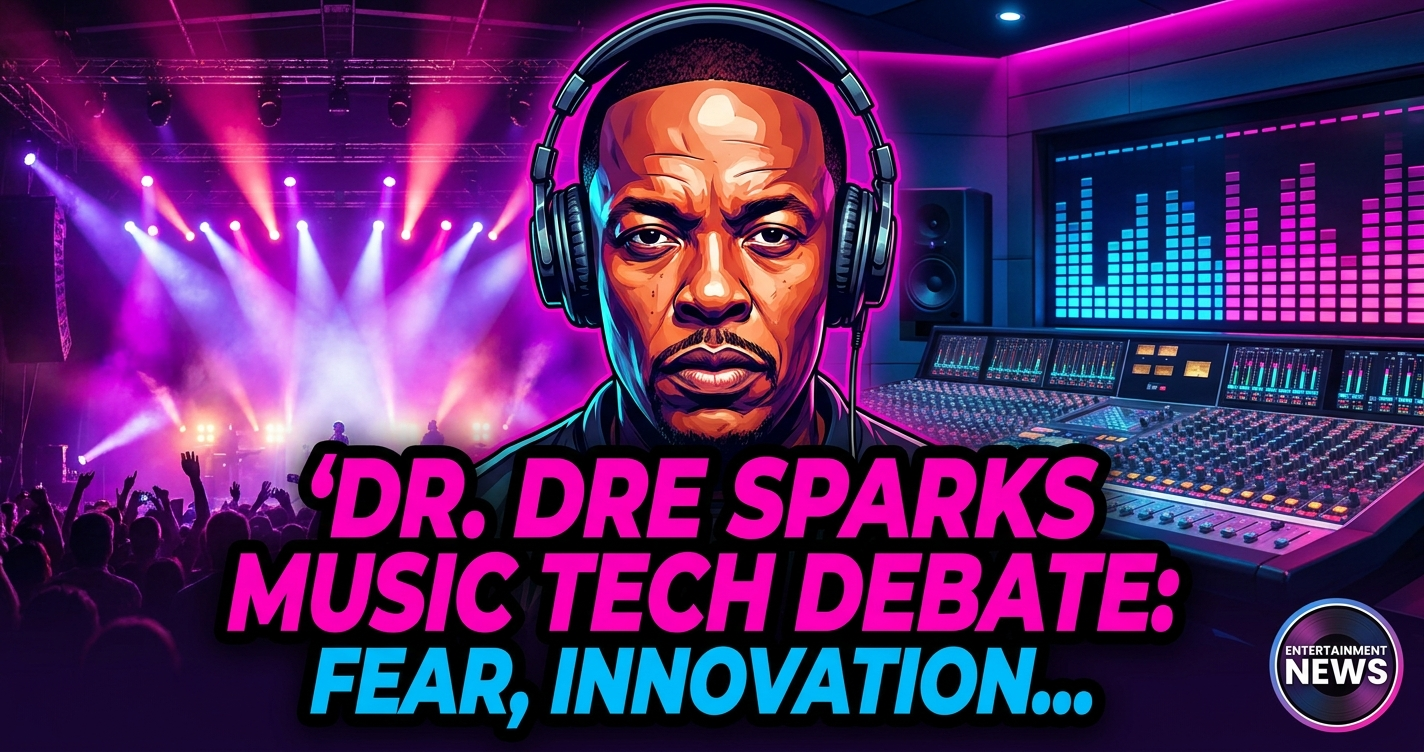
Dr. Dre Throws Down the Gauntlet: Is Fear Stifling Creativity?
The music industry is no stranger to seismic shifts, but few moments land with the force of a pronouncement from Dr. Dre. The legendary producer and mogul recently stirred the pot, suggesting that artists who express apprehension about emerging music creation technologies might simply be struggling with their own creative output. It’s a bold statement from a man whose career has consistently pushed sonic boundaries, and it immediately ignited a fiery debate that’s been simmering for months.
Dre’s sentiment isn’t just a casual observation; it’s a challenge to the very notion of artistic purity versus technological advancement. For decades, he’s been at the forefront of innovation, from revolutionizing hip-hop production to shaping the sound of an entire generation. His embrace of new tools, from drum machines to digital audio workstations, has always been about expanding the palette, not limiting it. So, when he implies that a fear of new tech might stem from a deeper creative block, it resonates with his personal history of relentless innovation.
Yet, this perspective clashes head-on with a growing chorus of artists, labels, and industry bodies who view the rapid proliferation of certain creation platforms not as a tool for expansion, but as a direct threat to intellectual property, fair compensation, and the very definition of human artistry. The tension is palpable: are we witnessing a new frontier for boundless creativity, or a slippery slope towards devaluation and widespread infringement?
The Industry’s Counter-Movement: Defining Authenticity and Protecting Rights
While Dre urges artists to look inward, the broader music industry is looking outward, scrambling to establish guardrails. Major players are moving swiftly to address the ethical and legal complexities these new technologies present. Take Apple Music, for instance, which has announced plans to implement labeling for songs derived from these platforms later this year. Spotify has already taken a similar step, identifying profiles that appear to be generated by algorithms as “AI Personas.”
These initiatives aren’t just about transparency; they’re a direct response to a burgeoning crisis of trust and ownership. The core concern revolves around the unauthorized ingestion of copyrighted material. Industry giants, including the Recording Industry Association of America (RIAA), the International Federation of the Phonographic Industry (IFPI), the Grammys, and SAG-AFTRA, have formed a powerful coalition. Their united front advocates for a comprehensive industry-wide labeling program, alongside robust legal frameworks to ensure artists are properly credited and compensated, and that their work isn’t exploited without consent.
Sources close to the labels suggest that this collective action is seen as a crucial defensive measure. The stakes are immense: without clear guidelines, the value chain of music creation, from songwriter to performer to producer, could be severely disrupted, potentially eroding the very foundation of the modern music business.
Echoes of the Past: Adapting to Technological Tides
This isn’t the first time the music world has grappled with disruptive technology. Each major innovation, from the rise of sampling in the 80s and 90s to the widespread adoption of Auto-Tune, and the seismic shift to digital distribution in the early 2000s, has brought its own set of fears and opportunities. Early sampling faced fierce legal battles and accusations of theft, eventually leading to a complex, often expensive, clearance system that shaped an entire genre. Auto-Tune, initially seen by some as a crutch for less talented vocalists, became an indispensable creative effect for others, defining the sound of pop and R&B for decades.
The digital revolution, epitomized by file-sharing platforms, nearly brought the industry to its knees before eventually giving rise to the streaming economy we know today. In each instance, fear eventually gave way to adaptation, new business models, and unforeseen creative avenues. The question now is whether the current wave of technological advancement represents a similar, albeit accelerated, evolutionary step, or a more fundamental challenge to the concept of authorship itself.
The Creator’s Crossroads: Tool or Threat?
For artists, the landscape is increasingly complex. On one hand, these new tools promise unprecedented accessibility and creative power. Imagine a solo artist able to conjure a full orchestral arrangement with a few prompts, or a songwriter overcoming writer’s block with intelligent suggestions. The potential for democratizing music creation and pushing artistic boundaries is undeniable. New genres could emerge, unheard sounds could be explored, and the barrier to entry for aspiring musicians could be significantly lowered.
On the other hand, the specter of these platforms being trained on vast troves of uncompensated, copyrighted material raises legitimate concerns about exploitation. If an algorithm can mimic a specific artist’s style or generate an entirely new track in their voice, what does that mean for their livelihood and unique artistic identity? The debate isn’t merely about fear; it’s about control, compensation, and the very definition of artistic integrity in an increasingly automated world. Many artists, particularly those outside the major label ecosystem, are concerned about becoming obsolete or having their unique creative fingerprints diluted and devalued.
What to Watch For Next
The coming months will be crucial. Expect to see continued legislative efforts pushing for stronger copyright protections and clearer definitions of fair use in the context of these new technologies. The effectiveness of labeling initiatives from platforms like Apple Music and Spotify will be closely scrutinized. Beyond the legal battles, the creative community itself will continue to grapple with how to harness these powerful tools responsibly, ensuring that innovation serves human artistry rather than eclipsing it. The tension between embracing the future and protecting the past will define the next chapter of the music industry.