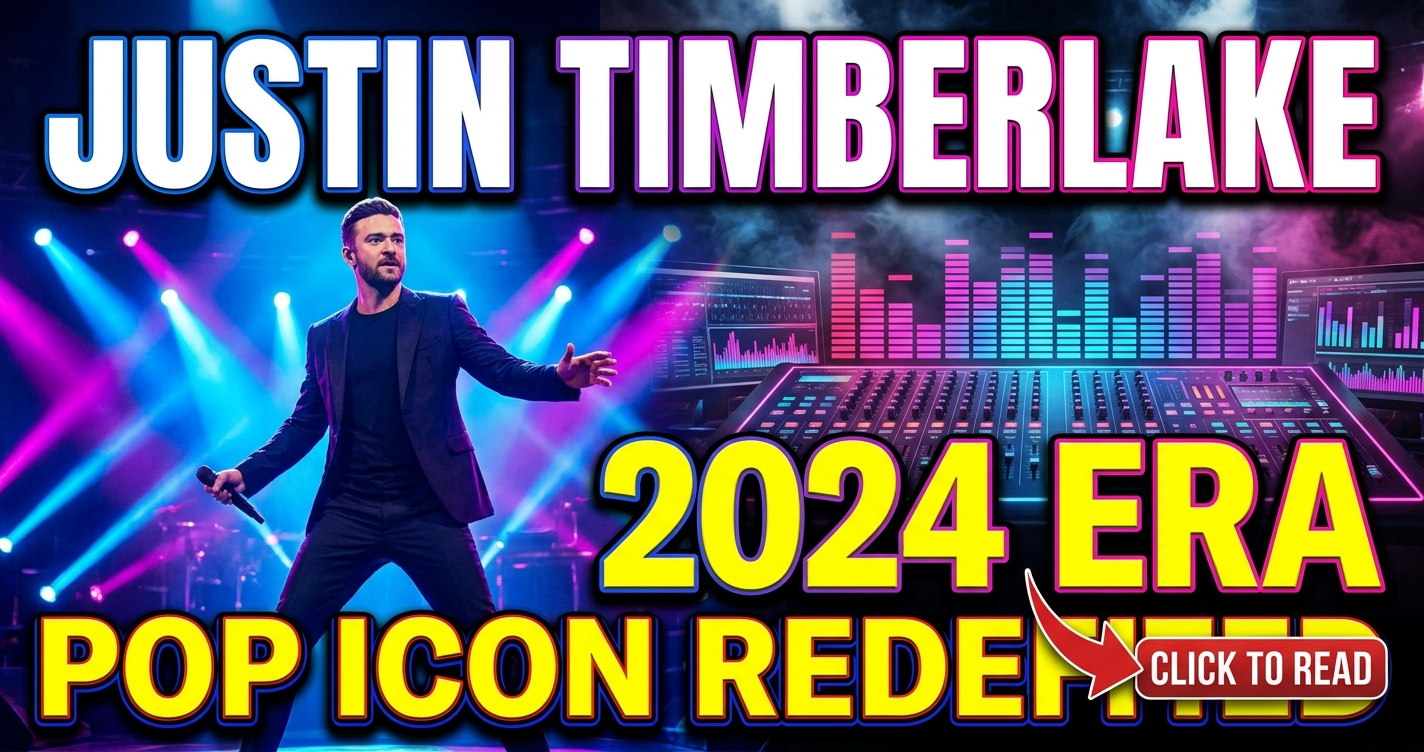
Justin Timberlake’s 2024 Era: Can a Pop Icon Redefine His Legacy?
For over two decades, Justin Timberlake has been a gravitational force in pop culture. From the synchronized moves of *NSYNC* to his Grammy-laden solo career, he’s consistently navigated the fickle tides of fame. Yet, his 2024 return, spearheaded by the album Everything I Thought It Was and the expansive *The Forget Tomorrow World Tour*, felt different. It wasn’t just a comeback; it was a deliberate attempt to mark a new era, a recalibration in a music industry that has fundamentally shifted, and a public gaze that has become increasingly critical.
The journey from boy band heartthrob to acclaimed solo artist is a path few traverse with such resounding success. Timberlake’s initial pivot from *NSYNC* – whose multi-platinum albums like No Strings Attached cemented their place in pop history – to his 2002 solo debut Justified was a masterclass in artistic reinvention. Collaborating with visionary producers like The Neptunes (Pharrell Williams and Chad Hugo) and Timbaland, he shed the polished pop veneer for a more sophisticated, R&B-infused sound. This strategic shift not only distinguished him from his boy-band past but also garnered immediate critical acclaim, Grammy recognition, and a string of top 10 Billboard hits, laying a blueprint for future pop stars looking to evolve.
Navigating the Shifting Sands of the Modern Music Industry
Fast forward to 2024, and the landscape Timberlake re-entered is vastly different from the one he dominated in the early 2000s. The industry has fragmented; streaming dictates consumption, social media amplifies every misstep, and artists are under constant scrutiny. For an artist with Timberlake’s extensive history, this means not just competing with emerging talents, but also confronting a re-evaluation of his past through a contemporary lens.
His latest album, Everything I Thought It Was, saw Timberlake leaning back into his signature blend of pop and R&B, with production credits from familiar faces like Timbaland and Louis Bell. While the album delivered classic JT grooves and introspective lyrics, its reception was met with a more nuanced response than his earlier works. Critics noted its polished sound but debated its ability to truly break new ground in a genre that has seen considerable evolution. This isn’t necessarily a failure, but rather a reflection of the challenge faced by legacy artists: how to honor your established sound while still pushing forward in a landscape obsessed with novelty and authenticity.
Adding another layer to this “new era” is the ongoing cultural conversation surrounding Timberlake’s past actions. Revelations and re-examinations concerning his relationships and public controversies – particularly those involving Britney Spears and Janet Jackson – have undeniably shaped public perception. While Timberlake has publicly expressed remorse and addressed aspects of his past, the court of public opinion remains a formidable and often unforgiving entity. For any artist, especially one as high-profile as Timberlake, navigating these discussions while promoting new music is a delicate balancing act, requiring more than just hit singles; it demands a genuine connection and perceived growth.
The Forget Tomorrow World Tour: A Statement of Enduring Appeal
Despite the critical nuances of his album, The Forget Tomorrow World Tour was a resounding success, underscoring Timberlake’s undeniable prowess as a live performer and his enduring appeal. Selling out arenas globally, the tour was a spectacle, blending his new material with an extensive catalog of classics. This is where Timberlake truly shines: his charisma, vocal talent, and unparalleled stage presence transform a concert into an event. The tour demonstrated that while album sales and streaming numbers tell one story, the power of a live show to connect with a loyal fanbase and attract new listeners remains paramount in an artist’s longevity.
The tour’s success also highlights a broader industry trend: for established artists, touring has become the primary revenue driver and a powerful means of maintaining relevance. Acts like U2, Taylor Swift, and Beyoncé consistently prove that a well-executed global tour can reaffirm an artist’s status, generate massive revenue, and create cultural moments far beyond album cycles.
What to Watch For Next
Justin Timberlake’s 2024 era, marked by a new album and tour, was less about a radical reinvention and more about a strategic reassertion of his place in the pop firmament. He proved he can still command stages and deliver his signature sound. The challenge moving forward will be to consistently engage with the evolving cultural zeitgeist, both musically and personally. Can he continue to evolve his sound in meaningful ways, perhaps through unexpected collaborations or deeper thematic explorations? Will his public narrative continue to shift towards a more universally appreciated legacy? The answers will not only define Timberlake’s future but also offer valuable insights into how enduring pop icons navigate an ever-changing industry and an increasingly discerning audience. DailyDrama will be watching closely.