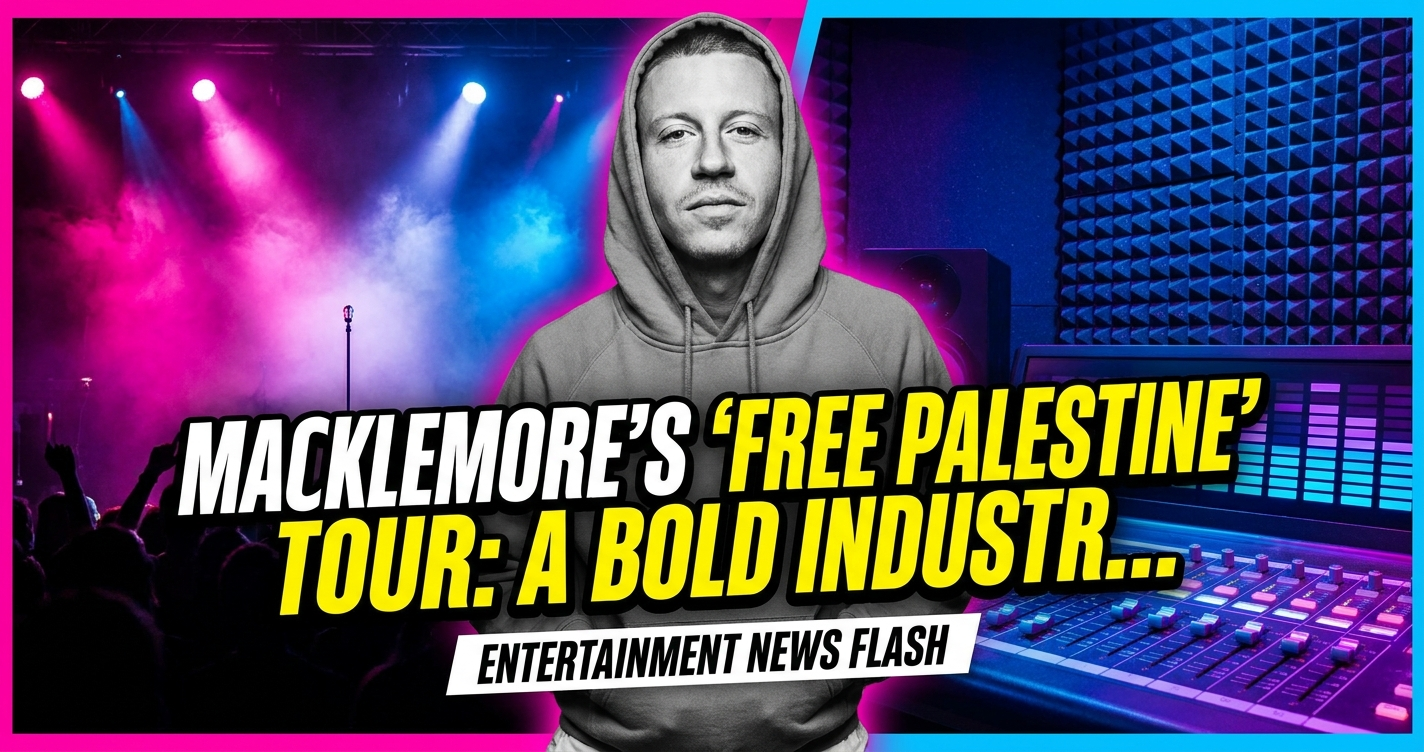
Macklemore’s ‘Free Palestine’ Tour: A Bold Industry Statement Amidst Rising Tensions
In an entertainment landscape often criticized for its cautious silence on contentious global issues, Macklemore, the Grammy-winning artist known for hits like “Thrift Shop” and “Same Love,” has once again proven he’s not one to shy away from the spotlight – especially when it comes to social justice. His recent announcement of a “Free Palestine Tour,” featuring initial dates in London, has sent ripples across the industry, sparking both fervent support and predictable controversy.
It’s a move that, for many, solidifies Macklemore’s position not just as a successful musician, but as an increasingly vocal and committed activist. Coming on the heels of his viral track “Hind’s Hall,” which condemned the conflict in Gaza and U.S. support for Israel, this tour isn’t merely a series of concerts; it’s a defiant declaration, a cultural and political rallying cry in a time of deep division.
The Unveiling: Dates, Venues, and the Call for Collective Solidarity
While details are still unfolding, what we know for certain is that the tour is real and rapidly coming together. Macklemore, whose real name is Benjamin Haggerty, has been candid about the whirlwind nature of its organization. He recently shared that he had spent the preceding week personally reaching out to fellow artists – specifically those who have previously lent their voices and platforms to express solidarity with the Palestinian people, acknowledging the significant professional and personal risks involved.
“I’ve spent the last week reaching out to artists who have shown up and used their stages to stand in solidarity with the Palestinian people, regardless of the consequences,” Macklemore stated, painting a clear picture of the collaborative spirit he aims to foster. This isn’t just a Macklemore show; it’s an invitation for a collective artistic stand. The initial focus on London dates suggests a strategic entry point into the European market, which has often seen a more pronounced public discourse on the Israeli-Palestinian conflict among artists and audiences alike.
The swiftness with which this tour has materialized underscores an urgency that transcends typical concert planning cycles. It speaks to a deep conviction and perhaps a frustration with the perceived inaction or silence from many corners of the music world. The question now isn’t just *who* will join him, but *how many* will answer the call, and what impact this collective will have beyond the stage.
A Rapper’s Evolution: From Pop Charts to Political Pulpit
Macklemore’s journey to this moment isn’t a sudden pivot. While he achieved global superstardom with mainstream hits like “Thrift Shop” and “Can’t Hold Us” alongside Ryan Lewis, his discography has long featured tracks that delve into social issues. “Same Love,” a powerful anthem for LGBTQ+ rights, was a groundbreaking moment in mainstream hip-hop, directly contributing to public discourse during the marriage equality movement.
Later, his solo work continued this trajectory, often touching on themes of addiction, consumerism, and racial injustice. What’s different now is the directness and the specific, highly politicized nature of his current activism. The “Free Palestine Tour” is a significant escalation, moving beyond song lyrics to concrete, real-world action, using his platform to organize and amplify a movement. It’s a testament to an artist who, despite achieving commercial success, has consistently sought to align his art with his conscience, even when it means navigating treacherous waters.
The Industry’s Tightrope: Navigating Activism and Backlash
The entertainment industry, for all its progressive posturing, remains a business deeply sensitive to public perception and economic consequences. Artists who take a strong political stance, particularly on issues as polarizing as the Israeli-Palestinian conflict, often face significant backlash. This can range from fan boycotts and online harassment to more severe professional repercussions, including canceled gigs, lost endorsement deals, and even blacklisting by promoters or venues.
Macklemore’s decision to launch this tour, especially after the widespread attention to “Hind’s Hall,” demonstrates a remarkable courage. It places him squarely in a lineage of activist musicians – from Harry Belafonte and Joan Baez to Rage Against the Machine and The Chicks – who have used their art as a vehicle for change, often at great personal and professional cost. In an era where “cancel culture” is a constant threat, his willingness to potentially alienate a segment of his audience or industry gatekeepers for a cause he believes in is a powerful statement about artistic integrity over commercial expediency.
The challenge for Macklemore and his collaborators will be to sustain this momentum, ensuring the message resonates beyond the echo chambers of existing supporters and truly contributes to broader awareness and dialogue, rather than just preaching to the choir. This tour also puts pressure on other artists who have expressed solidarity privately to now consider stepping into the public arena, potentially galvanizing a new wave of collective musical activism.
More Than a Concert: A Statement in Sound
Ultimately, the “Free Palestine Tour” is poised to be more than just a series of musical performances. It’s a live, traveling manifesto. It aims to generate awareness, foster solidarity, and undoubtedly, raise funds for humanitarian efforts. But perhaps more importantly, it seeks to shift the narrative, to demonstrate that using one’s artistic platform for deeply held political beliefs is not only valid but necessary.
By bringing together a roster of like-minded artists, Macklemore is creating a powerful, collective voice. This tour could serve as a blueprint for future artist-led initiatives on other pressing global issues, proving that independent, grassroots organization can overcome the hesitations of larger corporate entities. It’s a reminder that music, at its core, has always been a tool for protest, comfort, and community building.
What to watch for next: The full list of participating artists, potential additional dates beyond London, and the industry’s broader reaction – specifically, whether other prominent artists and promoters will be inspired to follow suit or continue their cautious distance.