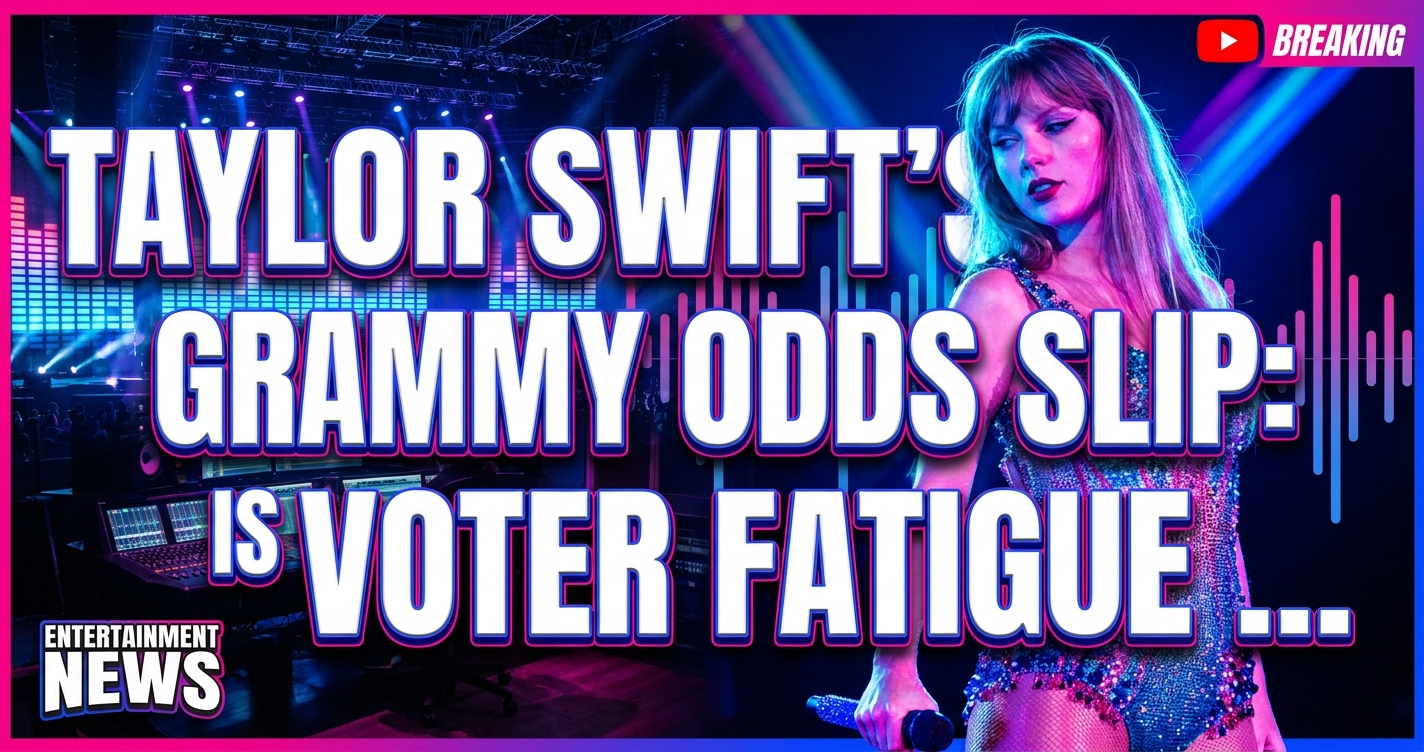
Taylor Swift’s Grammy Odds Slip: Is Voter Fatigue Clouding the *Midnights* Era?
It’s a truth universally acknowledged in the music industry that Taylor Swift is, quite simply, in a league of her own. From the record-smashing Eras Tour to a relentless, chart-topping string of re-records, her cultural omnipresence is undeniable. Yet, as the Grammy nomination window tightens, whispers from the gilded halls of awards season suggest a surprising turn: Swift’s odds for major categories, particularly Album of the Year for *Midnights*, are reportedly slipping.
Just weeks after a dazzling showing at the MTV Video Music Awards, where she swept multiple top honors, and amidst a continuous headline-generating run, one would assume the momentum for Grammy gold would be unstoppable. But as our sources close to the Recording Academy tell it, the narrative isn’t as straightforward as her stadium-filling success might imply. Has the sheer scale of her current reign inadvertently created a unique challenge for Grammy voters?
The Unstoppable Force Meets the Immovable Grammy Object
Taylor Swift isn’t just an artist; she’s a phenomenon. Her ability to command attention, break records, and redefine industry standards is unmatched. *Midnights*, released in October 2022, was another commercial juggernaut, spawning multiple No. 1 hits and cementing her status as a pop titan. Critically, it was generally well-received, though perhaps not with the same genre-bending, boundary-pushing raves that greeted her previous Album of the Year winners, *folklore* and *1989*.
The Grammys, however, operate on a different wavelength than chart performance or even general critical acclaim. The Academy, comprising thousands of music professionals, often seeks out specific narratives: artistic evolution, a breakthrough moment, or an album that truly defines its year. While *Midnights* certainly defined its year commercially, the question becomes: did it define it *artistically* in a way that resonates with the diverse and often unpredictable Grammy voting bloc?
A Crowded Field and the Shadow of "Voter Fatigue"
This year’s Grammy landscape for Album of the Year is arguably one of the most competitive in recent memory. Powerhouses like SZA’s critically adored and commercially dominant *SOS*, Olivia Rodrigo’s sharp and acclaimed *GUTS*, Miley Cyrus’s introspective *Endless Summer Vacation*, and Lana Del Rey’s sprawling, artistic *Did You Know That There’s a Tunnel Under Ocean Blvd* are all vying for attention. Then there’s the potential for breakthrough artists or surprise contenders to shake things up even further.
In such a stacked year, the concept of "voter fatigue" becomes a very real factor. Swift already holds the record for most Album of the Year wins by a female artist, with three to her name. While an unprecedented fourth would be historic, industry chatter suggests some voters might be inclined to spread the wealth, seeking fresh narratives or rewarding artists who haven’t had their moment in the AOTY spotlight. As one longtime Academy member reportedly mused, "Taylor is incredible, but sometimes, voters want to feel like they’re discovering something, or celebrating a different kind of journey."
Decoding *Midnights*’ Grammy Appeal
So, what about *Midnights* itself? It’s a cohesive, synth-pop-driven album that harks back to Swift’s earlier pop sensibilities while infusing a mature, introspective lyrical depth. Tracks like "Anti-Hero" and "Karma" became immediate anthems. However, compared to the indie-folk pivot of *folklore* or the genre-defining pop of *1989*, *Midnights* might be perceived by some as a consolidation of her strengths rather than a radical reinvention. The Academy often favors albums that push boundaries or showcase significant artistic growth, and while *Midnights* is undoubtedly excellent, it might not hit that particular sweet spot for a subset of voters looking for the "next big thing" or a profound artistic statement.
It’s a subtle distinction, but one that can make all the difference in a tight race. The album’s immense commercial success, paradoxically, could also work against it in the general fields, as the Grammys sometimes lean towards projects that are critically lauded but perhaps not *as* omnipresent in the mainstream, to highlight artistic merit beyond sheer popularity.
What’s Next for Swift and the Grammys?
It’s crucial to remember that falling odds don’t equate to a lack of nominations or even a guaranteed loss. Taylor Swift is a formidable force, and *Midnights* is still a strong contender. She’s almost certainly a lock for nominations in Pop categories, and a General Field nod is still highly probable. The conversation here isn’t about her overall legacy, which is firmly etched in music history, but rather the nuanced, often political dance of awards season.
What to watch for next: The official Grammy nominations announcement will be the true test, revealing whether the industry chatter holds weight or if Swift’s undeniable star power will once again defy expectations. One thing is certain: the road to the Grammys is rarely predictable, even for the biggest stars on the planet.