The Unseen Power: How Tiny Desk Concerts Redefined Music Authenticity
In an era saturated with highly polished music videos, elaborate stage productions, and meticulously crafted social media personas, one unassuming corner of a public radio office has quietly, yet profoundly, reshaped how we experience music. NPR Music’s Tiny Desk Concerts, born from a simple idea by host Bob Boilen, has evolved from an indie music blog novelty into an undeniable cultural force, a critical stop for artists ranging from budding talents to global superstars. It’s more than just a performance; it’s an audition for authenticity, a masterclass in stripping away the superfluous to reveal the pure essence of an artist.
What began in 2008 as an impromptu solution for a cramped office space has blossomed into a phenomenon watched by millions, fostering genuine connections between artists and audiences in a way few other platforms can. The impact isn’t just about viral moments; it’s about a fundamental shift in industry perception regarding what truly resonates in the digital age.
The Unlikely Blueprint for Raw Performance
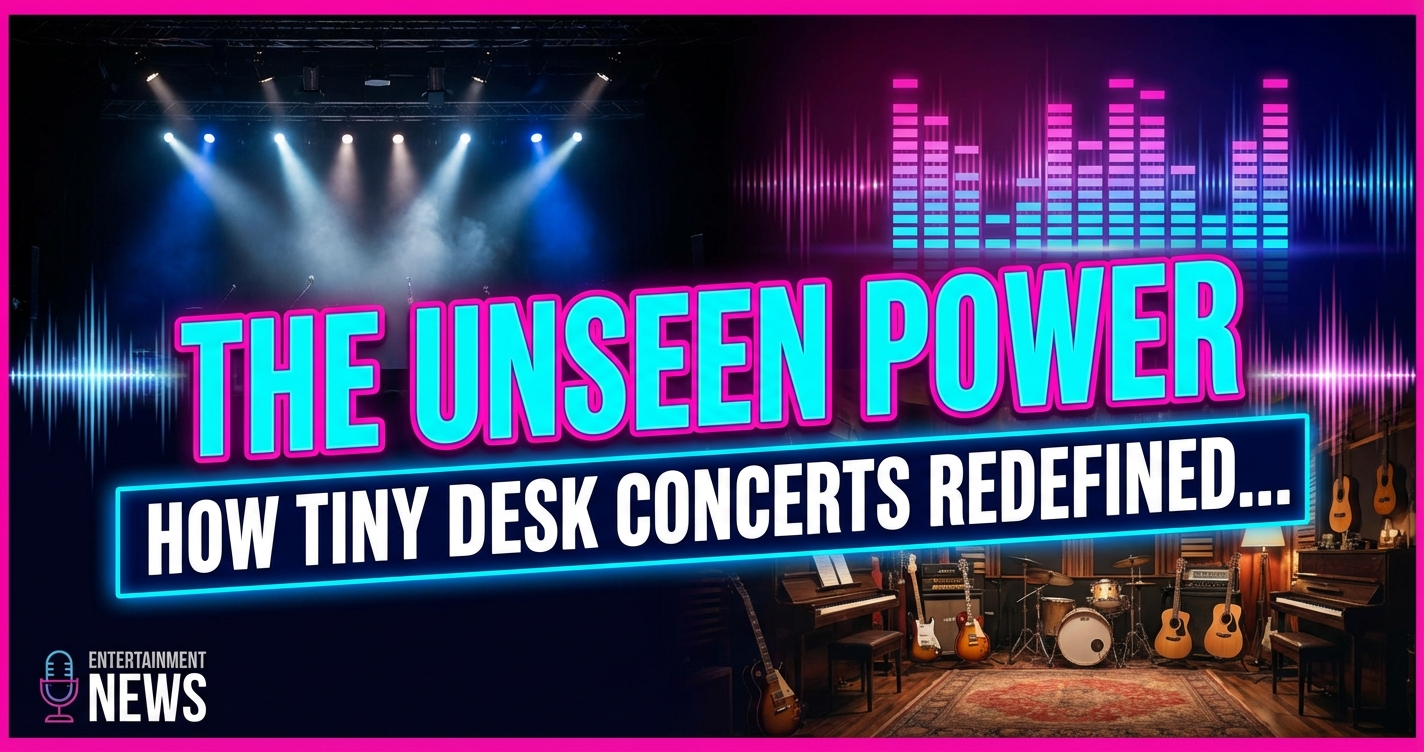
The premise is almost comically simple: an artist, often accompanied by their band, performs a short set at a literal desk in a bustling office environment. There are no smoke machines, no pyrotechnics, no elaborate lighting rigs. The audience is a small group of NPR staff, sometimes crammed into the background, offering a genuine, unpretentious vibe. This stark simplicity is precisely its genius.
In a recent industry panel, a prominent A&R executive, speaking anonymously due to ongoing label negotiations, remarked that the Tiny Desk format “forced artists to be vulnerable, to let their guard down. It proved that good music, performed well, doesn’t need all the bells and whistles to captivate.” This sentiment echoes across the industry, where the focus has increasingly shifted towards showcasing raw talent and personality.
This stripped-back approach offers a stark contrast to the often-impenetrable sheen of mainstream music production. It humanizes artists, allowing viewers to see them not just as performers, but as musicians deeply connected to their craft. For many, it’s the closest they’ll get to witnessing an intimate rehearsal, a moment of pure, unadulterated artistry.
From Indie Darling to Industry Staple
Initially, Tiny Desk was a haven for indie and folk artists, aligning perfectly with NPR’s established musical leanings. But its reach quickly expanded. The moment artists like Adele delivered a hauntingly beautiful performance, or T-Pain showcased his astounding un-autotuned vocals, the series transcended niche appeal. Suddenly, artists from every genre imaginable – hip-hop, R&B, jazz, classical, electronic, country – were clamoring for a spot.
Its cross-genre appeal is a testament to its democratic nature. Whether it’s the intricate wordplay of a rapper like Mac Miller (whose performance remains one of the most poignant and widely viewed) or the powerhouse vocals of a global pop star, the desk serves as an equalizer. It forces artists to rely solely on their musical prowess and stage presence, creating a powerful litmus test for their talent.
Managers and labels now see a Tiny Desk appearance not just as a promotional opportunity, but as a critical stamp of credibility. “It’s become a rite of passage,” shared a veteran music publicist, emphasizing that “a strong Tiny Desk can do more for an artist’s long-term perception than a massive late-night TV slot. It builds a deeper connection.”
The Tiny Desk Effect: A Marketing Powerhouse
The “Tiny Desk Effect” is now a recognized phenomenon. A compelling performance can lead to significant bumps in streaming numbers, album sales, and tour attendance. It’s particularly potent for emerging artists, offering unparalleled exposure and a direct introduction to a vast, engaged audience.
Beyond the direct metrics, Tiny Desk has influenced the broader music landscape. We’ve seen a surge in similar stripped-down performance series, from YouTube’s various acoustic sessions to platforms like COLORSXSTUDIOS, all seeking to capture that elusive blend of intimacy and authenticity. Yet, few have replicated the unique charm and consistent quality of the original.
The series has proven that in an increasingly fragmented media environment, there’s still a profound hunger for genuine artistic expression. It champions musicianship over spectacle, storytelling over flash, and substance over surface-level hype. This focus on authenticity resonates deeply with a generation of listeners wary of overly commercialized content.
The Enduring Legacy and What’s Next
More than a decade on, Tiny Desk Concerts continues to thrive, a consistent beacon of musical integrity in a constantly shifting industry. It has cemented its place not just as a showcase, but as an essential historical archive of contemporary music, capturing artists at pivotal moments in their careers, often revealing sides of them rarely seen elsewhere.
Its legacy is a powerful reminder that sometimes, the most impactful innovations come from the simplest ideas. By creating a space where music can simply *be*, Tiny Desk has not only uplifted countless artists but has also enriched the listening experience for millions. As the music industry continues to evolve, pushing boundaries with AI and immersive technologies, the humble desk in Washington D.C. stands as a testament to the enduring power of raw, human talent.
What to watch for next: As the series inevitably inspires new iterations and spin-offs, the challenge will be to maintain that core authenticity. We’ll be keeping an eye on how new platforms attempt to replicate this intimacy, and which artists use these stripped-down formats to forge deeper, more lasting connections with their fans.