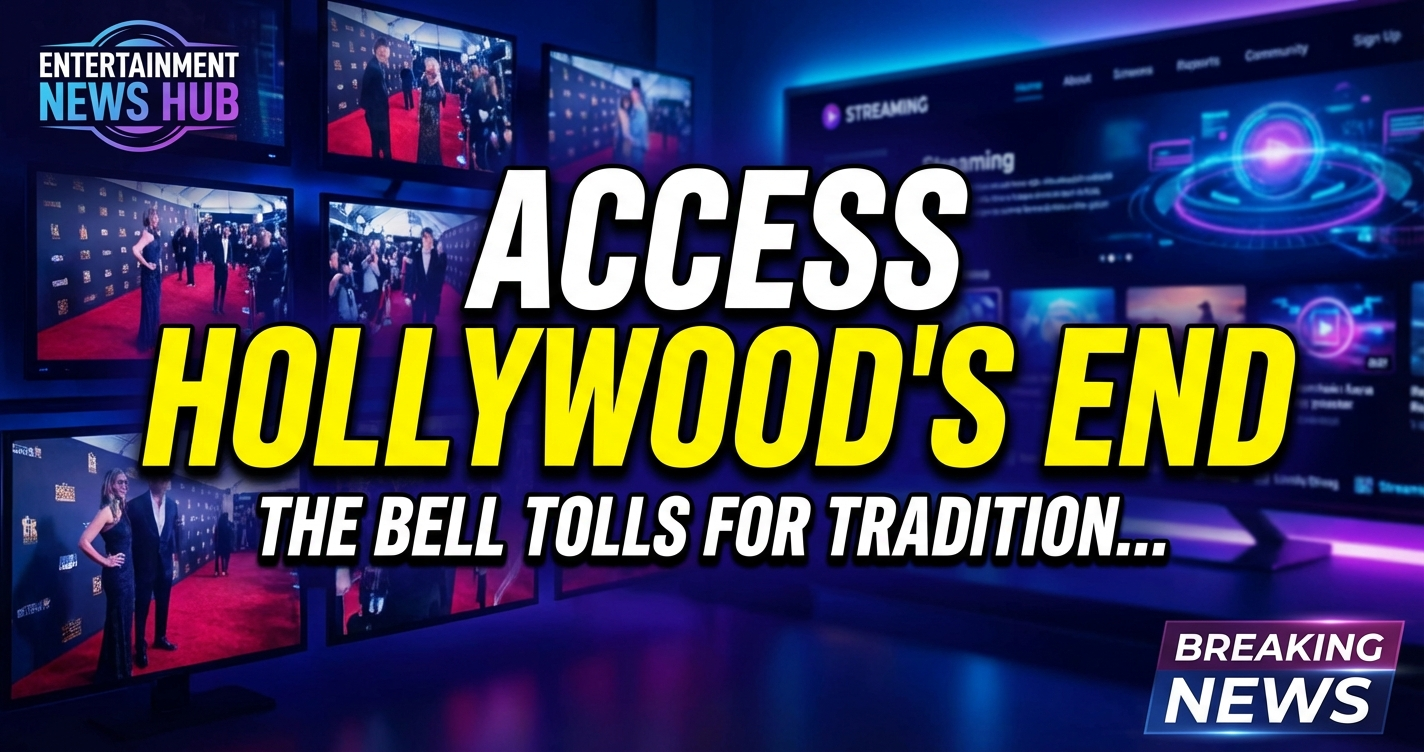
The Red Carpet Fades: ‘Access Hollywood’ Cancellation Signals a Seismic Shift in Entertainment News
It’s official: after three decades of delivering daily celebrity scoops, red carpet glamour, and behind-the-scenes exclusives, Access Hollywood and its daytime counterpart, Access Daily, are hanging up their microphones. NBCUniversal’s decision to end all first-run syndication programs, effective March 13, 2024, wasn’t just a business move; it was a profound tremor in the landscape of entertainment journalism, signaling the accelerating decline of a once-dominant broadcast format.
For those of us who’ve spent years covering the ins and outs of Hollywood, the news, while jarring, wasn’t entirely unexpected. The writing has been on the wall for traditional syndicated programming for quite some time. The real story here isn’t just the loss of a familiar show, but what its demise reveals about the changing tides of media consumption, network strategy, and the very nature of celebrity access in the digital age.
The End of an Era, or Just a Strategic Pivot for NBCU?
When Access Hollywood first premiered in 1996, the media world was a vastly different place. E! Entertainment Television was still finding its footing, TMZ was a decade away, and social media was a nascent concept. Shows like Access, alongside stalwarts like Entertainment Tonight and Extra, were the gatekeepers of celebrity news, offering a daily dose of glamour and gossip that viewers eagerly awaited. They built a loyal audience by providing a polished, network-backed look into the lives of the rich and famous, often with unparalleled access to sets, premieres, and A-list interviews.
NBCUniversal’s move to shutter its entire first-run syndication slate isn’t a targeted attack on Access Hollywood alone. It’s a strategic retreat from a business model that, for major studios, has become increasingly untenable. Industry insiders have long whispered about the spiraling costs of producing daily content, negotiating complex affiliate deals with local stations, and battling for shrinking advertising dollars. As one veteran syndication executive, who requested anonymity, put it, “The economics just don’t add up anymore for these big-budget daily shows. The audience has fractured, and the revenue isn’t there to support it.”
This decision likely frees up significant resources for NBCU to invest further in its streaming platform, Peacock, and its owned-and-operated stations, where content can be controlled more tightly and monetized more effectively. It’s a clear signal that the future of network-backed entertainment content lies within their own digital ecosystems, not in the fragmented world of syndicated broadcast.
From Red Carpets to TikTok Feeds: The Shifting Sands of Celebrity News
The biggest nail in the coffin for shows like Access Hollywood has been the radical transformation of how audiences consume celebrity news. Why wait until 7 PM for a recap of last night’s premiere when you can see candid, unfiltered moments on Instagram, TikTok, or X (formerly Twitter) in real-time? Celebrities themselves have become their own content creators, bypassing traditional media gatekeepers to control their narratives and connect directly with fans.
This shift has eroded the perceived value of the “exclusive access” that shows like Access Hollywood once prided themselves on. When every fan with a smartphone is a potential paparazzo and every celebrity has a direct line to millions, the carefully curated, produced segments of traditional entertainment news often feel a step behind. It’s a speed game now, and the daily syndicated format simply can’t keep pace with the hyper-instantaneous nature of digital news.
The Syndication Stalwarts: Who’s Next?
The cancellation of Access Hollywood inevitably raises questions about the future of its long-time competitors. Entertainment Tonight, the grand dame of the genre, has been on air since 1981, and Extra, another consistent player, debuted in 1994. Both have attempted to adapt, integrating more digital content and social media elements, but they operate within the same challenging broadcast ecosystem.
While Paramount Global and Warner Bros. Discovery haven’t made similar sweeping declarations about their syndication slates, the writing is on the wall. The pressure to innovate, cut costs, or pivot entirely is immense. It wouldn’t be surprising to see further consolidation or even more cancellations in the coming years as studios double down on streaming and in-house content strategies.
What This Means for Hollywood and Beyond
The ripple effects of Access Hollywood‘s departure will be felt across the industry. For publicists, it means one less major outlet for traditional press junkets and set visits. For up-and-coming talent, it’s one less platform for gaining mainstream exposure. For local TV affiliates, it’s a gap in their programming schedule that will need to be filled, likely with cheaper, more generic content or local news expansions.
Ultimately, the cancellation of Access Hollywood isn’t just a nostalgic farewell to a TV institution. It’s a stark reminder that the entertainment industry is in a constant state of flux. The old models are crumbling, replaced by a faster, more fragmented, and often less polished digital landscape. The appetite for celebrity news remains, but the avenues through which it’s delivered are evolving at breakneck speed.
What to Watch For Next
Keep an eye on how other major studios with long-running syndicated shows respond. Will they double down on digital integration, or will we see more widespread exits from the first-run syndication business? The move by NBCUniversal is likely a harbinger, not an isolated incident. The future of entertainment news is less about appointment viewing and more about on-demand, personalized feeds. It’s a new world, and only the most agile will survive.