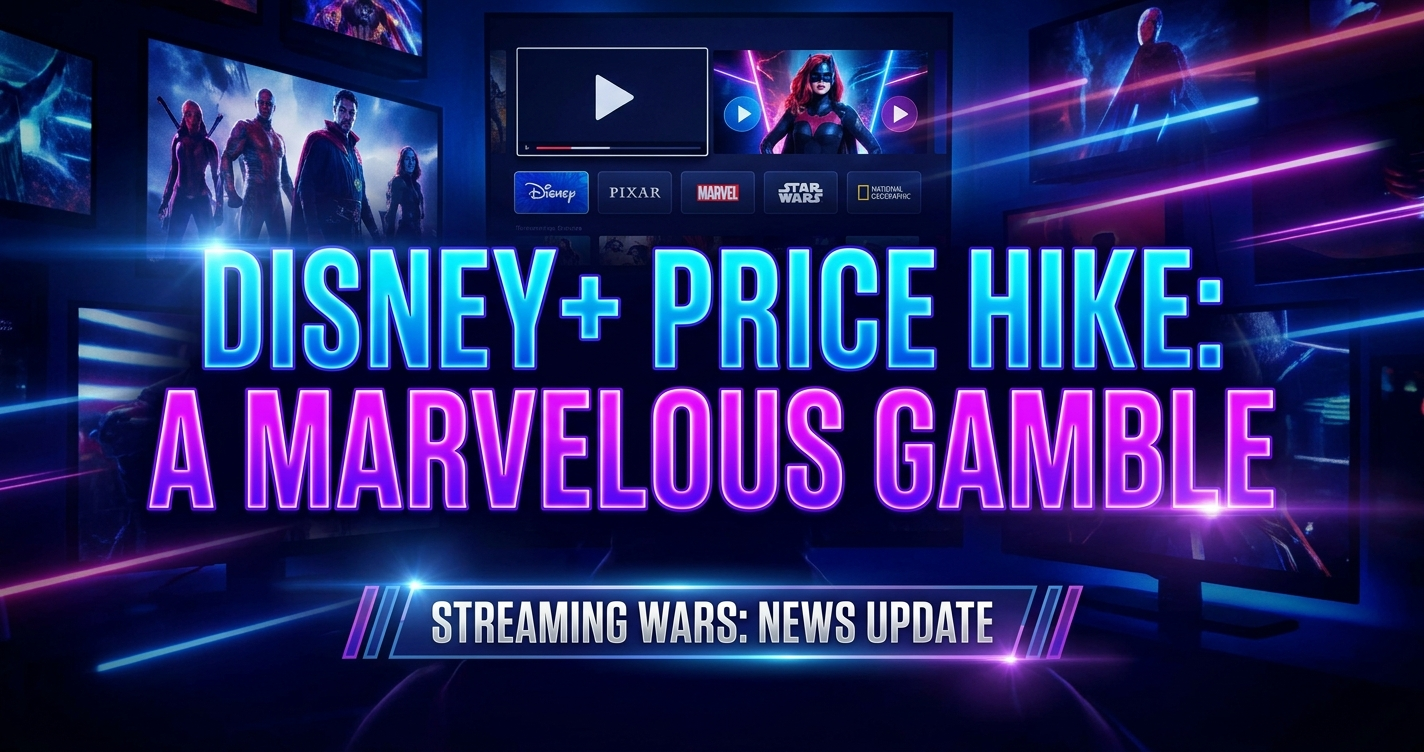
Disney+’s Price Hike: A Marvelous Gamble in the Streaming Wars
The streaming landscape just got a little pricier, and a lot more complicated. Disney+ subscribers are bracing for another significant price increase this October, a move that signals a clear shift in strategy for the entertainment giant. While the sting of a higher bill is undoubtedly real, Disney is sweetening the deal with a potent content package, including a highly anticipated new Marvel TV series and the continued integration of beloved network television staples. But is this a sustainable model, or a calculated gamble in an increasingly saturated market?
For those of us who’ve been chronicling the streaming wars since their inception, this moment feels less like a surprise and more like an inevitable evolution. Disney+ famously launched at an aggressively low price point, a strategic maneuver to rapidly build subscriber numbers and establish a formidable foothold against Netflix. That era, it seems, is well and truly over. As industry analysts have been predicting for months, the focus has unequivocally shifted from subscriber growth at all costs to achieving profitability. The October price hike, coupled with the continued push towards ad-supported tiers, is the clearest indication yet of this new imperative.
The Price of Pixels: Disney+’s Calculated Gamble
Make no mistake, this isn’t just about making more money; it’s about reshaping the value proposition of a streaming service. Disney executives, including CEO Bob Iger, have been vocal about the need to turn a profit on their direct-to-consumer businesses. The increased subscription fees for Disney+ and Hulu are a direct response to this mandate. While some subscribers will undoubtedly grumble—and perhaps even churn—the company is betting that its unparalleled content library, bolstered by new additions, will be sticky enough to retain a significant portion of its audience.
The centerpiece of this October content push is the new Marvel TV series, widely expected to be the highly anticipated second season of Loki. The first season of the Tom Hiddleston-led series was a critical and commercial darling, proving that Marvel Studios’ small-screen ventures could deliver the same cinematic scope and character depth as their blockbuster films. A new season of *Loki* isn’t just another show; it’s a major event designed to justify the higher price tag and remind subscribers of the unique, exclusive content that only Disney+ can offer. This strategy mirrors the early days of Disney+’s success, where flagship content like *The Mandalorian* drove initial sign-ups.
Network TV’s Streaming Lifeline: The Hybrid Model
Beyond the Marvel Cinematic Universe, Disney+ and Hulu are becoming increasingly important platforms for traditional network television. The October lineup includes weekly episodes from new seasons of ABC’s critically acclaimed comedy Abbott Elementary, long-running medical drama Grey’s Anatomy, and the fan-favorite FX cult hit It’s Always Sunny in Philadelphia. Even the venerable Dancing With the Stars, having made the leap from linear television to streaming exclusively on Disney+, continues its run.
This hybrid approach is a fascinating evolution in the broadcasting landscape. It’s a clear acknowledgment that linear television, while still generating significant revenue, needs a robust streaming counterpart to stay relevant and capture younger demographics. For Disney, it’s a win-win: these shows provide consistent, week-to-week engagement for streamers, offering a different kind of value than the typical binge-drop model. It also strengthens the perceived value of the Disney+/Hulu bundle, which allows the company to consolidate its vast content empire under fewer, more profitable digital roofs. This trend isn’t unique to Disney; Warner Bros. Discovery’s Max and Paramount Global’s Paramount+ are also heavily leveraging their network and cable content to bolster their streaming offerings.
The Shifting Sands of Streaming Rights: The Hunger Games Saga
While the focus is often on new releases, the movement of older, popular content is just as indicative of the industry’s flux. The mention of The Hunger Games franchise bouncing between streaming services, currently available on Netflix, highlights the incredibly complex and dynamic world of content licensing. Studios are increasingly opting to bring their crown jewel franchises back in-house for their own streaming platforms. However, lucrative licensing deals for older titles are still a significant revenue stream, leading to a merry-go-round of content that can be frustrating for viewers trying to keep track of where their favorite films reside.
The upcoming prequel, The Ballad of Songbirds & Snakes, will undoubtedly generate renewed interest in the original films. This kind of franchise synergy is crucial for studios, allowing them to monetize intellectual property across theatrical releases, streaming, and even ancillary markets. The fact that the entire franchise is currently on Netflix speaks to the aggressive bidding wars that still occur for popular library titles, even as studios prioritize their own direct-to-consumer services.
Marvel’s Next Chapter: Quantity vs. Quality Debate
The return of a high-profile Marvel series like Loki comes at a pivotal time for Marvel Studios on the small screen. Following the initial groundbreaking success of shows like WandaVision and The Falcon and the Winter Soldier, the sheer volume of Marvel content has led to a mixed reception for some subsequent series. Industry insiders have whispered about a potential “superhero fatigue” and the need for Marvel to be more judicious with its Disney+ output, perhaps prioritizing quality over an endless conveyor belt of content.
Loki Season 2, with its established characters and intricate multiverse storyline, has the potential to reignite excitement and remind audiences of Marvel’s storytelling prowess. Its success will be a key indicator for Marvel’s future streaming strategy, especially as the MCU navigates its post-Avengers: Endgame era and introduces a new generation of heroes and villains.
What to Watch For Next
As we head into the final quarter of the year, the streaming wars are clearly entering a new phase. Expect more price increases across the board, further consolidation of content, and a continued emphasis on hybrid models that blend the best of linear television with the convenience of streaming. The battle for subscriber retention, rather than just acquisition, will define the next chapter. Savvy viewers will need to weigh the value of each service, and studios will continue to walk a tightrope, balancing profitability with compelling content that justifies the ever-growing cost of entry. The streaming landscape is still evolving, and for DailyDrama.com, we’ll be here to cover every twist and turn.