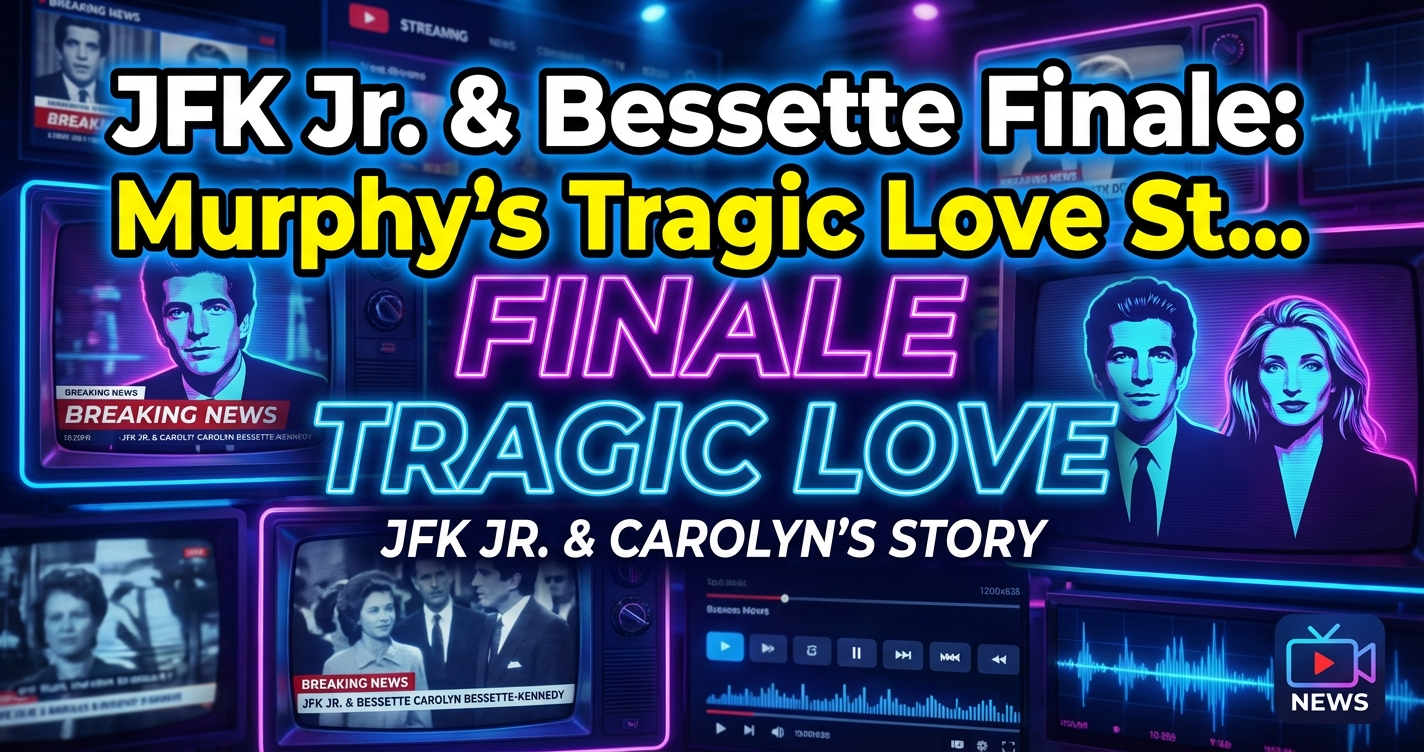
FX’s ‘Love Story’ Finale: Re-Living the Inevitable Tragedy
Thursday night brought to a close FX’s highly anticipated – and, let’s be honest, morbidly fascinating – anthology series, Love Story: John F. Kennedy Jr. & Carolyn Bessette. For nine episodes, viewers were invited back into the glittering, often fraught world of America’s unofficial royals, a couple whose very existence was a magnet for media scrutiny and public adoration. The finale, as everyone knew it would, culminated in the unspeakable, tragic plane crash that claimed their lives, along with Carolyn’s sister, Lauren. It was a somber, inevitable conclusion to a story the entire world already knew, yet still felt compelled to watch unfold on screen.
The series, executive produced by the maestro of high-gloss drama, Ryan Murphy, joined his impressive stable of true-story anthologies, promising a deep dive into the human cost behind the headlines. But unlike the criminal investigations of American Crime Story or the bitter feuds of… well, Feud, this installment tasked itself with something arguably more delicate: portraying a love story hurtling towards a preordained, heartbreaking end. The challenge wasn’t *what* happened, but *how* it happened, and what emotional weight the series could wring from a narrative arc already etched into collective memory.
Ryan Murphy’s Anthology Empire: A Formula for Prestige Tragedy?
Ryan Murphy has become synonymous with the anthology format, particularly when it comes to dramatizing historical events and figures. From the O.J. Simpson trial in The People v. O. J. Simpson: American Crime Story to the chilling narrative of Dahmer – Monster: The Jeffrey Dahmer Story, Murphy’s productions have consistently dominated water cooler conversations and award season ballots. His signature style – lavish production design, an almost operatic sense of drama, and a keen eye for casting transformative performances – was on full display in Love Story.
Industry insiders have long debated the ethics and appeal of these ‘prestige tragedy’ series. One television executive, speaking off the record, noted, “Murphy has perfected the art of taking a known, often traumatic, historical event and re-packaging it with a level of cinematic polish that makes it feel fresh and urgent again. It’s not just a retelling; it’s an emotional excavation, often polarizing, but undeniably compelling.” Love Story certainly fit this mold, meticulously recreating the late ’90s aesthetic and the palpable pressure cooker environment surrounding JFK Jr. and Carolyn.
The Enduring Kennedy Mystique and the Weight of Expectation
The fascination with the Kennedy family is a phenomenon unto itself, a uniquely American obsession that blends royalty, celebrity, and an almost Shakespearean cadence of triumph and tragedy. John F. Kennedy Jr., often dubbed ‘America’s Prince,’ embodied this mystique perhaps more than any other member of his generation. His marriage to Carolyn Bessette, a stylish, private, and fiercely independent woman, only amplified the public’s gaze. They were the ultimate power couple, seemingly untouchable, until they weren’t.
Dramatizing the Kennedys is not new territory for Hollywood. From various miniseries like The Kennedys to films such as Jackie, storytellers have repeatedly tried to unlock the secrets behind the public facade. What Love Story uniquely attempted was to hone in on a specific, relatively recent period, focusing almost entirely on the private dynamic of a couple under intense public pressure. Critics have observed that the series succeeded in peeling back some layers, revealing the vulnerability beneath the glamour, but the specter of their known fate always loomed large, creating a sense of dramatic irony that was both poignant and unsettling.
Navigating the Ethical Tightrope of Recent Tragedy
One of the persistent challenges for series like Love Story is navigating the ethical landscape of dramatizing recent tragedies involving real people. The families of those portrayed are often still alive, and the wounds, though decades old, can remain fresh. Showrunners face the delicate balance of crafting compelling television while striving for a degree of respect and accuracy.
Sources close to the production indicated that the creative team was acutely aware of this tightrope walk. They aimed to portray JFK Jr. and Carolyn not just as icons, but as complex individuals grappling with immense expectations and personal struggles. The finale, in particular, had to be handled with immense care, avoiding sensationalism while still delivering the emotional punch of the inevitable. Viewers, many of whom remember the actual event vividly, brought their own pre-existing emotional connections to the story, making the series’ reception particularly nuanced.
What’s Next for the True-Story TV Trend?
The conclusion of Love Story: John F. Kennedy Jr. & Carolyn Bessette leaves an indelible mark on the current television landscape. It reinforces Ryan Murphy’s unparalleled ability to turn historical tragedy into compelling, high-end entertainment. It also demonstrates the enduring power of true stories, even those with known endings, to captivate audiences when told with style and emotional depth.
As streaming wars continue to escalate and networks vie for prestige projects, we can expect to see more creators following Murphy’s lead, mining history for narratives that resonate with contemporary audiences. The appetite for ‘true story’ dramas, be they crime, political, or personal, shows no signs of waning. The question now becomes: which iconic figures or pivotal moments from our recent past will be the next to receive the full, glossy, and often heartbreaking, prestige TV treatment?