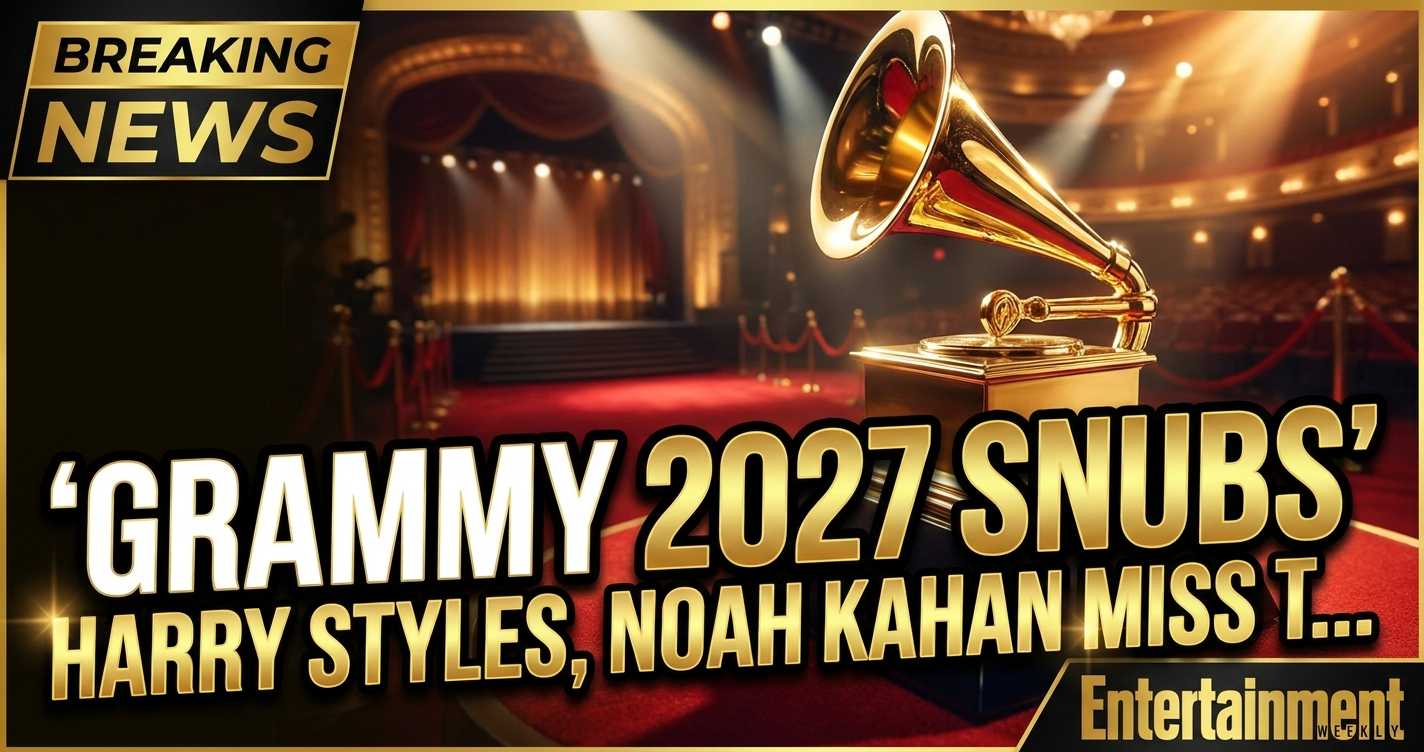
Grammy 2027 Nominations: The Snubs, The Shocks, And What It Means For Music’s Biggest Night
The Recording Academy has, once again, delivered its annual dose of delight and disbelief with the unveiling of the 2027 Grammy nominations. As the dust settles on this year’s hotly contested fields, the buzz isn’t just about who made the cut, but rather the glaring omissions that have sent shockwaves through the industry. From the monumental snub of pop titan Harry Styles in the major categories to the perplexing exclusion of folk-pop phenomenon Noah Kahan from the coveted ‘Big Four,’ these nominations paint a fascinating, often frustrating, picture of where the Academy stands in a rapidly evolving music landscape.
For weeks, industry prognosticators and fan bases alike had been meticulously handicapping the races, particularly for Album, Record, and Song of the Year, alongside Best New Artist. While some predictions hit the mark, the Academy’s penchant for the unexpected – and sometimes, the seemingly inexplicable – has dominated the post-announcement discourse. Let’s peel back the layers of this year’s nominations and dissect the decisions that have everyone talking.
The Harry Styles Conundrum: Too Big For The Room, Or Just Too Familiar?
Perhaps the most jaw-dropping absence from the marquee categories is Harry Styles. His latest opus, “Labyrinthine Echoes,” was not only a critical darling, praised for its audacious genre-bending and deeply personal lyricism, but also a commercial juggernaut, shattering streaming records and dominating airwaves globally. Many believed it was a shoe-in for Album of the Year, with lead single “Crimson Tide” a strong contender for Record and Song of the Year.
“It’s truly baffling,” one seasoned A&R executive, who wished to remain anonymous, confided to DailyDrama.com. “’Labyrinthine Echoes’ was Harry’s most ambitious work yet. It had the critical acclaim, the cultural impact, and the sheer artistry. To see him relegated to only a few genre-specific nods feels like a deliberate message, almost like the Academy thinks he’s ‘had his moment’ and wants to spread the love, even if it means overlooking what was arguably the year’s most significant album.”
This isn’t the first time an artist of Styles’ magnitude, fresh off a major sweep, has found themselves unexpectedly sidelined. The Academy has a history of sometimes shying away from rewarding artists too soon after a previous triumph, perhaps hoping to avoid accusations of favoritism or simply to highlight new talent. However, the sheer quality and impact of “Labyrinthine Echoes” makes this particular snub feel less like strategic diversification and more like a monumental oversight. It raises questions about whether the Academy truly recognizes sustained, evolving artistry, or if they’re always chasing the next new thing.
Noah Kahan: The Folk-Pop Juggernaut’s Roadblock
Another major head-scratcher is the minimal presence of Noah Kahan in the top-tier categories. His album, “Maplewood Reveries,” was a cultural phenomenon, connecting with millions through its raw, emotionally resonant storytelling and infectious folk-pop melodies. It was the soundtrack to countless road trips and introspective evenings, garnering comparisons to modern troubadours and indie icons. While Kahan did secure nominations in the folk and alternative categories – well-deserved, no doubt – his complete absence from Album, Record, and Song of the Year is a bitter pill for many fans and industry observers.
“’Maplewood Reveries’ was more than just a folk album; it was a movement,” a prominent music critic noted. “It transcended genre and resonated universally. His exclusion from the Big Four feels like the Academy is still struggling to fully embrace artists whose success builds organically and whose sound doesn’t fit neatly into traditional pop boxes. It’s a familiar story for artists who aren’t overtly mainstream pop or R&B, no matter how massive their cultural footprint becomes.”
This echoes past frustrations where critically adored, commercially successful, yet genre-specific artists have struggled to break into the main categories, often perceived as too niche by a voting body that sometimes leans towards more traditional, polished pop sounds. Kahan’s narrative, of a quiet artist building an enormous following, seemed perfectly aligned with a desire for authenticity, yet it appears the Academy’s compass still points elsewhere for its biggest prizes.
The Surprises That Shook The Status Quo
Amidst the snubs, there were also genuinely thrilling surprises. The inclusion of hyper-pop trailblazer Aura’s experimental yet surprisingly accessible album, “Digital Heartbeat,” in the Album of the Year race, and her genre-defying single “Neon Abyss” for Record of the Year, signals a potential shift in the Academy’s taste. Aura, known for her boundary-pushing soundscapes and avant-garde visuals, was considered a long shot for mainstream recognition, making her major nominations a significant win for forward-thinking music.
Equally refreshing was the strong showing for veteran soul artist Seraphina Vance. Her comeback album, “Midnight Bloom,” a deeply personal and exquisitely produced collection, earned her multiple nods, including a surprise Album of the Year slot. After years of quiet critical acclaim but limited mainstream fanfare, Vance’s resurgence is a testament to timeless artistry finally getting its due, perhaps appealing to the Academy’s more traditionalist voters while still feeling fresh.
What It All Means: A Shifting, Yet Still Familiar, Landscape?
The 2027 Grammy nominations present a complex picture. On one hand, the embrace of artists like Aura suggests a willingness to acknowledge emerging sounds and genres, signaling a slow but steady evolution within the Recording Academy. On the other, the exclusions of behemoths like Harry Styles and cultural touchstones like Noah Kahan raise persistent questions about the Academy’s criteria for its highest honors. Is it about pure artistry, commercial impact, cultural relevance, or a delicate, often inconsistent, balance of all three?
Industry insiders suggest that the voting bloc, while diversifying, still grapples with how to weigh different forms of success. The battle between critical darlings and fan favorites, between established pop royalty and grassroots phenomena, continues to play out on the nomination ballot. These snubs and surprises aren’t just about individual artists; they’re symptomatic of an ongoing identity crisis for music’s most prestigious awards.
As we brace for the 2027 Grammy Awards ceremony, the narratives are already clear: the fight for validation, the push for representation across genres, and the eternal debate over what truly constitutes the ‘best’ in music. DailyDrama.com will be watching closely as these stories unfold on music’s biggest night.