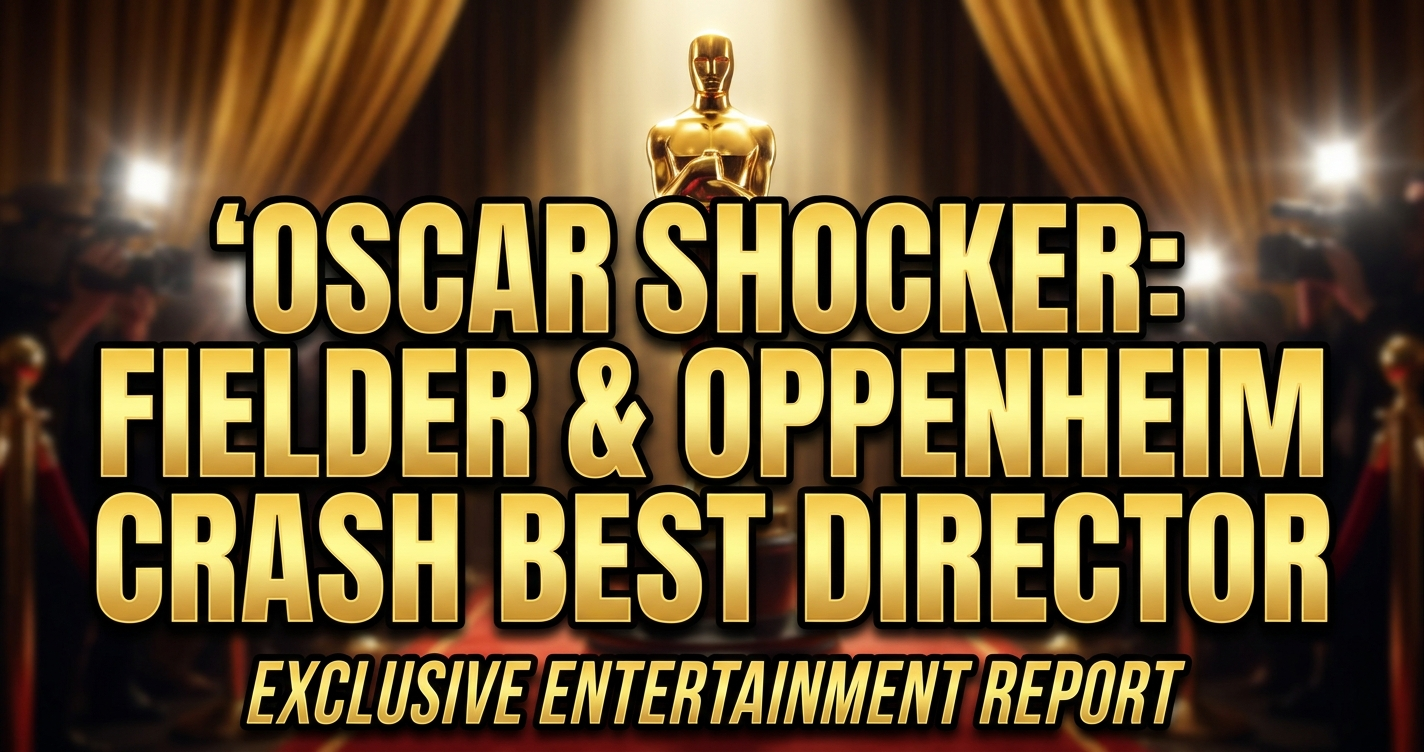
Hold onto your ballots, folks, because the Best Director Oscar race just got a jolt straight from the surreal. DailyDrama.com has learned from our industry sources that the boundary-pushing duo of Nathan Fielder and Lance Oppenheim have officially catapulted into the predicted Top 5 for a Best Director nomination for their film, You Can See Everything. And in perhaps the most surprising twist, their ascent has pushed veteran filmmaker Denis Villeneuve, a presumed lock for Dune: Part Two, out of the current frontrunner pack.
According to our internal Oscar trackers and confirmed by experts at GoldDerby.com, Fielder and Oppenheim now boast a significant 48% chance of snagging a coveted nomination. This isn’t just a minor fluctuation; it’s a seismic shift that speaks volumes about the Academy’s evolving tastes and the undeniable buzz surrounding a film that defies easy categorization.
The Unconventional Visionaries: Fielder & Oppenheim’s Ascent
For anyone who’s followed the careers of Nathan Fielder and Lance Oppenheim, their pairing always promised something uniquely unsettling and profoundly human. Fielder, the mastermind behind the meta-comedic genius of Nathan For You and the existential labyrinth of The Rehearsal, has carved a niche as a director who meticulously constructs reality, only to pick apart its seams. Oppenheim, known for his critically acclaimed documentary Some Kind of Heaven, possesses a similarly keen eye for the peculiar beauty in mundane existence and the often-unseen dramas playing out in highly specific communities.
Their collaboration on You Can See Everything was always going to be an event, but few predicted it would resonate so strongly with the notoriously traditional Directors Branch. The film, a psychological drama described by those who’ve seen it as a chillingly prescient exploration of surveillance, community, and the curated self, reportedly blurs the lines between documentary and narrative, a trademark of both directors. “It’s a film that gets under your skin and stays there,” one veteran publicist, who asked not to be named due to ongoing campaign efforts, told DailyDrama.com. “It’s not just technically brilliant; it’s intellectually demanding and emotionally resonant in a way that truly stands out.”
Why Now? The Academy’s Shifting Tides
This isn’t the first time the Academy has embraced unconventional voices in the Best Director category. We’ve seen it with Bong Joon-ho for Parasite, the Daniels for Everything Everywhere All at Once, and Yorgos Lanthimos’s distinctive style, all of whom brought unique cinematic languages to the forefront. But Fielder and Oppenheim represent a different kind of disruptor – one rooted in the art of the ‘constructed reality’ and a deadpan wit that often borders on the profound.
Sources close to the Academy suggest a growing appetite among voters for films that challenge traditional storytelling and push the boundaries of the medium. “There’s a fatigue with the ‘safe’ choices,” one long-time Academy member confided to us. “Voters are looking for films that provoke conversation, that they can passionately advocate for. You Can See Everything is that film this year for many of us. It feels fresh, even revolutionary.”
The campaign for You Can See Everything has been notably strategic, focusing on intimate screenings followed by Q&As that allow Fielder and Oppenheim to articulate their unique vision directly to voters. This approach, eschewing splashy studio-backed galas for more cerebral engagements, appears to be paying off handsomely.
The Villeneuve Enigma and a Crowded Field
Denis Villeneuve’s temporary displacement from the Top 5 is not a reflection of any weakness in Dune: Part Two, which remains a monumental cinematic achievement and a strong contender in many other categories, including Best Picture. Rather, it highlights the intense competition in the Best Director category this year. Villeneuve’s visually stunning work is universally praised, but perhaps the Directors Branch is gravitating towards films with a more singular, auteurist imprint this time around, even if it comes from a directing duo.
The current Best Director race is packed with formidable talent. While Fielder and Oppenheim surge, other strong contenders include Martin Scorsese for Killers of the Flower Moon, Christopher Nolan for Oppenheimer, Yorgos Lanthimos for Poor Things, and Alexander Payne for The Holdovers, among others. Each offers a distinct directorial voice, making the five nomination slots incredibly hard-won.
This shakeup suggests that the narrative surrounding a film and its director(s) is more crucial than ever. Fielder and Oppenheim’s journey from cult television to serious Oscar contenders is a testament to the power of a unique artistic voice breaking through the noise, especially when paired with a film that resonates deeply with the zeitgeist.
What to Watch For Next
The race is far from over. As more critics’ awards and guild nominations roll in, the picture will become clearer. Can Fielder and Oppenheim maintain their momentum? Will Villeneuve reclaim his spot, or will another dark horse emerge? The next few weeks of precursor awards and industry chatter will be vital. One thing is certain: the Best Director category this year is shaping up to be one of the most unpredictable and exciting in recent memory, proving that in Hollywood, the only constant is change.