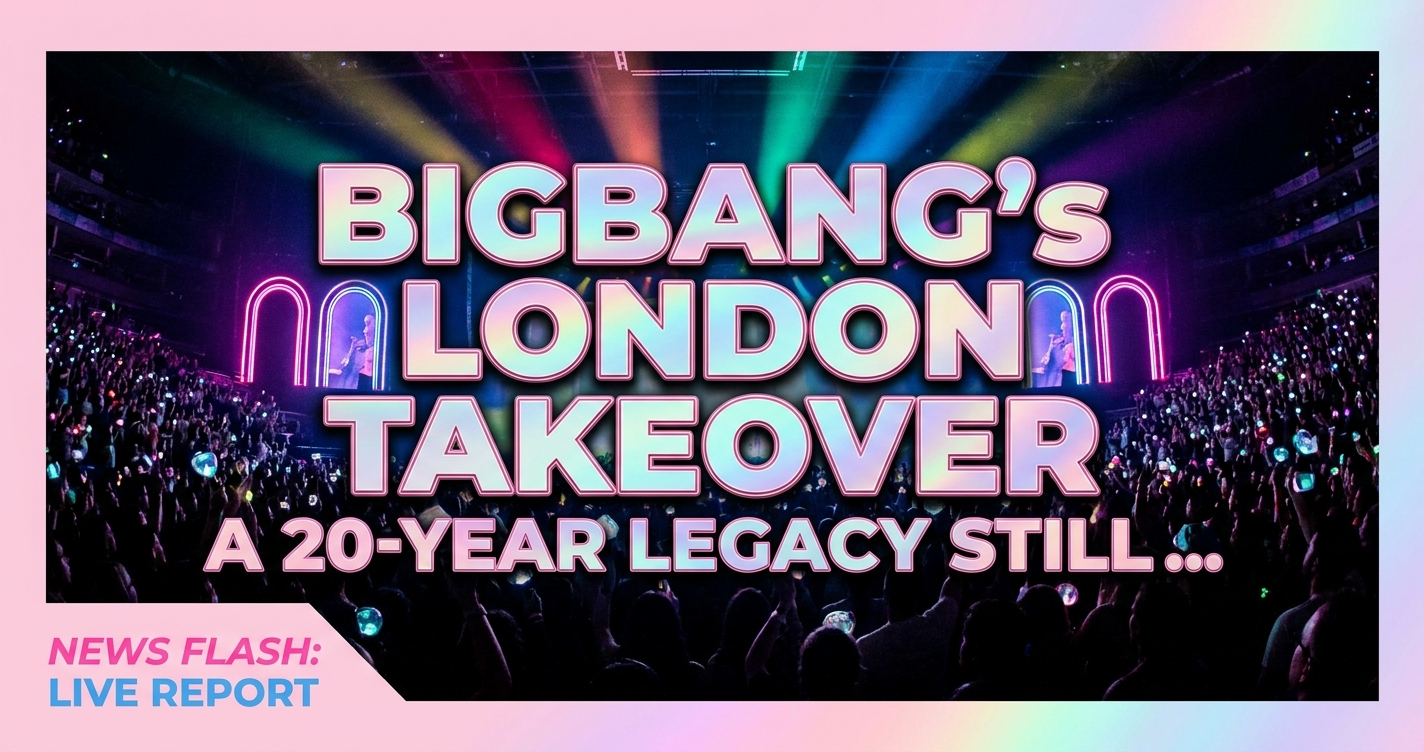
London finally got its moment with K-pop royalty last week as BIGBANG brought their monumental 20th-anniversary world tour to the city, igniting an arena nearly 14 years after their last solo performance in the UK capital. For fans, it wasn’t just a concert; it was a pilgrimage, a reunion with a group that didn’t just define an era, but fundamentally reshaped the global music landscape.
The energy inside the venue was palpable, a testament to the enduring loyalty of V.I.P.s (BIGBANG’s fanbase) who have weathered hiatuses, solo ventures, and industry shifts alongside their idols. From the moment the first beat dropped, it was clear this wasn’t just a nostalgia trip; it was a reaffirmation of BIGBANG’s unparalleled stage presence and catalog of hits that seamlessly blend hip-hop, R&B, and electronic anthems. Tracks like “Fantastic Baby,” “Bang Bang Bang,” and deeper cuts from their extensive discography reverberated with an intensity that only a group with two decades of experience can command. The London show wasn’t merely a stop on a tour; it was a declaration that the Kings of K-Pop are very much still on their throne.
A Legacy Unmatched in K-Pop’s Pantheon
To understand the significance of BIGBANG’s current tour and their sold-out London show, one must look back at their pioneering journey. Debuting in 2006 under YG Entertainment, BIGBANG didn’t just follow trends; they set them. Led by the visionary G-Dragon, the group was instrumental in ushering in K-pop’s “second generation,” breaking away from the more manufactured idol image to embrace a bolder, more artistic, and self-produced identity. G-Dragon, in particular, became a fashion icon and a musical chameleon, influencing countless artists across Asia and beyond. Their willingness to experiment with genres, their distinctive fashion, and their raw, charismatic stage presence laid much of the groundwork for K-pop’s eventual global explosion.
While groups like TVXQ and Super Junior paved the way for idol groups, BIGBANG injected a rebellious, hip-hop-infused spirit that resonated deeply with a generation seeking authenticity. Their influence can be seen in the stylistic choices and musical directions of many subsequent K-pop acts, making them true godfathers of the modern scene. The longevity they’ve achieved, especially as a male idol group, is almost unheard of in an industry known for its rapid turnover.
Navigating the Tides: Scandals, Hiatuses, and Reinvention
BIGBANG’s journey has been far from smooth sailing. Like many long-standing acts, they’ve faced their share of challenges, from mandatory military enlistments that led to long hiatuses to highly publicized controversies involving former members. The departure of Seungri following the Burning Sun scandal and T.O.P.’s past legal issues tested the group’s resilience and the loyalty of their fanbase. Many industry observers questioned whether BIGBANG could ever truly recover and return to their former glory.
Yet, their resilience is a testament to the strength of their music and the unwavering dedication of their V.I.P.s. Unlike many groups that crumble under such pressures, BIGBANG has consistently found a way to reinvent themselves, or perhaps, simply remind the world of the undeniable power of their core artistry. Their 2022 single, “Still Life,” a poignant reflection on their journey, marked a powerful return, demonstrating that their musicality and emotional depth remain intact, even with a refined lineup. It’s a rare feat in K-pop to not just survive, but thrive, after such significant obstacles.
The Enduring Power of the “Kings of K-Pop”
So, what is it about BIGBANG that continues to draw massive crowds and maintain their status as K-pop legends after 20 years? It’s a combination of factors. Firstly, their individual star power is immense. G-Dragon remains an enigmatic global icon, a producer, rapper, and fashion trendsetter whose every move makes headlines. Taeyang possesses one of K-pop’s most distinctive and powerful vocal instruments, with a successful solo career to his name. Daesung provides the soulful rock-vocal anchor, and while T.O.P.‘s involvement in this particular tour wasn’t specified, his unique rap style and visual artistry have always been integral to the group’s identity.
Secondly, their music simply holds up. It’s diverse, innovative, and emotionally resonant. Their live performances are legendary for their intensity and connection with the audience. As one long-time fan noted after the London show, “It’s not just about the songs; it’s the *feeling* they bring. They perform with their whole being, and that energy is infectious.” This raw, unadulterated passion for performance is what separates the legends from the fleeting acts.
The success of this London concert underscores a broader industry trend: the enduring appeal of second-generation K-pop groups. While newer acts dominate headlines, the foundational artists like BIGBANG, Girls’ Generation, and 2NE1 (whose members have also had notable solo and reunion moments) continue to hold significant cultural weight and draw power. Their legacy isn’t just about sales; it’s about impact and influence.
As BIGBANG continues their 20th-anniversary world tour, their London stop serves as a powerful reminder that true artistry transcends time, scandal, and even long hiatuses. The “Kings of K-Pop” are not just celebrating a milestone; they are actively reaffirming their reign. What to watch for next is how this iconic group continues to evolve, perhaps with more new music, and how their individual members will further carve out their unique paths while potentially reuniting for future monumental moments. Their journey is far from over, and the K-pop world, along with their dedicated V.I.P.s, is undoubtedly ready for the next chapter.