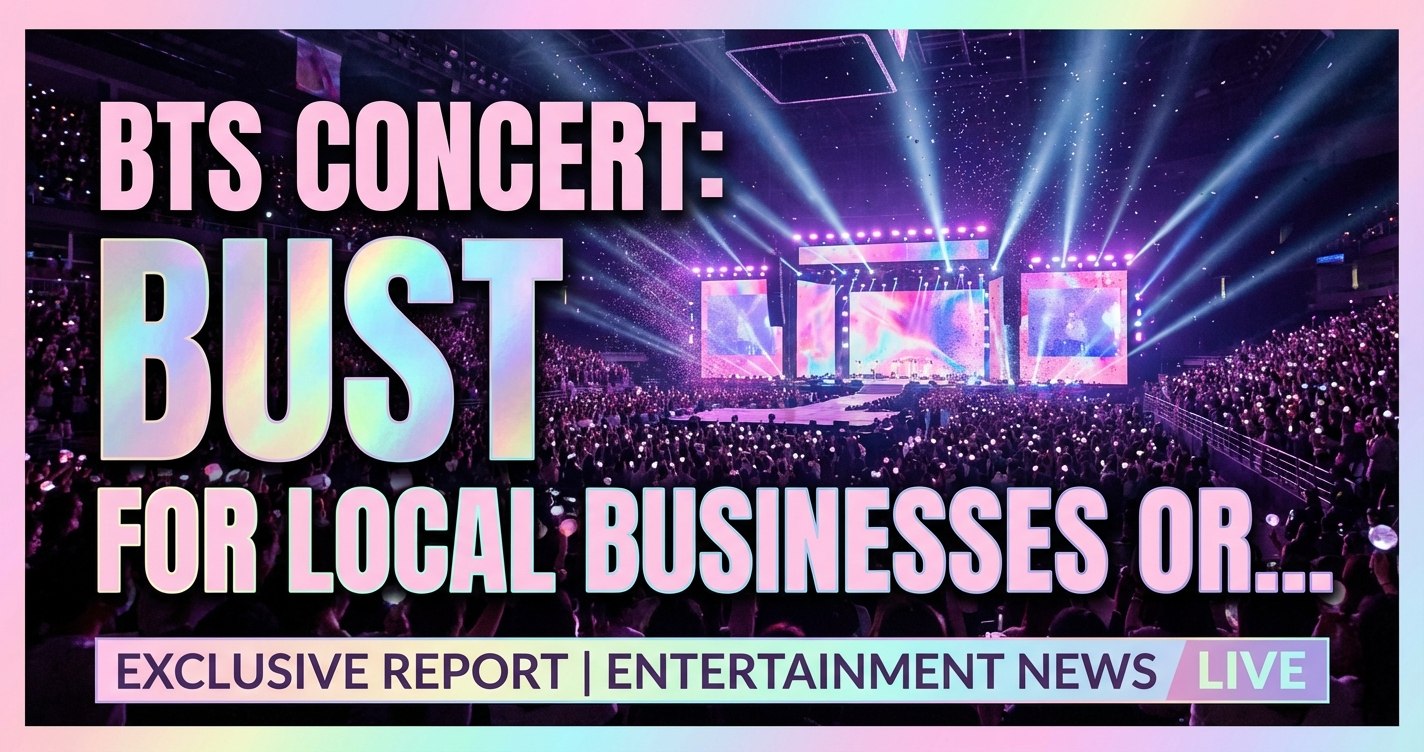
BTS Concert: Was It a Bust for Local Businesses or Just Hype Overload?
The purple ocean of ARMYs gathered, the cheers were deafening, and the global sensation BTS once again delivered a performance for the ages. But behind the dazzling spectacle, a surprising narrative has emerged: for some local businesses banking on a massive economic boom, the concert’s turnout was reportedly lower than projected, leaving a noticeable dent in their bottom line and even causing a slight tremor in HYBE’s stock. At DailyDrama.com, we’ve been digging into the numbers and talking to industry insiders to understand what really happened.
When K-pop titans like BTS announce a show, cities brace for an economic tidal wave. Restaurants stock up, hotels fill, and local shops prepare for a surge of fans eager to immerse themselves in the full concert experience. For this particular event, however, several reports indicate that the anticipated foot traffic and spending didn’t quite materialize to the levels officials and businesses had projected. One local restaurateur, who asked to remain anonymous, expressed disappointment, noting their pre-concert dinner rush was “noticeably lighter than anticipated.” This sentiment wasn’t isolated, painting a picture of missed opportunities for some who had invested heavily in staffing and inventory.
The Disconnect: Expectations vs. Reality
It’s crucial to clarify: this isn’t to say the concert itself wasn’t a success for fans. By all accounts, the energy was electric, and BTS delivered. The ‘disaster,’ if we can even call it that, lies in the *expectations* surrounding the event’s wider economic ripple effect. Sources close to the city’s tourism board indicated that initial projections might have been overly optimistic, failing to fully account for several unique factors at play with BTS right now.
Firstly, this isn’t a typical ‘comeback’ concert. With members fulfilling solo endeavors and the looming reality of mandatory military service for some, this period for BTS has been dubbed ‘Chapter 2’ – a transition phase. While ARMY remains fiercely loyal, the dynamic shifts. Fans might be more judicious with their spending, prioritizing official merchandise and the concert ticket itself over ancillary local expenditures. Furthermore, the K-pop fandom is incredibly organized; many fans pre-plan extensively, often booking accommodations and even meals well in advance through fan groups, potentially bypassing last-minute local business opportunities.
HYBE’s Broader Strategy and Market Jitters
The slight dip in shares for HYBE, BTS’s management company, following these reports, underscores the market’s sensitivity to perception, even if the underlying business remains robust. While any dip is unwelcome, analysts tracking HYBE’s performance suggested that it was more of a ‘minor correction’ reflecting broader market sentiment and perhaps an over-reliance on single-event projections rather than a crisis. HYBE has been aggressively diversifying its portfolio, nurturing other successful groups like TXT, LE SSERAFIM, and NewJeans, and expanding into various entertainment ventures. This strategic foresight means the company isn’t solely dependent on one group’s concert turnout for its overall health, something that has been a cornerstone of their post-BTS ‘Chapter 2’ strategy.
This situation also highlights a perennial challenge in the live entertainment industry: accurately predicting the full economic impact of mega-tours. While events like Taylor Swift’s Eras Tour or Beyoncé’s Renaissance Tour have indeed generated unprecedented local spending, those are often exceptions rather than the rule, fueled by unique circumstances and decades-long career trajectories. For any city or business, relying on a single concert to be a golden ticket can be a risky gamble. The economic models used by city officials and promoters need constant recalibration to reflect evolving fan behaviors, global economic pressures, and the specific context of each artist’s career phase.
Lessons for the K-Pop Machine and Beyond
What does this mean for the future of K-pop concerts and large-scale entertainment events? It serves as a stark reminder that even for the biggest acts in the world, the peripheral economic benefits aren’t always guaranteed to match the wildest projections. It suggests a need for more nuanced forecasting and perhaps a diversification of offerings from local businesses to capture fan spending more effectively, rather than just waiting for walk-ins.
For HYBE, it reinforces the wisdom of their diversification strategy. The K-pop industry is dynamic, and while BTS remains a powerhouse, the future involves multiple successful acts and a robust content pipeline. The slight market wobble acts as a gentle nudge to continue building a resilient ecosystem that can weather the ebb and flow of individual projects or concert turnouts.
What to Watch For Next: We’ll be keeping a close eye on how other major K-pop tours and global events fare in terms of their projected versus actual economic impact. Will cities and businesses adjust their strategies? And how will HYBE continue to build its empire beyond the immediate spotlight of its flagship group? The entertainment world is never dull, and DailyDrama.com will be here to break it all down.