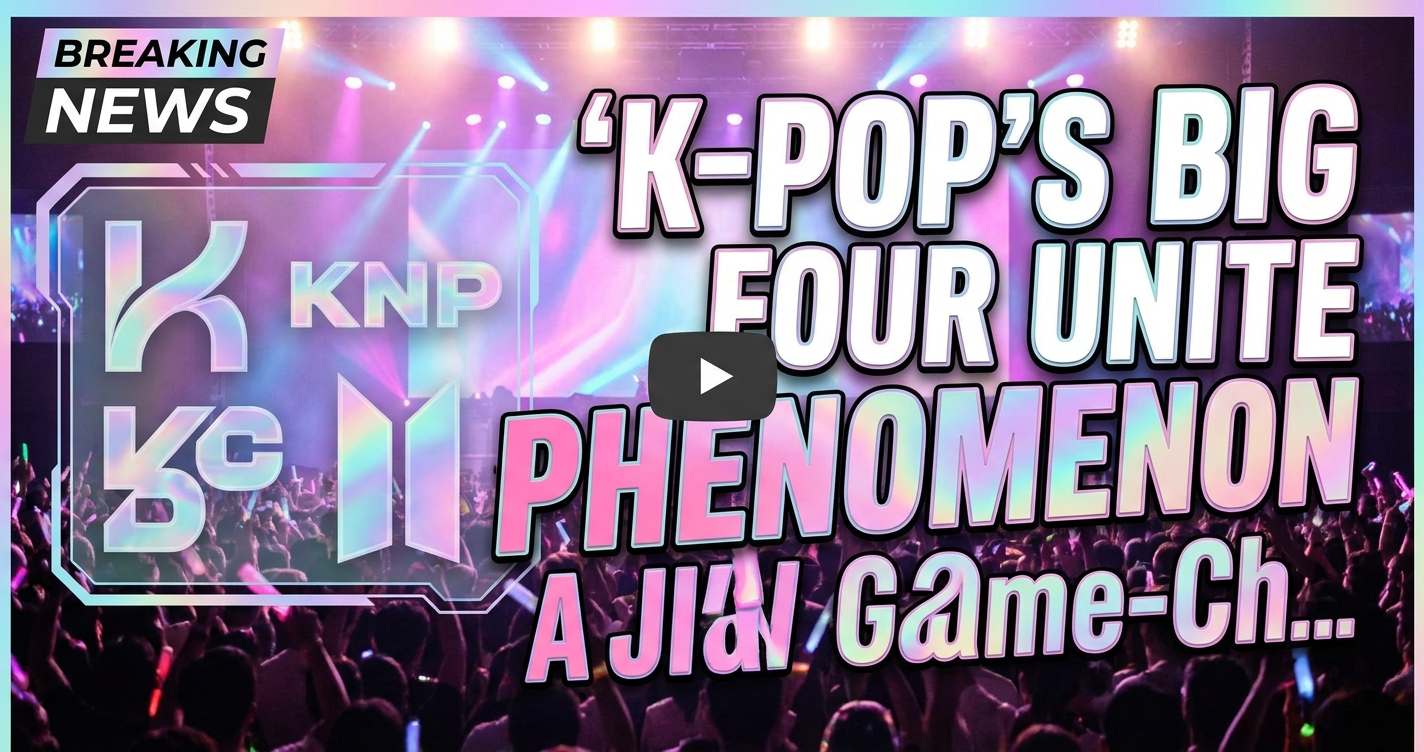
Seoul, South Korea — In a move that has sent shockwaves through the global music industry, K-pop’s undisputed titans—HYBE, SM Entertainment, JYP Entertainment, and YG Entertainment—are reportedly joining forces for an ambitious new venture: a large-scale global K-pop festival dubbed ‘Phenomenon.’ This unprecedented collaboration between fierce rivals has sparked intense debate among fans and industry watchers alike, raising questions about everything from K-pop’s strategic overseas expansion to the very definition of industry cooperation.
The Unprecedented Alliance: Rivals United?
For years, the K-pop landscape has been defined by the competitive prowess of these four entertainment powerhouses. HYBE, with its global juggernaut BTS, has redefined the scale of K-pop’s international reach. SM Entertainment, the industry’s original pioneer, boasts a legacy of innovation and iconic groups. JYP Entertainment is known for its meticulous artist development and consistent global successes. YG Entertainment, though more selective in its output, has produced global acts like BLACKPINK with undeniable impact. Each has, in its own right, spearheaded K-pop’s journey from a niche genre to a global cultural force.
The news that these ‘Big Four’ are pooling resources for ‘Phenomenon’ isn’t just a headline; it’s a seismic shift. Historically, these companies have competed fiercely for talent, market share, and fan loyalty. While individual artists from different labels might collaborate, a joint venture of this magnitude, involving the corporate entities themselves, is virtually unheard of. Industry insiders suggest this collaboration signals a maturation of the K-pop industry, where collective strength might now be seen as more beneficial than isolated competition, especially in navigating the complexities of global expansion.
‘Phenomenon’: Ambition Meets Global Stage
The name ‘Phenomenon’ itself speaks volumes, aiming to encapsulate K-pop’s meteoric rise and perhaps, to solidify its status as a permanent fixture on the world stage. The ambition is clear: to create a festival that isn’t just a series of concerts but a cultural event on par with global staples like Coachella or Lollapalooza, specifically curated for the K-pop experience. This isn’t just about putting idols on stage; it’s about exporting the entire K-pop ecosystem – the fashion, the fan culture, the energy – to new territories.
However, the concept has already ignited a passionate debate among netizens. While many are ecstatic at the prospect of seeing a dream lineup featuring artists from all four labels, others voice concerns about the potential for oversaturation, the challenges of catering to diverse international audiences, and whether such a large-scale commercial venture might dilute K-pop’s unique charm. Some fans worry that a focus on broad overseas expansion could lead to less attention on the domestic scene or a homogenization of K-pop’s distinct flavors.
The Business of K-Pop’s Global Push
Behind the fan excitement and critical debate, the driving force is undoubtedly business. K-pop’s domestic market, while robust, has its limits. The logical next step for growth is sustained global presence, not just through album sales and digital streams, but through live experiences. While events like KCON and MAMA have successfully laid groundwork, they often involve numerous smaller labels and are organized by media companies. ‘Phenomenon’ is different; it’s the labels themselves, the direct content creators, taking the reins.
This collaboration could offer several strategic advantages. It could provide a unified front for negotiating with international venues, sponsors, and logistics providers, potentially reducing costs and increasing leverage. It also allows for a diversification of risk, as the immense financial and logistical undertaking is shared. Furthermore, by bringing together their collective artist rosters, they can create an unparalleled lineup that no single agency could realistically assemble, making ‘Phenomenon’ an undeniable draw for both existing fans and potential new audiences.
What This Means for Fans and the Industry
For fans, ‘Phenomenon’ promises an almost impossible dream lineup. Imagine the potential for cross-label collaborations, unexpected stages, and a sheer density of K-pop star power never before seen in one place. The challenge, of course, will be accessibility – ticket pricing, location, and the sheer demand will be critical factors. Will it be a truly global event, hitting multiple continents, or will it initially test waters in key markets?
For the industry, this venture could be a blueprint for future collaborations, not just in K-pop but across the entertainment spectrum. It signals a recognition that in an increasingly globalized and competitive market, cooperation, even among rivals, can unlock new levels of growth and innovation. However, it also presents significant hurdles. Managing the creative directions, scheduling conflicts, and financial interests of four massive, distinct companies will be a monumental task. The success of ‘Phenomenon’ will largely depend on the ability of these giants to move beyond historical rivalries and truly operate as a cohesive unit.
The stage is set for what could be K-pop’s most ambitious live event yet. Whether ‘Phenomenon’ lives up to its name and truly redefines K-pop’s global footprint, or becomes a cautionary tale of too many cooks in the kitchen, remains to be seen. But one thing is certain: the world is watching, and the stakes couldn’t be higher for the future of K-pop.
What to Watch For Next
Keep an eye on official announcements regarding specific dates, locations, and the initial artist lineup. The logistical rollout will be a key indicator of the festival’s ambition and feasibility. Also, observe fan reactions in early target markets; their engagement will be crucial to ‘Phenomenon’s’ long-term success. This grand experiment will undoubtedly shape the next chapter of K-pop’s global journey.