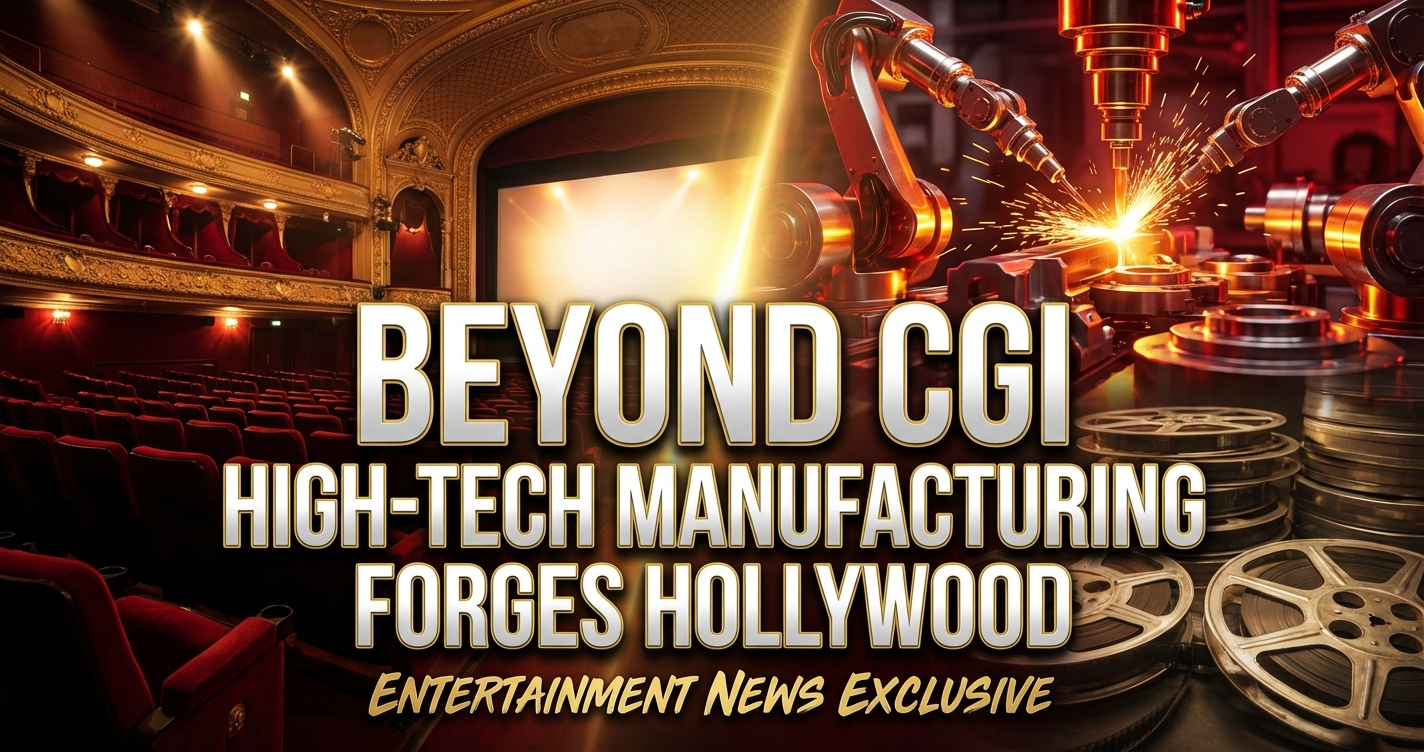
The Unsung Engineers: Forging Hollywood’s Future, One Precision Part at a Time
In an era dominated by dazzling visual effects and seamless CGI, it’s easy to forget that much of Hollywood’s magic still has a tangible, physical backbone. While digital artistry continues to push boundaries, a quiet revolution is happening behind the scenes, fueled by advanced manufacturing techniques that borrow heavily from high-stakes industries like aerospace and medical engineering. This isn’t just about bigger budgets or faster rendering farms; it’s about the very nuts and bolts, the custom components, and the intricate structures that bring impossible visions to life on screen and in theme parks.
Industry insiders are increasingly pointing to a structural expansion in the demand for precision-engineered components, not just for jet engines or surgical tools, but for the next generation of blockbuster props, animatronics, and cutting-edge camera rigs. The push for hyper-realism and durable, repeatable practical effects is driving a fascinating convergence of Hollywood’s creative ambition with the rigorous demands of advanced manufacturing.
The Practical Effects Renaissance: Precision in Every Pixel (and Prop)
Remember the awe-inspiring animatronics of Jurassic Park, the intricate miniatures of Blade Runner 2049, or the tactile creature suits in recent horror hits? These aren’t mere relics of a bygone era. Practical effects are experiencing a powerful resurgence, not as an alternative to CGI, but as a vital complement. Directors like Denis Villeneuve (Dune) and Christopher Nolan (Oppenheimer) have championed the use of physical elements, understanding that a tangible prop or a working miniature often grounds a scene with an authenticity that even the most sophisticated digital effect struggles to replicate.
This return to the physical demands unprecedented precision. Modern practical effects are less about foam and latex, and more about high-strength alloys, advanced composites, and meticulously engineered internal mechanisms. Craftspeople are now working with CAD software, 3D printing, and sophisticated CNC machining – technologies once primarily reserved for aerospace prototyping. Imagine a creature’s articulating skeleton, custom-machined from lightweight titanium, allowing for fluid, lifelike movement. Or a spaceship model, where every panel and greeble is individually cast and assembled with the kind of accuracy you’d expect from a functional satellite component.
As one veteran prop master, who preferred to remain anonymous given the proprietary nature of their work, put it, “The demands are brutal now. Audiences expect perfection. We’re not just making something look good for a few seconds; we need it to perform, to hold up to stunts, and often, to be indistinguishable from a real object. That requires engineering, not just artistry.”
Advanced Camera Systems & Drone Tech: The Eyes of Hollywood
It’s not just props benefiting from this manufacturing boom. The tools used to capture the magic are also undergoing a significant transformation. Filmmakers are constantly pushing the boundaries of cinematography, requiring custom camera rigs, specialized gimbals, and ultra-stable drone platforms that can carry heavy cinema cameras through complex flight paths. The precision and durability required for these systems often mirror the demands of uncrewed aerial vehicles in other industries.
Consider the bespoke camera stabilization systems developed for films like Avatar: The Way of Water, allowing for underwater motion capture and stunning aquatic cinematography. These aren’t off-the-shelf solutions; they are often one-off engineering marvels, leveraging advanced materials and precision machining to withstand extreme environments and deliver flawless performance. The same expertise that designs a lightweight, high-stress component for an aircraft can be applied to create a camera rig that can execute a seemingly impossible shot.
Theme Parks: The Ultimate Testbed for Immersive Engineering
Beyond the silver screen, the theme park industry stands as a testament to the power of advanced manufacturing in entertainment. The latest generation of immersive attractions, from Disney’s Star Wars: Galaxy’s Edge to Universal’s Wizarding World of Harry Potter, are built upon foundations of incredibly complex, precision-engineered animatronics, ride vehicles, and set pieces. These aren’t just static displays; they are dynamic, interactive environments designed for continuous operation and safety, demanding engineering rigor on par with any industrial application.
The animatronics in these parks, some capable of hundreds of distinct movements, are marvels of mechanical engineering. Each joint, hydraulic cylinder, and servo motor must be manufactured to exacting specifications to ensure lifelike motion and long-term reliability. It’s a grand-scale application of the same precision casting and fabrication techniques that ensure a medical device functions flawlessly or an aerospace component withstands extreme stress.
What to Watch For Next
As the line between practical and digital effects continues to blur, the demand for sophisticated, high-performance physical elements will only grow. Expect to see even more advanced materials, custom robotics, and precision manufacturing techniques integrated into every facet of film production and experiential entertainment. From hyper-realistic creature suits to groundbreaking camera movement systems, the silent engineers and their cutting-edge workshops are quietly building the future of Hollywood magic, one perfectly crafted component at a time. The next big blockbuster isn’t just about who’s in front of the camera, but what incredible feats of engineering are happening behind it.