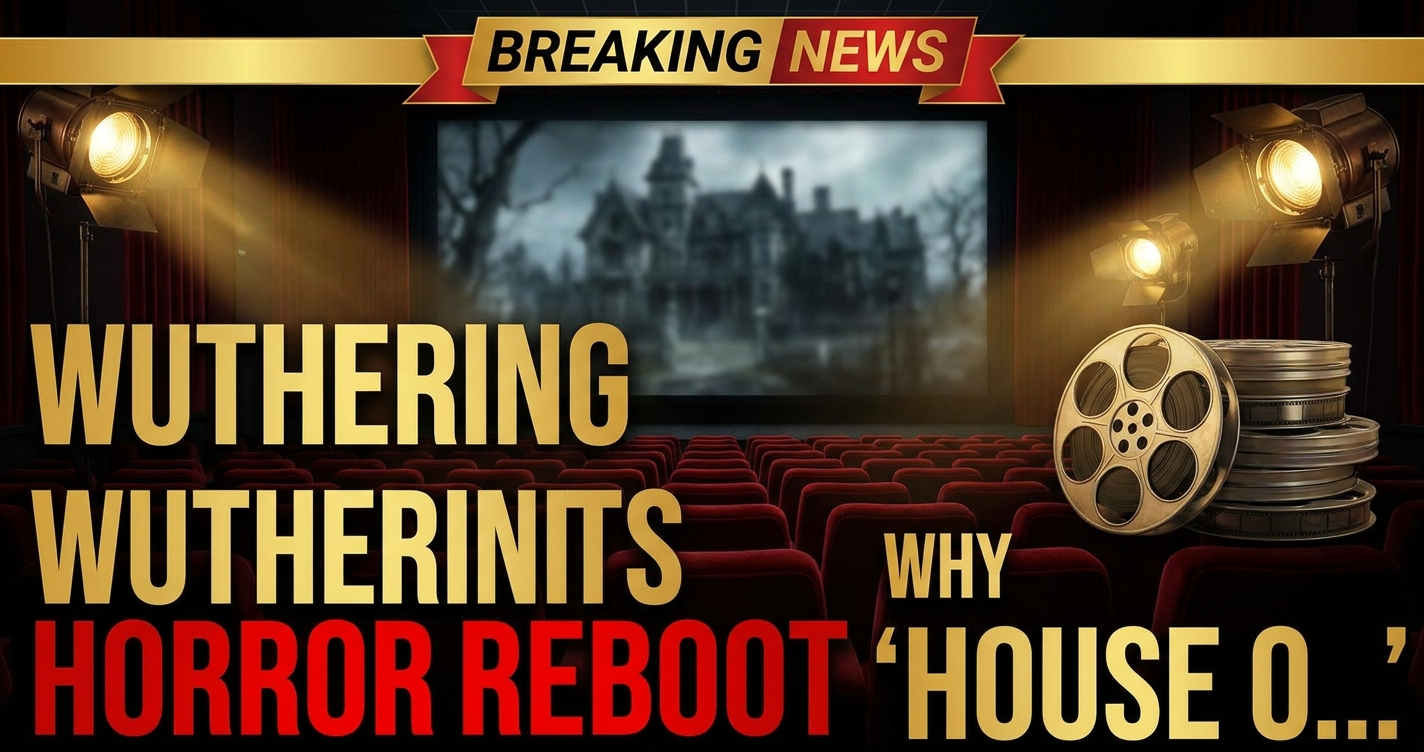
Wuthering Heights Gets Horror Reboot: Why ‘House of the Damned’ Is Already Winning
The moors of Yorkshire have always held a chilling secret, a palpable darkness that few adaptations of Emily Brontë’s Wuthering Heights have dared to fully explore. Until now. News that acclaimed horror director Becca Hirani is taking the reins for a 2026 reboot titled House of the Damned has sent a tremor through Hollywood, and for good reason. This isn’t just another period drama; it’s a bold, genre-redefining vision that’s already doing three crucial things better than previous attempts, including last year’s somewhat lukewarm Wuthering Heights: A Timeless Romance.
For decades, Brontë’s singular novel has been pigeonholed as the ultimate tragic romance, its supernatural elements and psychological cruelty often relegated to atmospheric window dressing. But for anyone who truly delves into its pages, the story of Heathcliff and Catherine is less a love story and more a visceral tale of obsession, vengeance, possession, and spectral presences. Hirani, known for her atmospheric dread in films like The Shrouded House and the critically lauded folk horror Beneath the Veil, is poised to unleash the full, terrifying potential embedded within the classic text.
DailyDrama.com has learned that early script treatments for House of the Damned are focusing heavily on the novel’s inherent gothic horror, aiming to present a Catherine Earnshaw who is literally haunted and a Heathcliff whose monstrous nature is not merely metaphorical. It’s a gamble, but one that industry insiders are already betting on.
From Moors to Mayhem: The Unseen Darkness of Brontë’s Classic
Let’s be clear: Wuthering Heights is inherently unsettling. From Catherine’s famous cry, "I am Heathcliff!" which hints at a terrifying dissolution of self, to the persistent ghostly presence that literally taps at Mr. Lockwood’s window, the novel is steeped in themes of possession, psychological torment, and the destructive power of unresolved trauma. Past adaptations, from William Wyler’s iconic 1939 film to Andrea Arnold’s raw 2011 take, have certainly captured elements of its intensity, but often through a romanticized lens, sidestepping the full-blown horror. Last year’s Wuthering Heights: A Timeless Romance, for instance, doubled down on the picturesque tragedy, leaving audiences with a beautiful but ultimately unchallenging experience.
This isn’t to say previous versions were bad, but they often felt constrained by genre expectations. "The true horror of Wuthering Heights isn’t just in its violence or its ghosts, but in the psychological suffocation and the inescapable, generational curse that grips the characters," a literary scholar familiar with the project told DailyDrama.com. "Hirani understands that. She’s not just adding jump scares; she’s revealing the dread that was always there."
Why Hirani’s Vision Is Already a Game Changer
So, what exactly is House of the Damned doing better, even before cameras have rolled?
1. The Director’s Uncompromising Gaze
This is perhaps the most significant differentiator. Becca Hirani isn’t just a director; she’s an auteur with a distinct voice in the modern horror landscape. Her previous works have demonstrated a masterful ability to build tension, explore psychological fragility, and utilize atmospheric dread to chilling effect. Handing the reins to a proven horror talent immediately signals intent. It’s a clear declaration that this adaptation will not shy away from the novel’s darkest corners. Contrast this with many previous adaptations, often helmed by directors more comfortable with period drama or romance, who, while talented, might view the gothic elements as stylistic flourishes rather than foundational horror. Hirani’s involvement alone generates a level of anticipation and genre curiosity that no previous Wuthering Heights has achieved.
2. Unleashing the True Gothic Spirit
The decision to explicitly brand this as a "horror reboot" allows House of the Damned to fully embrace the supernatural, the grotesque, and the psychological torment that is integral to Brontë’s narrative. Imagine the chilling implications of Catherine literally wasting away, not just from a broken heart, but from a spiritual affliction born of her refusal to abandon Heathcliff. Picture the true terror of Heathcliff’s vengeful machinations, painted not just as cruel, but as the work of a man possessed by a demonic obsession. This approach legitimizes the eerie elements often downplayed or explained away in favor of human drama. "Studio whispers suggest they’re leaning into the notion of the landscape itself being cursed, a character in its own right, mirroring the tormented souls who inhabit it," an insider revealed to us. This is a far cry from the more decorous, albeit tragic, portrayals.
3. Strategic Timing and Industry Resonance
Hollywood is currently in a horror renaissance. From A24’s elevated genre fare to Blumhouse’s consistent commercial hits, horror is not only profitable but critically respected. Projects like The Haunting of Bly Manor (a loose adaptation of Henry James’s The Turn of the Screw) and even Pride and Prejudice and Zombies have shown audiences are hungry for classic literature re-imagined through a genre lens. Announcing House of the Damned for 2026, with a clear genre mandate and an established horror director, taps directly into this zeitgeist. It’s a calculated move that promises to attract both Brontë purists looking for a fresh perspective and horror fans eager for a sophisticated, character-driven scare. This early buzz and clear marketing strategy stand in stark contrast to the more traditional, often-forgotten releases that simply re-tread familiar ground.
The Challenge Ahead: Balancing Terror and Timelessness
Of course, the challenge for Hirani and her team will be to infuse House of the Damned with genuine horror without sacrificing the novel’s timeless emotional core. The tragic romance, however twisted, is still integral. The trick will be to make the horror *emerge* from that romance, rather than overshadow it. If done right, this could be more than just a horror film; it could be the definitive adaptation that finally acknowledges the full, terrifying scope of Brontë’s genius.
As we await further details, particularly casting news for the iconic roles of Heathcliff and Catherine, all eyes will be on House of the Damned. It’s an exciting prospect that promises to drag one of literature’s greatest love stories out of the drawing rooms and into the darkened, haunted halls where it truly belongs.