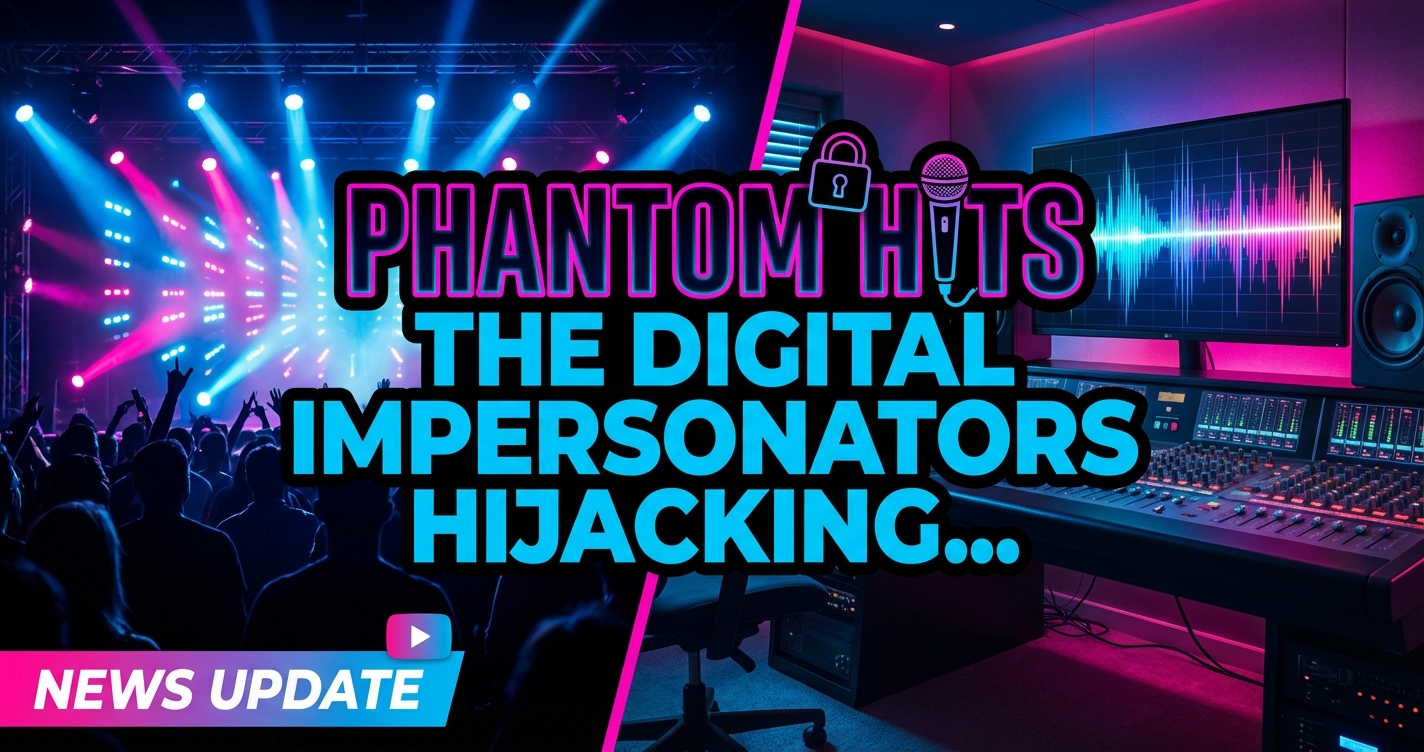
Phantom Hits: The Digital Impersonators Hijacking Your Favorite Artists’ Sound
It’s a familiar scenario: scrolling through your favorite streaming service, a new track pops up from an artist you love. The voice is uncannily similar, the production style feels just right, and you hit play. But what if that track, that voice, isn’t actually them? What if it’s a meticulously crafted digital doppelganger, a phantom hit designed to siphon streams and royalties, leveraging the very sound that defines an artist’s identity?
This isn’t the old game of anonymous bedroom producers dropping soundalike tracks. We’re talking about a far more sophisticated, insidious phenomenon. Industry insiders are sounding the alarm: advanced generative technology has supercharged the problem of stream fraud, moving beyond simple bot farms to create entirely new, convincing musical content that mimics established artists with chilling accuracy. It’s a profound challenge to artistic authenticity and intellectual property, shaking the foundations of how music is created, consumed, and monetized.
The Rise of the Synthetic Soundalikes
Fraudulent streams have long been a thorn in the side of the music industry. For years, bad actors have deployed bots and click farms to artificially inflate play counts, diverting royalties from legitimate artists and labels. But the latest evolution of this scam is a game-changer. These new tools can analyze an artist’s vocal timbre, melodic habits, lyrical themes, and even their signature production techniques, then generate entirely new songs that sound startlingly authentic.
Imagine a track from your favorite pop star, complete with their distinctive vocal inflections and lyrical quirks, yet entirely unauthorized and created by a machine. This isn’t just about stealing a melody; it’s about effectively stealing an artist’s entire sonic persona. These ‘synthetic soundalikes’ are then uploaded through various digital distributors to major streaming platforms, often under slightly altered artist names or even entirely new, generic monikers designed to confuse algorithms and unsuspecting fans. The goal is simple: rack up millions of streams before detection, cashing in on the illusion of authenticity.
Artists and Their Voices: A New Battleground for Identity
For artists, the implications are dire. Beyond the immediate financial hit – diluted royalties from genuine streams being siphoned off by these phantom tracks – there’s a profound threat to their artistic identity and brand. How do fans distinguish real from fake when the mimicry is so good? The potential for confusion, reputational damage, and even legal quagmires is immense. An artist’s voice is their most unique instrument, their fingerprint; to have it replicated and exploited without consent is a violation of the highest order.
Independent artists, often lacking the legal teams and resources of major labels, are particularly vulnerable. One indie artist, speaking anonymously to DailyDrama, expressed the deep sense of violation. “It’s not just about the money,” they said, “it’s about someone else using my voice, my style, to make something I didn’t create. It’s like a digital identity theft.” The mental and emotional toll of seeing one’s creativity co-opted in this way cannot be overstated.
Streaming Platforms and the Content ID Conundrum
The spotlight inevitably turns to the streaming platforms themselves. Services like Spotify, Apple Music, and Amazon Music are the primary conduits for this fraudulent content. While they employ sophisticated content ID systems and regularly engage in takedowns of suspicious tracks, the sheer volume and increasing sophistication of these generative impersonations pose an unprecedented challenge. It’s a constant game of cat and mouse, where detection systems struggle to keep pace with ever-evolving methods of deception.
Many in the industry argue that platforms and their digital distribution partners need to implement more stringent vetting processes for new uploads. The speed at which new music can be uploaded and distributed globally is a double-edged sword: it empowers independent creators but also provides an open door for bad actors. The onus is increasingly on these platforms to invest heavily in advanced detection technologies and enforce stricter guidelines to protect artists and ensure the integrity of their ecosystems.
A Broader Industry Reckoning
This surge in digital impersonation isn’t an isolated incident; it’s part of a larger, ongoing reckoning for the entertainment industry with the rapid advancement of generative tools. We’ve seen similar debates rage over deepfake videos, unauthorized use of actors’ likenesses, and the ethical boundaries of digital sampling. From the legal battles over early sampling in hip-hop to the ongoing fight against digital piracy, the music industry has a long history of grappling with technological shifts that challenge traditional notions of ownership and creation.
The conversation now extends to fundamental questions about copyright in the age of synthetic media: When a machine learns from an artist’s entire catalog and generates a new track, who owns the resulting work? Is the original artist due compensation? These are complex legal and ethical waters that will require collaboration between lawmakers, technology companies, artist advocacy groups, and the industry at large to navigate.
What to Watch For Next
The fight against digital artist impersonation is only just beginning. Expect to see increased investment in forensic audio analysis technologies, stricter upload policies from digital distributors, and potentially new legislative efforts to protect an artist’s ‘voice rights’ and creative identity. The industry is at a critical juncture, facing the challenge of embracing innovation while safeguarding the very essence of human artistry. The question isn’t just whether we can detect these phantom hits, but whether we can preserve the authenticity of music itself in an increasingly synthetic soundscape.