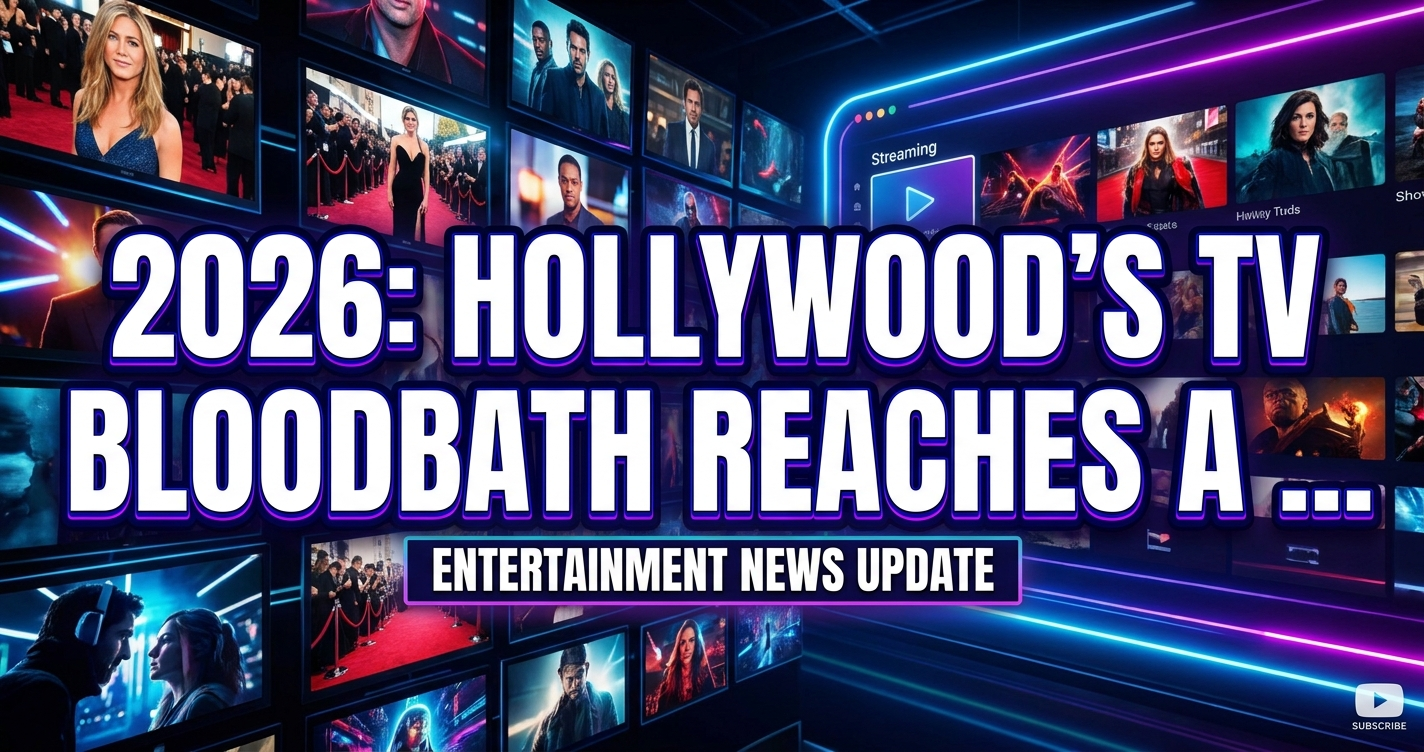
2026: The Year Hollywood’s TV Bloodbath Reaches a Fever Pitch
As the calendar pages turn towards 2026, industry whispers are growing louder, and the prognosis isn’t pretty for many beloved (and even some brand-new) television series. DailyDrama.com has been tracking the shifting tides in Hollywood for years, and what’s unfolding now feels less like a course correction and more like an outright industry reckoning. The days of endless greenlights and bottomless budgets seem to be firmly in the rearview mirror, making 2026 a year that could reshape the television landscape as we know it.
For a long time, the mantra was ‘more is more.’ Streamers, in particular, chased subscriber growth with an insatiable appetite for content, often prioritizing prestige and volume over sustainable profitability. Networks, in turn, fought to retain relevance with their own mix of tentpole dramas and buzzy new entries. But the economic realities, coupled with evolving audience habits and the ever-present pressure from shareholders, have forced a dramatic pivot. Now, the question isn’t just ‘will people watch it?’, but ‘is it worth *this much* for *that many* people?’
Sources across major studios and streaming platforms confirm a renewed, almost ruthless, focus on ROI (Return on Investment). Every pilot, every renewal, every existing series is under the microscope. If a show isn’t delivering massive viewership, critical acclaim, or a significant boost in subscriber acquisition/retention, its days are numbered. This isn’t just about the occasional low-rated casualty; it’s a systemic culling, and 2026 is shaping up to be one of the most brutal years for TV show cancellations in recent memory.
The Streaming Scrutiny: From Subscriber Obsession to Profitability Push
The streaming wars, once a mad dash for supremacy, have matured into a grueling marathon for profitability. Companies like Warner Bros. Discovery, Paramount Global, and even the seemingly unshakeable Netflix, have all publicly stated their commitment to financial efficiency over pure growth. This means fewer vanity projects, less tolerance for slow-burn dramas that don’t immediately capture a huge audience, and a much shorter leash for even critically praised shows that come with a hefty price tag.
Consider the trajectory of a show like Amazon’s Gen V. While the The Boys spin-off was quickly renewed for a second season, the very fact that a show of its caliber and existing fanbase would even be mentioned in the same breath as future cancellations (as some industry pundits are doing for *any* high-cost show post-initial renewal) speaks volumes. Even established hits aren’t entirely safe from scrutiny if their production costs escalate without a proportional jump in new subscribers or sustained engagement. Executives are no longer afraid to pull the plug, even on projects with significant embedded costs, if the long-term projections don’t align with the new fiscal realities. One insider familiar with a major streamer’s strategy put it bluntly, “The era of ‘throw everything at the wall and see what sticks’ is over. Now, we’re building a wall, and only the strongest bricks get in.”
The “One-and-Done” Dilemma and the Sophomore Slump
For new series, the window for success has narrowed to a sliver. The “one-and-done” phenomenon, where shows are canceled after a single season, is becoming the norm rather than the exception. Take a high-profile series like The Abandons, set to star Lena Headey and from a proven showrunner. While the pedigree is undeniable, the pressure on such a show to deliver immediate, undeniable numbers will be immense. The luxury of a slow build, or even a second season to find its footing, is a relic of a bygone era.
The “sophomore slump” isn’t just a creative challenge anymore; it’s a financial death sentence. If a show’s second season doesn’t significantly improve its metrics, or if its audience retention drops off, it’s an easy target for cancellation. This trend forces creators into a difficult position: front-load the action, make every episode feel like a finale, or risk not getting to tell your full story. It also makes it harder for audiences to commit, fostering a cautiousness that can become a self-fulfilling prophecy for new shows.
The Showrunner Shuffle and Talent Exodus
This aggressive cancellation culture also has a profound impact on the creative talent behind the scenes. Showrunners, once courted with lucrative overall deals, are finding those agreements re-evaluated and restructured. The promise of multiple projects and long-term security is being replaced by shorter-term contracts and performance-based incentives. This can lead to a talent exodus, as creatives seek more stable environments or pivot to feature films, which, despite their own challenges, often offer a more defined beginning and end.
Actors, too, are facing increased uncertainty. Longer contracts are rarer, and the guarantee of multi-season arcs is evaporating. For many, the constant churn means a perpetual audition cycle and less opportunity to build long-standing characters that resonate deeply with audiences.
What It Means for Viewers: A More Cautious Future
For the average viewer, 2026’s cancellation wave will likely breed a sense of fatigue and caution. Why invest time and emotional energy into a new series if there’s a strong chance it will be unceremoniously axed after a single season, leaving plotlines unresolved and characters unexplored? This could lead to audiences gravitating even more towards established franchises, reality TV, or older, completed series – a conservative viewing strategy that ironically makes it even harder for new, original programming to break through.
The TV landscape of 2026 will be leaner, meaner, and undeniably more competitive. While this might lead to a higher batting average for the shows that *do* survive, it also means less creative risk-taking and potentially fewer truly groundbreaking, niche narratives. DailyDrama.com will continue to monitor these trends, keeping you informed as Hollywood navigates this treacherous new era.
What to watch for next: Keep an eye on mid-season 2025 ratings for any new shows that struggled out of the gate, as their fates for 2026 will likely be sealed early. Also, pay close attention to any major streamer earnings calls – executive commentary on content spend will be a strong indicator of who’s tightening the purse strings the most.