The Unlikely Kingmaker: How ‘Dutton Ranch’ Rode Past Dragons to Streaming Glory
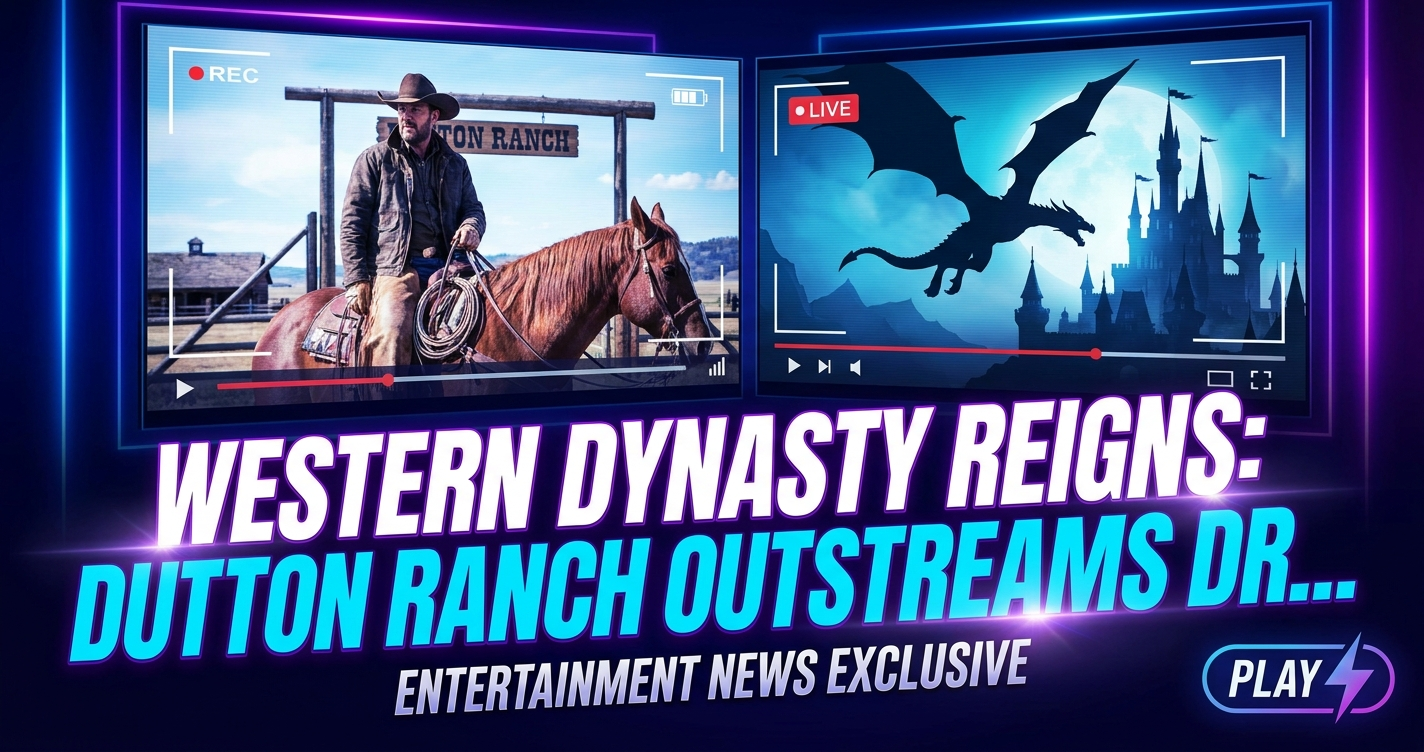
In a contest that might have seemed unthinkable a few years ago, the latest chapter in the sprawling Yellowstone universe, often colloquially referred to as ‘Dutton Ranch,’ has reportedly outstreamed HBO’s fantasy juggernaut, House of the Dragon. This isn’t just a win; it’s a seismic shift, a testament to the unexpected power of the modern Western, and a significant marker in the ongoing streaming wars.
While stylistically worlds apart – one rooted in gritty historical drama, the other soaring on the wings of dragons and ancient prophecies – both series represent the pinnacle of franchise television in the 2020s. They are tentpole spin-offs, designed to expand beloved universes and hook audiences in an increasingly fragmented media landscape. Yet, it was the dusty plains of a 19th-century Montana ranch, rather than the intricate political machinations of Westeros, that captured the most eyeballs for its first season finale.
The Taylor Sheridan Empire: Building a Modern Western Dynasty
The success of the ‘Dutton Ranch’ series—which, for clarity, is the fifth installment in Paramount’s rapidly expanding Yellowstone universe, following the flagship show and its wildly successful prequel 1883—is inextricably linked to the vision of one man: Taylor Sheridan. Sheridan isn’t just a showrunner; he’s a brand. He has single-handedly revitalized the Western genre, transforming it from a niche offering into appointment television for millions.
Industry insiders tell DailyDrama.com that Paramount’s strategy to bet big on Sheridan has paid off handsomely. “They gave him the keys to the kingdom, and he’s built an empire,” one studio executive, who requested anonymity to speak frankly, observed. “It’s not just Yellowstone and its prequels; it’s Mayor of Kingstown, Tulsa King, and soon Lawmen: Bass Reeves. He’s created a loyal audience that follows his name, regardless of the specific premise.” This level of showrunner-as-star power is rare, reminiscent of Shonda Rhimes’s early days at ABC or Ryan Murphy’s prolific output, but with a distinct, rugged American flavor.
The appeal of the Dutton-verse is multifaceted. It offers escapism to a simpler, albeit harsher, time. It delves into universal themes of family loyalty, land, and legacy. It speaks to a demographic often overlooked by the coastal-centric entertainment industry, connecting with viewers who appreciate its authentic, albeit often brutal, portrayal of frontier life and the challenges of upholding traditions in a changing world.
HBO’s Dragon Problem? The Weight of a Legacy
On the other side of this streaming showdown is House of the Dragon, HBO’s much-anticipated prequel to the global phenomenon Game of Thrones. Expectations were stratospheric. After the divisive final season of its predecessor, HotD faced the monumental task of not only recapturing the magic but also restoring faith in the franchise. And to its credit, it largely succeeded, earning critical acclaim and drawing a massive, dedicated fanbase that devoured every twist and turn in the Targaryen dynasty’s descent.
So, how could a show of such pedigree, backed by the might of HBO (now Max), potentially fall behind a Western prequel? It’s not a failure for House of the Dragon, which remains a massive hit by any measure. Instead, it highlights the unique challenges and opportunities in the current streaming landscape. “Fantasy, by its nature, can be a barrier to entry for some,” explains a veteran TV critic. “The lore, the names, the complex histories – it demands a certain level of commitment. The Dutton-verse, while serialized, offers a more immediately relatable emotional core.”
Furthermore, while Game of Thrones created a global cultural phenomenon, its prequels are still operating under the shadow of its gargantuan success. There’s a constant comparison, a need to prove itself worthy, that the Yellowstone universe, which started with lower expectations, has largely avoided.
Beyond the Charts: What This Tells Us About Streaming
This head-to-head performance offers several critical insights into the state of television and streaming:
- The Power of Niche (or not-so-niche) Genres: The Western, once thought dead, is alive and thriving. It proves that compelling storytelling, even within a specific genre, can attract a broad audience if executed with vision and authenticity.
- Franchise Fatigue vs. Franchise Fervor: Both shows are spin-offs, underscoring Hollywood’s reliance on proven IP. However, the ‘Dutton Ranch’ victory suggests that novelty within a familiar framework (a new time period, new characters, but same universe) can sometimes outshine direct lineage.
- Paramount+’s Ascendance: This win is a huge boost for Paramount+, a streamer that has aggressively leveraged its intellectual property, particularly the Yellowstone brand, to carve out its place in the crowded market. It demonstrates that you don’t need the broadest library if you have a few undeniable hits.
- Showrunner as King: The era of the powerful showrunner is far from over. Taylor Sheridan’s creative control and distinct voice are key differentiators for the Dutton-verse.
The Art of the Spin-off: A Tale of Two Universes
Ultimately, this isn’t about one show being ‘better’ than the other. Both are expertly crafted and resonate deeply with their respective audiences. It’s about different strategies for expanding universes. HBO is meticulously building out the history of Westeros, creating a rich tapestry for devout fans. Paramount, through Sheridan, is exploring different facets of American history and culture, using the Dutton family name as a gravitational center, but allowing for varied tones and settings within that orbit.
The ‘Dutton Ranch’ series’ success is a loud declaration that the Yellowstone universe has transcended its initial fan base, becoming a mainstream cultural force. It’s a compelling case study for studios looking to cultivate their own mega-franchises, proving that sometimes, the most surprising stories can come from the most unexpected places – or in this case, from the heartland, not high fantasy.
What to watch for next: The future of the Yellowstone universe remains a hot topic, especially with rumors swirling around Kevin Costner’s potential exit from the flagship series and the addition of stars like Matthew McConaughey to future projects. Will Sheridan continue his prolific output without diluting the brand? Meanwhile, HBO is reportedly developing several more Game of Thrones spin-offs, including a potential Jon Snow series. The battle for streaming supremacy, fueled by these massive, interconnected universes, is far from over. We’ll be watching closely to see whose empire expands next.