Atonement Stage Trailer Drops: Can Hampton Master McEwan’s Epic Again?
The literary world, and indeed the entire entertainment industry, is buzzing. Chichester Festival Theatre has just released the first production trailer for its highly anticipated world premiere stage adaptation of Ian McEwan’s monumental novel, Atonement. And with it, the question that has hung in the air since the project was first announced resurfaces with renewed urgency: Can Christopher Hampton, the acclaimed adapter behind some of cinema’s most revered literary translations, truly capture the sprawling, intricate tapestry of McEwan’s masterpiece for the stage?
For fans of McEwan’s work, Atonement is more than just a story; it’s an immersive experience, a deeply philosophical exploration of guilt, memory, class, and the power of narrative itself. Its 2007 film adaptation, directed by Joe Wright and starring Keira Knightley, James McAvoy, and Saoirse Ronan, was a critical and commercial darling, garnering seven Oscar nominations, including Best Adapted Screenplay for Hampton himself. But translating a sweeping, internal novel that relies heavily on an unreliable narrator and shifts in perspective to the visual medium of film is one challenge. Bringing it to the intimate, immediate world of live theatre is an entirely different beast.
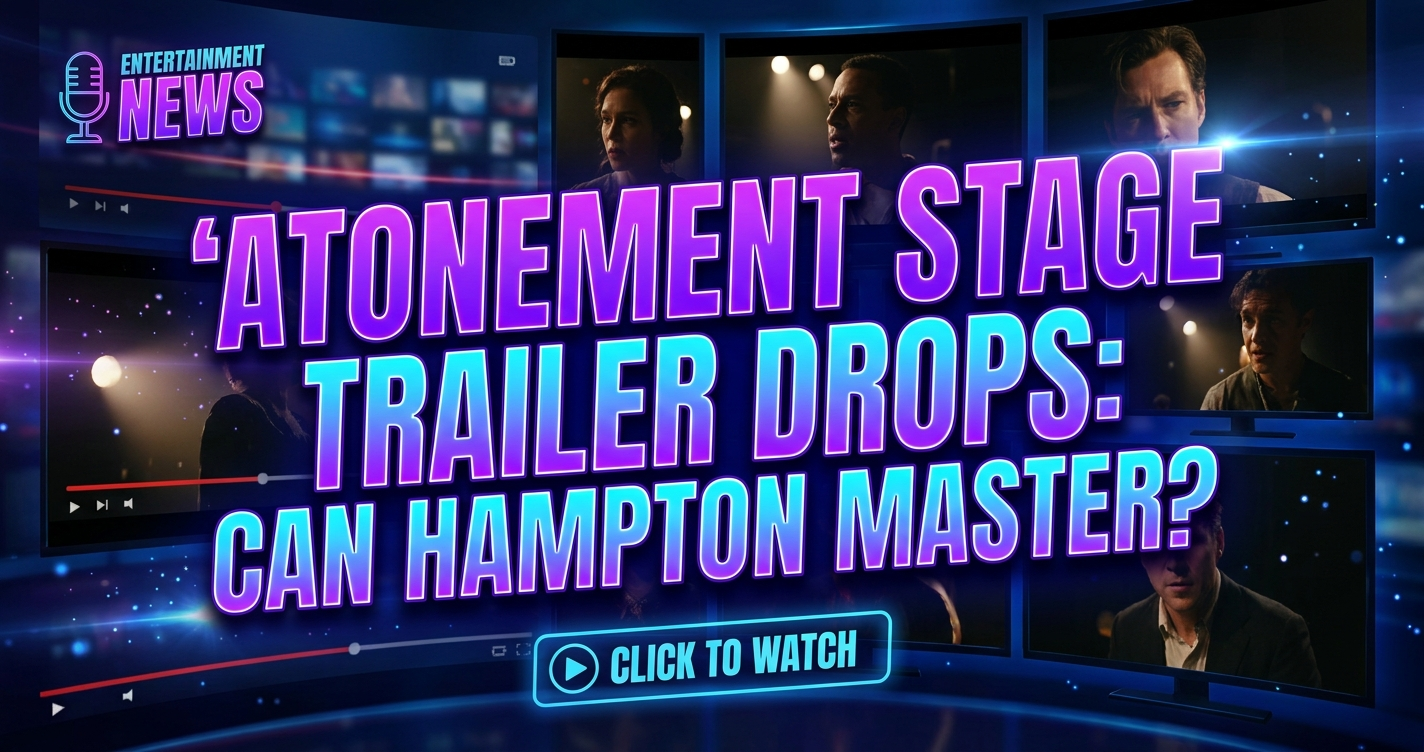
The trailer offers tantalizing glimpses of Miriam Petche and Jasper Talbot in the iconic roles, hinting at a production that promises both grandeur and raw emotional intensity. Yet, the inherent difficulties of staging a narrative that spans decades, crosses battlefields, and delves deep into the psychological landscape of its characters remain at the forefront of industry discussions. This isn’t just another book-to-stage adaptation; it’s a high-stakes gamble on one of modern literature’s most beloved and complex works.
Hampton’s History with Literary Giants: A Master of Adaptation
If anyone is equipped to tackle the theatrical leviathan that is Atonement, it’s Christopher Hampton. The Oscar-winning screenwriter and playwright has built a career on deftly navigating the treacherous waters of literary adaptation. His 1988 screenplay for Dangerous Liaisons, adapted from his own play, earned him an Academy Award, showcasing his uncanny ability to distill complex narratives and biting dialogue from source material. He also penned the screenplay for the aforementioned Atonement film, demonstrating a prior understanding of McEwan’s narrative intricacies.
Beyond these triumphs, Hampton’s resume boasts adaptations of Henrik Ibsen’s A Doll’s House and the screenplays for films like Carrington and The Quiet American. His reputation is one of meticulous respect for the source text combined with a clear-eyed vision for how to translate its essence to a new medium. Industry insiders are watching closely to see how he’ll approach the unique structural challenges of Atonement for the stage, particularly its famously meta-fictional ending and the deeply internal monologues that define Briony Tallis’s journey.
The Unstageable?: Atonement’s Narrative Challenge
Many pundits questioned if Atonement could ever be effectively staged, given its reliance on an unreliable narrator, shifting perspectives, and vast chronological scope. The novel’s power lies in its gradual unveiling of truth, its examination of a childhood mistake with devastating adult consequences, and its poignant, almost self-aware commentary on storytelling itself. How do you convey the internal machinations of a burgeoning writer’s mind, the sweeping horror of Dunkirk, or the quiet desperation of love lost, all within the confines of a proscenium arch?
The film adaptation utilized cinematic techniques – voiceovers, sweeping camera work, and the sheer visual scale – to convey these elements. On stage, Hampton will need to rely on the magic of theatricality: innovative set design, lighting, soundscapes, and the raw power of performance. Sources close to the production indicate a focus on the emotional core and the devastating ripple effect of Briony’s actions, perhaps streamlining some of the more expansive historical elements to concentrate on the personal drama. It’s a bold choice that will undoubtedly spark debate among purists and theatre-goers alike.
Chichester: A Proving Ground for Theatrical Gold
The choice of Chichester Festival Theatre for the world premiere is no accident. Chichester has long been a prestigious launchpad for productions destined for the West End and even Broadway. Known for its high production values and adventurous programming, the theatre offers a perfect environment for a major new work to find its footing. A “strictly limited run” at Chichester often signals a testing ground, allowing the creative team to fine-tune the production before a potential transfer to a larger, longer engagement.
The theatre’s artistic director is said to be immensely proud of bringing such a significant literary work to the stage, emphasizing Chichester’s commitment to bold, challenging new theatre. For audiences, it means a rare opportunity to witness a world premiere of a highly anticipated adaptation, potentially catching a glimpse of a future theatrical hit before it reaches wider acclaim.
New Faces in Iconic Roles: Petche and Talbot Step Up
Stepping into roles previously embodied by the likes of Keira Knightley, James McAvoy, and Saoirse Ronan is no small feat. Miriam Petche and Jasper Talbot, while not household names to the same degree, are respected talents within the UK theatre scene. Petche takes on the complex role of Briony Tallis, a character who evolves dramatically from a precocious child to a guilt-ridden adult. Talbot, meanwhile, has the unenviable task of portraying Robbie Turner, the wrongly accused lover whose life is irrevocably altered.
This provides a unique opportunity for these actors to make these iconic characters their own, free from the shadow of their screen predecessors. Stage performances demand a different kind of intensity, a sustained presence that fills the theatre, and a vocal dexterity that conveys both internal thought and external emotion. Their performances will be crucial in selling the emotional truth of Atonement to a live audience, and all eyes will be on them as they bring McEwan’s tragic lovers and their accuser to life.
The release of the Atonement stage adaptation trailer is more than just a promotional beat; it’s a declaration of intent. Christopher Hampton, Chichester Festival Theatre, and its talented cast are taking on a literary giant, daring to ask if its profound narrative can find a new, equally powerful voice on the stage. The industry is holding its breath, eager to see if this audacious undertaking will prove to be a theatrical triumph. What to watch for next? The critical reception will be paramount, followed by swift announcements regarding potential West End transfers if the buzz lives up to the hype.