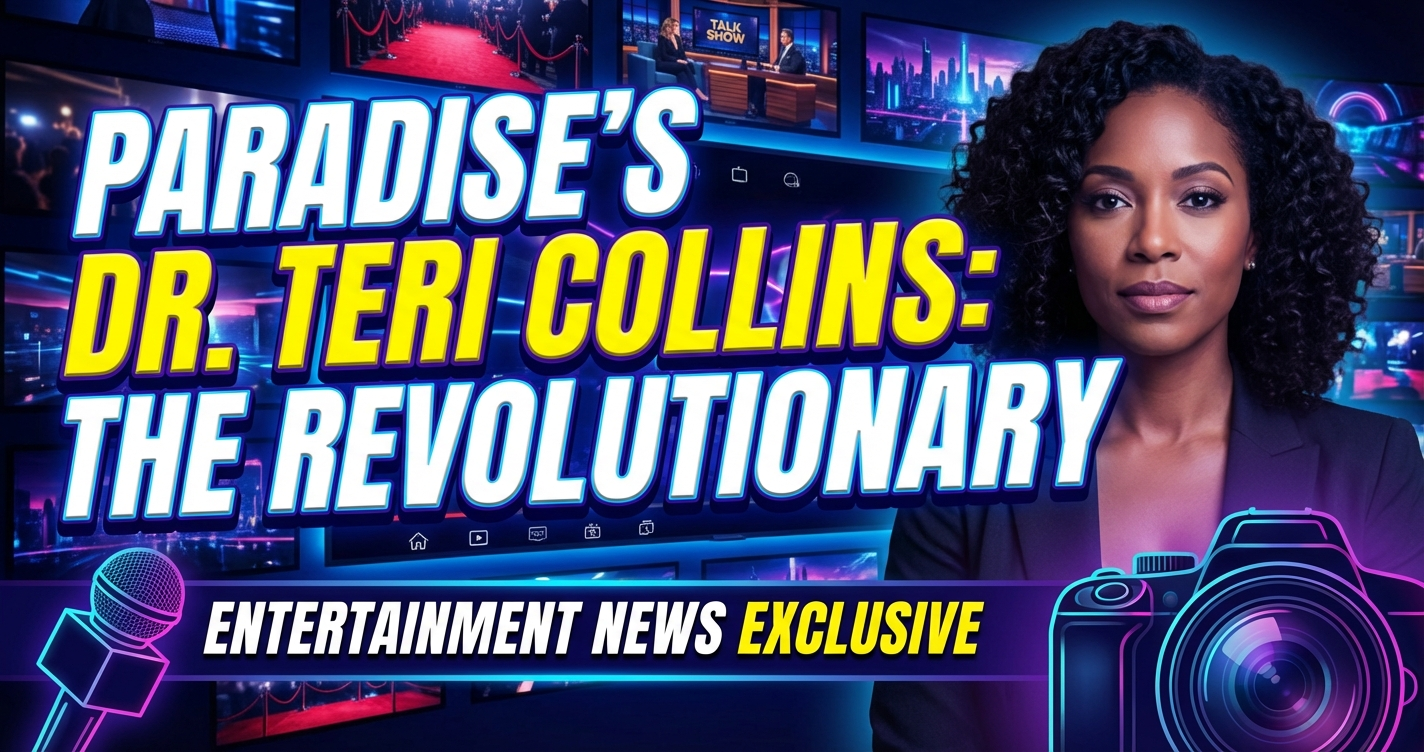
‘Paradise’s’ Dr. Teri Collins: The Revolutionary Hero TV Needs
In an era saturated with prestige television, it takes something truly special to cut through the noise and capture the collective imagination. Enter Paradise, the gripping survival drama that has not only redefined the genre but, more importantly, introduced us to Dr. Teri Rogers Collins, a character so profoundly resonant, she’s become the unexpected heart of the series. As Season 2 wraps, the buzz around Teri isn’t just about her pivotal role in navigating disaster; it’s about the seismic shift her portrayal represents for Black women on screen.
From its very first episode, Paradise, from acclaimed showrunner Maya Vance, has specialized in high-stakes drama, pitting humanity against an unimaginable catastrophe. But where many post-apocalyptic or disaster-centric narratives lean into the grim, the cynical, or the morally ambiguous, Season 2 elevated Dr. Teri Rogers Collins into a different kind of hero. She is, in the simplest yet most powerful terms, good. Unwaveringly, unequivocally good. And in a world that often celebrates anti-heroes, Teri’s steadfast compassion and integrity have proven to be the most addictive element of the show.
Beyond the Apocalypse: A New Kind of Hero Emerges
The disaster genre has long been a fertile ground for exploring the depths of human nature. From Lost‘s intricate character studies to The Walking Dead‘s brutal moral dilemmas, survival stories often push characters to their breaking points, revealing their darkest impulses. Paradise certainly doesn’t shy away from these harsh realities, showing us the lengths to which desperation can drive people. Yet, Dr. Teri Rogers Collins stands as a beacon, a reminder that even amidst utter chaos, decency can not only survive but thrive.
Industry insiders have quietly celebrated Vance’s deliberate choice to craft Teri as a counter-narrative. “We’ve been craving characters who lead with empathy, not just brute force or cunning,” a source close to the production recently shared with DailyDrama.com. “Teri isn’t a superhero in the traditional sense; she’s a deeply human woman who chooses goodness, time and again, even when it’s the hardest path. That’s a revolutionary act on television right now.” Her heroism isn’t about saving the world with a single grand gesture, but through countless small acts of kindness, medical expertise, and unwavering belief in humanity.
The Evolving Narrative of Black Women On Screen
Perhaps the most significant impact of Dr. Teri Rogers Collins lies in her nuanced portrayal as a Black woman. For too long, Black female characters in mainstream media have been confined to rigid archetypes: the stoic ‘strong Black woman’ who shoulders everyone’s burdens, the sassy sidekick, or the tragic victim. While strength is undeniably a facet of Teri’s character, it’s not her defining trait, nor is it presented as a burden she *must* carry for others.
What Paradise so beautifully illustrates through Teri is that Black women don’t need to be solely defined by their resilience in the face of adversity. They can be vulnerable, they can be desired, they can be taken care of, and they can be fought for. They can be loved wholeheartedly, simply for being themselves, without the prerequisite of saving everyone around them. This mirrors a broader, vital shift in television, championed by creators like Issa Rae (Insecure) and Ava DuVernay (Queen Sugar), who have consistently pushed for more authentic, multi-dimensional Black female experiences.
As one of our DailyDrama.com critics pointed out, “Teri challenges the very notion that a Black woman’s worth is tied to her ability to endure hardship or be the perpetual savior. She’s allowed to simply exist, to be loved, and to embody inherent goodness. That’s a profound statement in 2024 television.” Her relationship with Xavier Collins, for instance, is depicted with a tenderness and equality that transcends typical on-screen romance, showcasing a partnership built on mutual respect and genuine affection.
Crafting the “Addictive” Binge: Inside the ‘Paradise’ Writing Room
The success of Paradise isn’t just about one character, however compelling. The show’s addictiveness stems from a masterful blend of high-stakes plotting and profound character development. Showrunner Maya Vance, known for her ability to weave intricate emotional tapestries in previous projects like The Echo Chamber, has perfected this balance in Paradise. The creative team understands that the spectacle of disaster can only hold an audience for so long; it’s the personal journeys and the relationships forged under pressure that keep viewers hitting ‘next episode.’
Sources reveal that the writers’ room actively sought to subvert genre tropes, particularly in how characters react to extreme stress. “We didn’t want easy answers or predictable breakdowns,” a writer shared. “We wanted to explore the full spectrum of human response, from fear and selfishness to profound selflessness. Teri became our anchor in that exploration.” This commitment to psychological realism, coupled with thrilling plot twists and a relentless pace, ensures that Paradise remains a must-watch, week after week, or in most cases, binge-watch after binge-watch.
The show’s ability to maintain narrative tension while simultaneously delivering deeply satisfying character arcs is a testament to its strong creative vision. It manages to be both a nail-biting thriller and a deeply moving character study, a rare feat in today’s crowded streaming landscape.
What to Watch For Next
As fans eagerly await news on Season 3, the future of Paradise, and particularly Dr. Teri Rogers Collins, remains a hot topic. Will the creative team continue to lean into her unwavering moral compass, or will new challenges test her goodness in unforeseen ways? One thing is certain: Teri has already left an indelible mark on television, proving that quiet strength, profound empathy, and genuine goodness can be the most compelling and revolutionary forces on screen. We’ll be watching closely to see how Paradise continues to evolve its groundbreaking narrative.