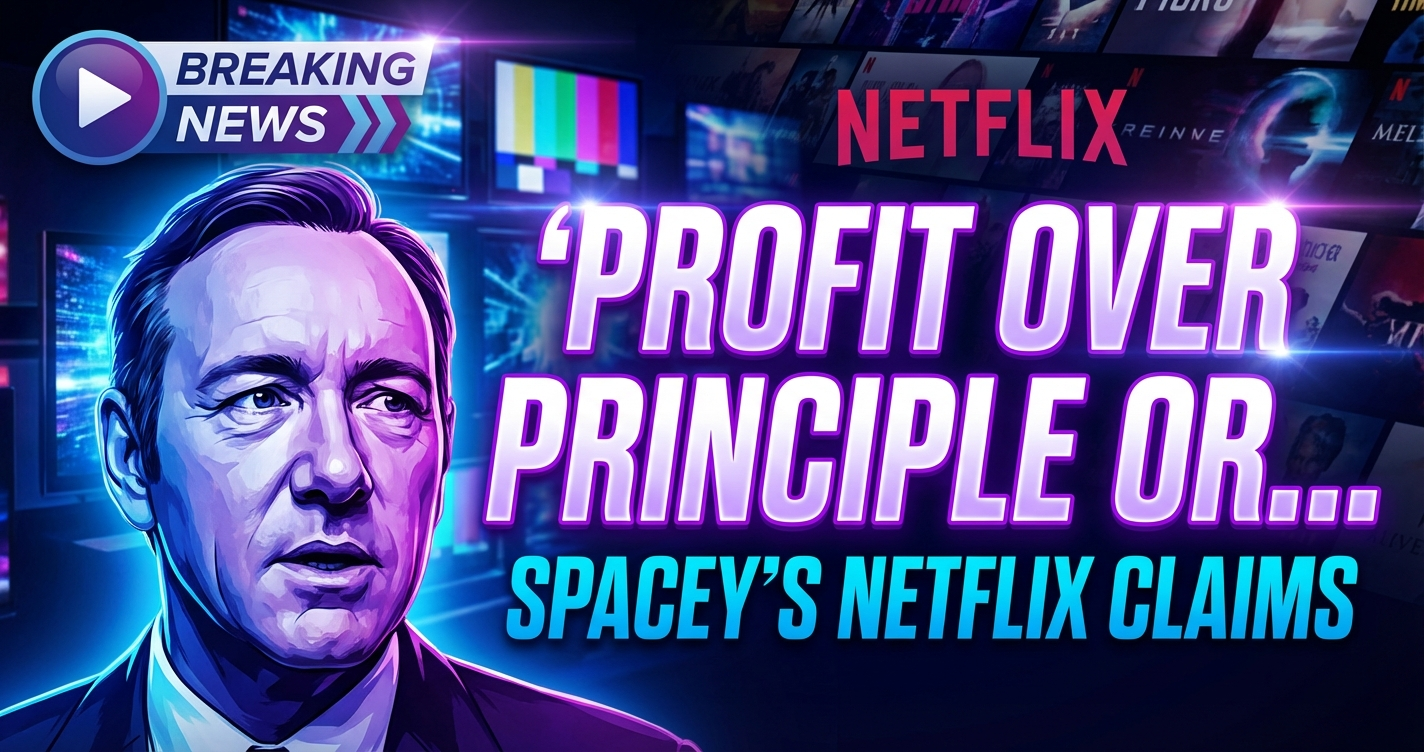
Kevin Spacey’s Latest Claims Reignite Debate Over Netflix’s ‘House of Cards’ Exit
The entertainment world is once again buzzing as fallen star Kevin Spacey publicly asserts that his dramatic exit from Netflix’s flagship series, House of Cards, was a cold, calculated move by the streamer to ‘protect their cash.’ His recent statements, echoing a long-held personal narrative, force us to revisit a pivotal moment in Hollywood history—a moment that redefined accountability in the streaming era and sent shockwaves through every major studio.
For those of us who watched the meteoric rise of Netflix’s original programming, House of Cards was a cornerstone. It wasn’t just a critical darling; it was the series that cemented Netflix as a serious player, capable of producing prestige television on par with HBO. Spacey, a two-time Oscar winner, was the gravitational center of that universe, embodying the Machiavellian Frank Underwood with a chilling brilliance that captivated millions. Then, the allegations hit.
The Unprecedented Fallout: A Studio’s Standoff with Its Star
In late 2017, as the #MeToo movement gained an undeniable, seismic force, multiple accusations of sexual misconduct against Spacey emerged. The industry, still reeling from the Harvey Weinstein scandal, was on high alert. For Netflix, the stakes couldn’t have been higher. Their brand, built on innovation and perceived cultural leadership, was suddenly entangled in a scandal involving its most prominent star.
Sources close to the situation at the time tell DailyDrama.com that the internal discussions at Netflix were intense, with options ranging from halting production indefinitely to a full cancellation. Ultimately, the streamer made an unprecedented decision: fire their lead actor and pivot the entire final season to focus on Robin Wright’s Claire Underwood. This wasn’t just a creative challenge; it was a logistical and financial nightmare. Rewrites, reshoots, contract renegotiations—the cost was astronomical. Yet, Netflix moved swiftly, effectively amputating its most recognizable star from its most important show.
Spacey’s ‘Profit’ Narrative vs. Industry Reality
Spacey’s recent claims suggest Netflix’s decision was purely mercenary, driven by a desire to shield its burgeoning profits from controversy. While no major corporation is immune to financial considerations, industry watchers widely understood Netflix’s move as a multi-faceted decision. Yes, protecting the bottom line was undoubtedly a factor. Advertisers, partners, and subscribers would have undoubtedly recoiled from a show fronted by a figure facing such severe allegations.
However, framing it solely as a ‘cash protection’ strategy arguably downplays the immense pressure on companies to demonstrate a commitment to ethical standards and workplace safety in the post-#MeToo landscape. Netflix, as a global brand vying for subscribers, was under intense public scrutiny. To ignore the allegations and continue with Spacey would have been a catastrophic blow to their public image, potentially alienating millions and jeopardizing future projects with talent unwilling to be associated with such a perceived tolerance.
The #MeToo Aftershocks: A New Era of Accountability
The Spacey-House of Cards saga became a benchmark for how studios and networks would handle similar situations. Prior to this, public figures embroiled in scandal often saw their careers merely paused or relegated to smaller, less visible projects. Post-Spacey, the message was clear: major studios, especially those with global streaming ambitions, would not hesitate to cut ties with high-profile talent if allegations were deemed credible and threatened their brand integrity.
We’ve seen similar, though perhaps less dramatic, ripple effects across Hollywood. The industry, once notorious for its quiet complicity, now operates with a heightened awareness of public perception and moral responsibility. Casting directors, showrunners, and network executives now routinely conduct deeper background checks and consider the ‘risk factor’ associated with talent, not just their creative prowess. This isn’t to say the industry is perfect, far from it, but the calculus has undeniably shifted.
What’s Next: Spacey’s Comeback Trail and Netflix’s Evolving Brand
For Kevin Spacey, the road back to mainstream Hollywood has been arduous, marked by independent films and legal battles. His recent acquittal in a UK court has emboldened him to speak more openly, yet the industry gatekeepers remain cautious. The shadow of the past, regardless of legal outcomes, often lingers in the court of public opinion.
Meanwhile, Netflix has continued its aggressive expansion, weathering its own creative and financial storms, but always with the Spacey precedent in its institutional memory. The decision to excise him from House of Cards wasn’t just about one show or one actor; it was a defining moment for a nascent streaming giant grappling with its newfound power and responsibility. It was a gamble that paid off, allowing them to salvage their most important early original series and send a clear message: no star, no matter how big, is bigger than the brand. We will continue to watch how this evolving dynamic shapes talent relations and corporate ethics in Hollywood’s ever-changing landscape.