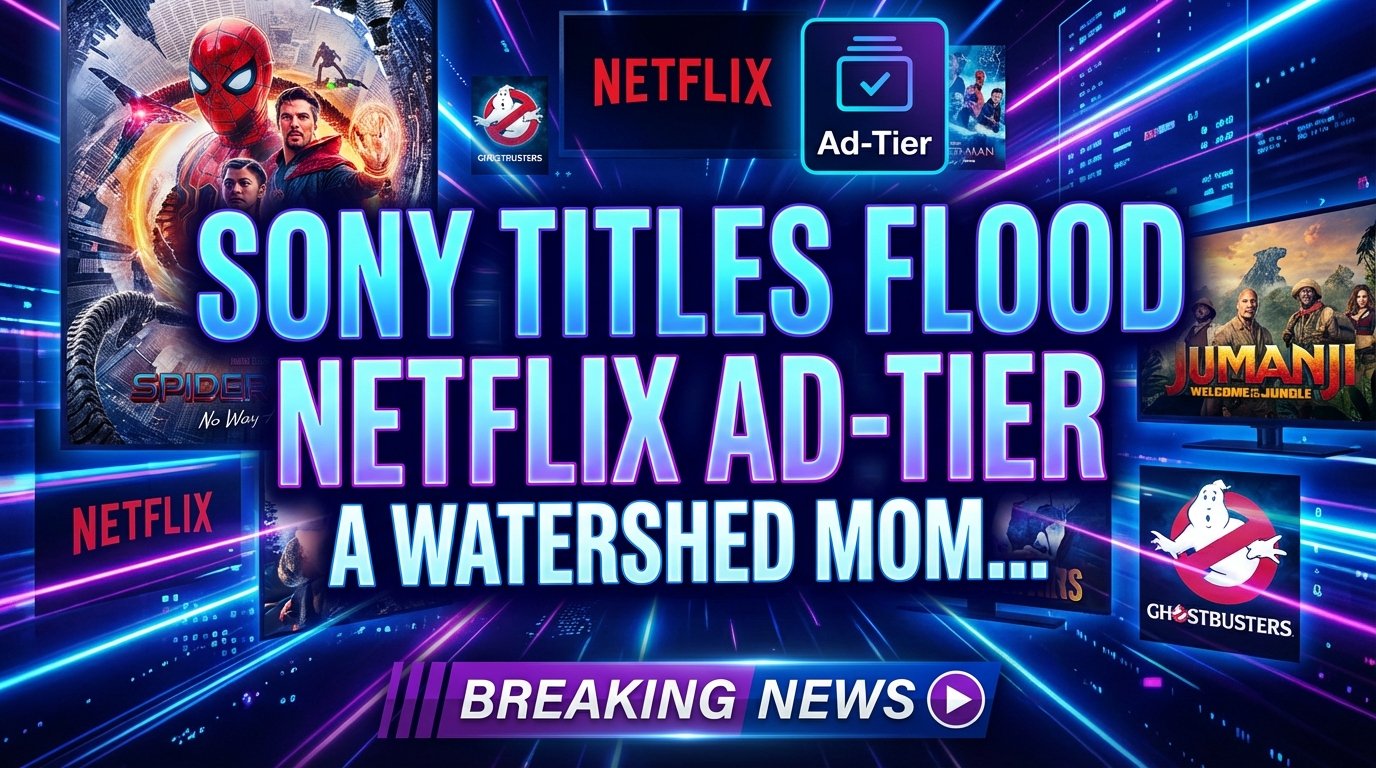
Sony Titles Flood Netflix Ad-Tier: A Watershed Moment in Streaming Content Strategy
It wasn’t long ago that the idea of a major studio’s premium content being readily available on an ad-supported streaming tier felt like a pipedream, or perhaps a desperate last resort. Yet, here we are. The news that Sony Pictures’ extensive library is now largely unlocked for Netflix’s ad-supported subscribers – with a mere fraction of titles remaining off-limits – isn’t just a win for consumers; it’s a profound declaration about the evolving economics of the streaming wars. This isn’t just about a few more movies; it’s about the industry’s pivot from chasing endless subscriber growth to embracing diverse, robust monetization strategies.
For years, content was king, and exclusivity was its iron crown. Studios, eager to build out their own direct-to-consumer platforms, often pulled their most coveted titles from third-party streamers, even if it meant leaving significant licensing revenue on the table. The thinking was simple: hoard your IP, build your fortress, and subscribers will come. Netflix’s initial foray into an ad-supported tier was met with skepticism, not just from audiences accustomed to an ad-free experience, but from content partners wary of diluting their brands or cannibalizing their own ad-supported ventures.
Sony’s Unique Position and the AVOD Imperative
Sony Pictures, however, has always operated a little differently. Unlike media behemoths like Disney, Warner Bros. Discovery, or Paramount, Sony doesn’t own a flagship direct-to-consumer streaming service. Instead, they’ve always been the consummate content supplier, a studio-for-hire model that prioritizes robust licensing deals across the board. From their lucrative ‘Pay-1’ window deals (famously with Netflix, and more recently with Disney+ for some animated fare) to their general library licensing, Sony has consistently sought to maximize revenue by selling their content to the highest and broadest bidders.
This strategic positioning makes them a natural partner for Netflix’s ad-tier expansion. “Sony understands the power of reach and multiple revenue streams better than most,” noted one veteran industry analyst we spoke with, requesting anonymity to speak frankly about studio strategies. “They don’t have the same internal pressures to keep everything exclusive to an in-house platform. For them, it’s about monetizing their content in every conceivable way, and that absolutely includes AVOD.”
The move underscores a broader industry trend: the shift from a ‘growth at all costs’ mentality to a laser focus on profitability. After years of hemorrhaging cash to acquire and produce content, streaming services are under immense pressure to turn a profit. Ad-supported tiers offer a vital lifeline, allowing them to attract cost-conscious subscribers while simultaneously generating significant advertising revenue. The more compelling the content on these tiers, the more attractive they become to both viewers and advertisers.
What the “Less Than 1%” Means and Why It Matters
The fact that “less than 1%” of Sony’s library remains blocked for Netflix’s ad-supported subscribers is telling. These holdouts are likely not strategic content decisions aimed at protecting a rival streamer. Instead, they usually boil down to very specific, often intricate, rights issues: an expiring music license, a particularly complex talent residual agreement, or a very short-term, pre-existing exclusivity window with a niche platform. It’s the kind of contractual minutiae that keeps legal departments busy, rather than a studio actively trying to withhold a blockbuster.
For Netflix, this influx of Sony content – which includes major franchises like Spider-Man films, Jumanji, and beloved classics – is a huge boon. It strengthens the value proposition of their ad-supported tier, making it even harder for budget-conscious consumers to opt for the pricier ad-free option or switch to a competitor. It’s a clear signal to the market that Netflix is serious about making its AVOD offering a premium destination, not just a dumping ground for older, less desirable content.
The Ripple Effect Across the Streaming Landscape
This move isn’t happening in a vacuum. It puts pressure on other major players. Will Disney, which has been experimenting with licensing some of its library content (like certain FX shows) to Hulu, consider opening up more of its crown jewels to its own ad-supported Disney+ tier, or even to third parties in specific cases? Will Warner Bros. Discovery double down on Max’s ad-supported offering by ensuring its entire library is available, or perhaps license more broadly to generate additional cash?
“Exclusivity will always have its place, particularly for tentpole originals,” a former studio executive, now a consultant, told DailyDrama.com. “But the days of blanket exclusivity for an entire catalog are quickly fading. The market demands flexibility, and profitability requires it. This Sony-Netflix deal is a loud bellwether.”
We’re witnessing a significant maturation of the streaming industry. The initial gold rush of subscriber acquisition is over. Now, it’s about sustainable business models, diversified revenue streams, and giving consumers value at every price point. The willingness of a major content powerhouse like Sony to fully embrace Netflix’s ad-supported offering is a clear indication that AVOD isn’t just a secondary option anymore – it’s a cornerstone of the future of entertainment.
What to Watch For Next
Keep an eye on how other major studios react to this development. Will we see more selective licensing deals for ad-supported tiers? Will the definition of “premium content” shift as more high-profile titles become available with ads? And how will this influence the theatrical window, if studios find more immediate and diverse monetization avenues post-cinema? The streaming landscape remains fiercely competitive, but the playbook is clearly being rewritten.