The Netflix Axe Falls Again: A Quiet End for a New Beginning
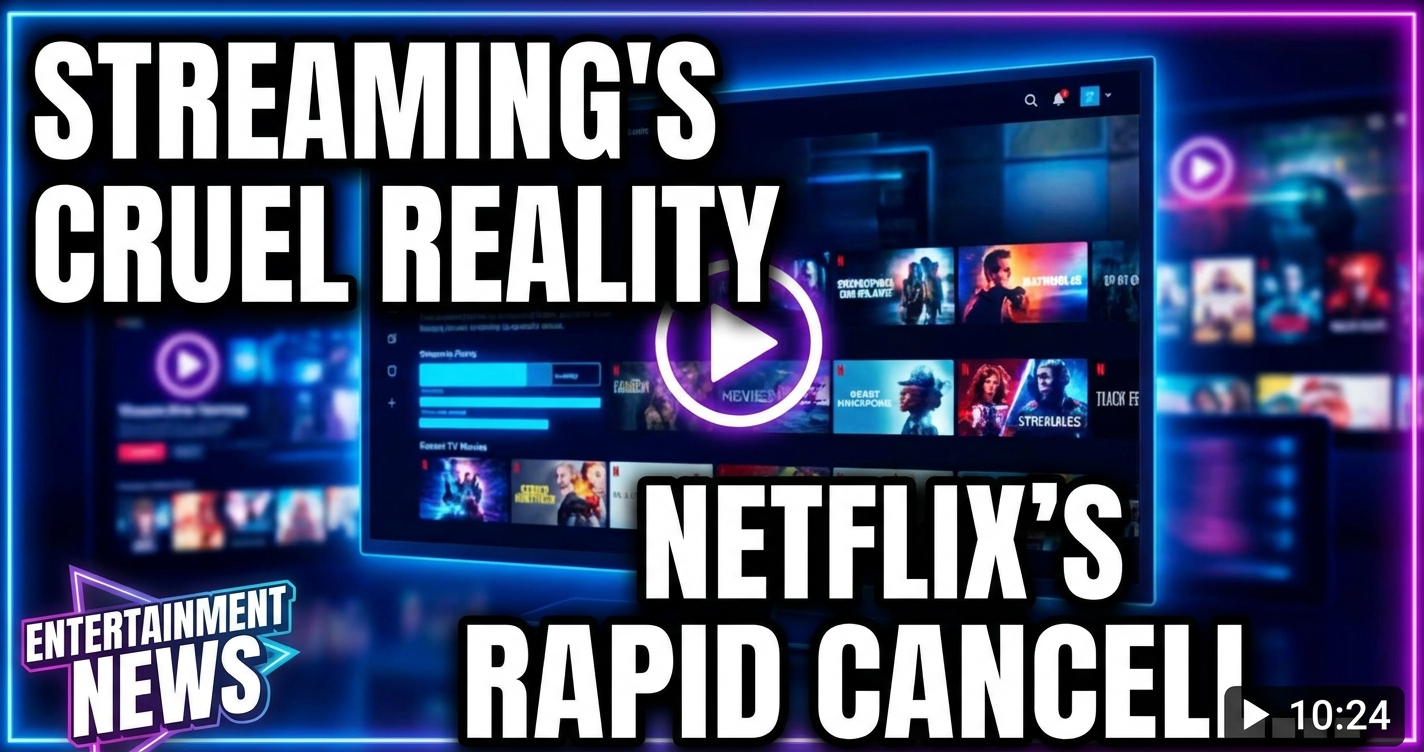
It’s become a familiar, if always jarring, headline: Netflix has quietly canceled another new series, barely weeks after its debut. The latest casualty, whose name we won’t dwell on here, joins a growing graveyard of shows that never made it past their freshman season, signaling a harsh truth in the streaming wars: the window for success is shrinking faster than ever.
While the specific series may vary, the pattern is consistent. A show premieres with fanfare, captures some initial buzz, and then, often before the ink on its initial reviews is dry, it’s unceremoniously axed. For industry veterans, this isn’t surprising. Netflix, the titan that popularized the binge-watching model, has also perfected the art of the swift, data-driven execution. It’s a strategy that prioritizes instant, massive engagement over slow burns or critical acclaim, leaving creators and audiences alike in a constant state of uncertainty.
The streaming giant has always been notoriously secretive about its internal metrics, but the outcome is clear: if a show doesn’t immediately grab a significant, global audience and keep them hooked through to the finale, its days are numbered. This latest cancellation, coming just a month after its first season dropped, is merely another stark reminder of the cutthroat environment for content in the digital age.
The Silent Killer: How Netflix’s Data Machine Decides Show Fates
Behind every cancellation is a mountain of data. Netflix, unlike traditional networks, doesn’t rely solely on Nielsen ratings. Instead, it tracks everything: who watches, how much they watch, how quickly they finish a season (the crucial “completion rate”), how many new subscribers a show attracts, and how many existing subscribers it retains. These aren’t just vanity metrics; they’re the lifeblood of its business model.
“For Netflix, every show is an investment with an expected return,” an industry analyst, who wished to remain anonymous to discuss proprietary strategies, told DailyDrama.com. “If a series isn’t performing on multiple key indicators – driving new subscriptions, retaining existing ones, and being cost-effective per viewer – it becomes a liability. The longer they keep it going, the more expensive it gets, especially with rising production costs.”
This ruthless efficiency has led to some high-profile, and sometimes controversial, cancellations. Remember the fan outcry over the abrupt ending of genre darlings like 1899 or Warrior Nun (which, to its credit, found new life through fan efforts elsewhere)? Or the critically acclaimed but quickly dispatched Archive 81? Even shows with beloved stars, like the workplace comedy Blockbuster, which ironically centered around a video store, couldn’t escape the axe, despite the nostalgia factor and a recognizable cast.
The High Stakes for Creators and the Industry
For showrunners and their teams, the Netflix model presents a unique challenge. Developing a series is a marathon, often taking years from pitch to premiere. Yet, its fate can be sealed in a matter of weeks. Sources close to recently canceled productions often express frustration over the lack of transparency or a clear path to improvement.
“You pour your heart and soul into something, thinking you’ve made a compelling story, and then it’s gone before people even have a chance to discover it organically,” one showrunner, whose series was recently canceled by a major streamer (not Netflix in this instance, but experiencing similar pressures), lamented. “There’s no grace period, no time to build a word-of-mouth following. It’s an immediate hit or miss.”
This “instant gratification” expectation trickles down, impacting everything from storytelling to talent acquisition. Writers might feel pressured to craft cliffhangers for every episode to boost completion rates, potentially sacrificing narrative depth. Actors, too, face a new reality where multi-season contracts are less of a guarantee and more of a gamble.
What Makes a Show “Safe” in the Streaming Wars?
So, what does it take to survive Netflix’s gauntlet? Historically, shows with established IP (like The Witcher or Wednesday), those that become genuine cultural phenomena (Squid Game, Stranger Things), or those that tap into a massive, underserved global audience tend to be safer bets. Netflix is also increasingly investing in local-language content that can travel globally, like its Korean dramas, which often demonstrate incredible efficiency in terms of cost-per-viewer and subscriber acquisition.
Mid-budget dramas, comedies, or sci-fi series without a pre-existing fanbase seem to be particularly vulnerable. They often lack the immediate, explosive appeal of a blockbuster or the niche, passionate following that can sustain a smaller show. They fall into a grey area where their viewership is “good,” but not “Netflix-good,” which, in the current landscape, simply isn’t enough.
The Future: More Cuts, Higher Stakes
As the streaming market matures and competition intensifies, expect more of these rapid-fire cancellations across all platforms. Max, Prime Video, and Hulu are all facing similar economic pressures to demonstrate profitability and efficiency. The era of unchecked spending and endless renewals for moderately performing shows is largely over.
For viewers, this means a constant churn of new content with fewer guarantees of narrative closure. For creators, it means an even greater emphasis on developing concepts that can instantly captivate and hold a global audience. The “Netflix axe” isn’t just a quirk of one company; it’s a defining feature of the modern entertainment industry. What to watch for next? More swift goodbyes, and perhaps, a renewed focus from streamers on quality over quantity – or at least, quantity that *really* performs.