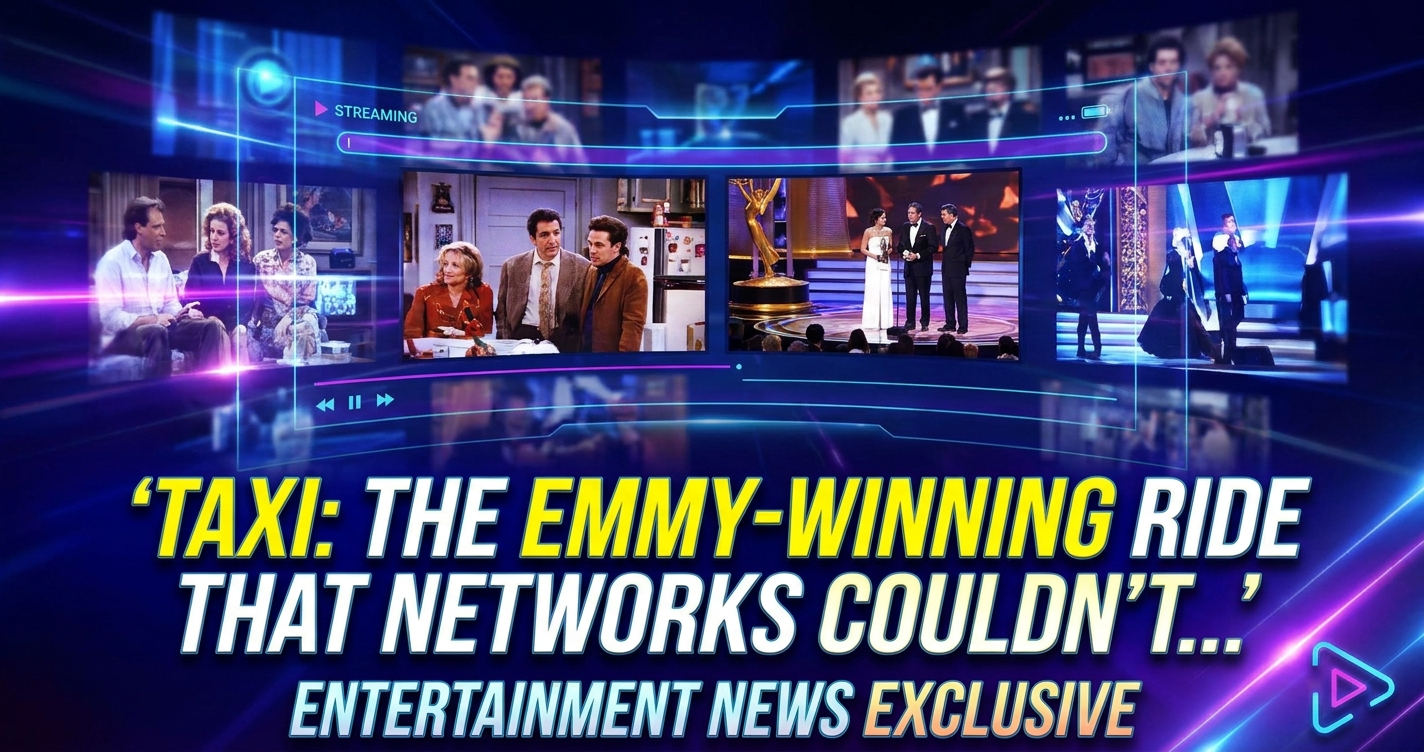
Taxi: The Emmy-Winning Ride That Networks Couldn’t Keep On Track
In the annals of television history, few shows exemplify the perpetual tension between artistic merit and commercial viability quite like Taxi. For anyone who grew up watching television in the late 70s and early 80s, or discovered its brilliance in syndication, the show was a masterclass in ensemble comedy, character development, and poignant storytelling. Yet, despite racking up a staggering 18 Emmy Awards – including three for Outstanding Comedy Series – its journey was a bumpy one, marked by a high-profile network cancellation and a last-ditch reprieve.
When Taxi first hit the airwaves on ABC in September 1978, it immediately stood out. Created by James L. Brooks, Stan Daniels, David Davis, and Ed Weinberger – a dream team from the legendary MTM Enterprises, known for crafting sophisticated sitcoms like “The Mary Tyler Moore Show” and “The Bob Newhart Show” – Taxi brought a gritty realism to the sitcom format. It centered on a motley crew of New York City taxi drivers, each with their own outlandish dreams and often bleak realities, working for the fictional Sunshine Cab Company. The cast was a who’s who of future stars: Judd Hirsch as the grounded Alex Rieger, Danny DeVito as the tyrannical dispatcher Louie De Palma, Marilu Henner as the vivacious Elaine Nardo, Tony Danza as the dim-witted boxer Tony Banta, Jeff Conaway as the aspiring actor Bobby Wheeler, Christopher Lloyd as the spacey Reverend Jim Ignatowski, and of course, the inimitable Andy Kaufman as Latka Gravas.
From the outset, critics raved. The show was hailed for its sharp writing, fearless tackling of serious themes disguised as comedy, and a cast that delivered nuanced performances week after week. It was intelligent, often melancholic, and deeply human – a dramedy before the term became commonplace. It challenged audiences in a way most network sitcoms didn’t dare, proving that laughter could coexist with genuine pathos.
The High Cost of Quality: Why ABC Pulled the Plug
So, with all this critical adoration and awards recognition, why did ABC, the network that launched it, decide to cancel Taxi after just four seasons? The answer, as it so often is in network television, boiled down to economics. Despite its prestige, Taxi struggled to find a massive mainstream audience. Its ratings, while respectable in some demographics, weren’t consistently blowing the competition out of the water, especially when compared to its hefty production costs.
In the late 70s and early 80s, network television was a different beast. The landscape was dominated by three major players – ABC, CBS, and NBC – and their primary goal was to capture as many eyeballs as possible to sell advertising. Shows like Taxi, which appealed to a more discerning, perhaps niche, audience, were often seen as less valuable than broader, more accessible fare. Industry insiders at the time frequently observed that executives prioritized mass appeal over critical darlings if the numbers didn’t justify the investment. Taxi was an expensive show to produce, requiring a large ensemble cast, intricate sets, and top-tier writing talent. When the ratings didn’t align with the budget, even a critically acclaimed, Emmy-winning series became expendable.
It was a stark reminder that in the cutthroat world of network programming, even the most artistically brilliant shows could fall victim to the bottom line. This wasn’t an isolated incident; other quality shows like WKRP in Cincinnati and Frank’s Place also faced similar struggles with network support despite critical praise. The struggle between creative control and commercial viability has always been a central theme in Hollywood, and Taxi was an early, prominent casualty.
NBC’s Eleventh-Hour Reprieve: A Brief Glimmer of Hope
The story of Taxi didn’t end with ABC’s cancellation, however. In a move that offered a glimmer of hope to fans and proved the show’s enduring industry respect, NBC swooped in and picked up the series for a fifth and final season. This was a significant moment, highlighting how much industry cachet Taxi truly had. NBC, often struggling in the ratings at the time, was looking for prestige and critical acclaim to bolster its lineup, and Taxi fit the bill perfectly.
The move to NBC was a temporary reprieve, granting the show another 24 episodes. It allowed the creative team to bring some closure to their beloved characters, and fans rejoiced at the chance to spend more time with the Sunshine Cab Company crew. However, the network change ultimately didn’t secure Taxi’s long-term future. The ratings challenges persisted, and after its fifth season, Taxi finally took its last ride, concluding in 1983.
While the NBC pickup was a testament to the show’s quality, it also underscored the difficulty of a network transfer. Building a new audience, even for an established show, on a different night and with different lead-ins, proved to be an uphill battle that even Taxi’s brilliance couldn’t fully overcome.
The Lasting Legacy: Far Beyond the Ratings Game
Decades later, the impact of Taxi far outshines its original ratings struggles. It’s remembered as a groundbreaking series that launched the careers of numerous stars and influenced countless shows that followed. Danny DeVito’s turn as Louie De Palma became iconic, paving the way for a stellar career in film and television, including his celebrated role in It’s Always Sunny in Philadelphia. Andy Kaufman’s portrayal of Latka remains one of television’s most unique and beloved characters, a testament to his singular genius. Judd Hirsch, Marilu Henner, Tony Danza, and Christopher Lloyd all went on to significant success, solidifying Taxi as a star-making vehicle.
Moreover, the show’s creative minds continued to shape the industry. James L. Brooks, for instance, would go on to co-create The Simpsons and direct Oscar-winning films like Terms of Endearment. The writing staff, which included future luminaries like Sam Simon (another co-creator of The Simpsons) and Ken Estin, set a high bar for comedic storytelling.
Today, Taxi is revered as a true classic, a show that was arguably ahead of its time. Its blend of humor and heartfelt drama paved the way for the “dramedy” genre that is so prevalent in modern television. In an era dominated by streaming services that often prioritize prestige and critical acclaim over immediate linear viewership, one has to wonder if Taxi, with its unique voice and character-driven narratives, might have found a more secure home today. It’s a testament to its enduring quality that it remains a subject of discussion and admiration, a powerful reminder that sometimes, the most acclaimed art struggles to find its place in the mainstream, only to be fully appreciated in retrospect.
What to Watch For Next:
The story of Taxi serves as a timeless case study in the entertainment industry. As network television continues to evolve and compete with the seemingly endless content from streaming platforms, the question of what constitutes success – ratings vs. critical acclaim, broad appeal vs. niche prestige – remains as relevant as ever. Keep an eye on how new shows navigate these waters, and which ones manage to balance commercial viability with artistic ambition, much like Taxi tried to do, in its own unforgettable way.