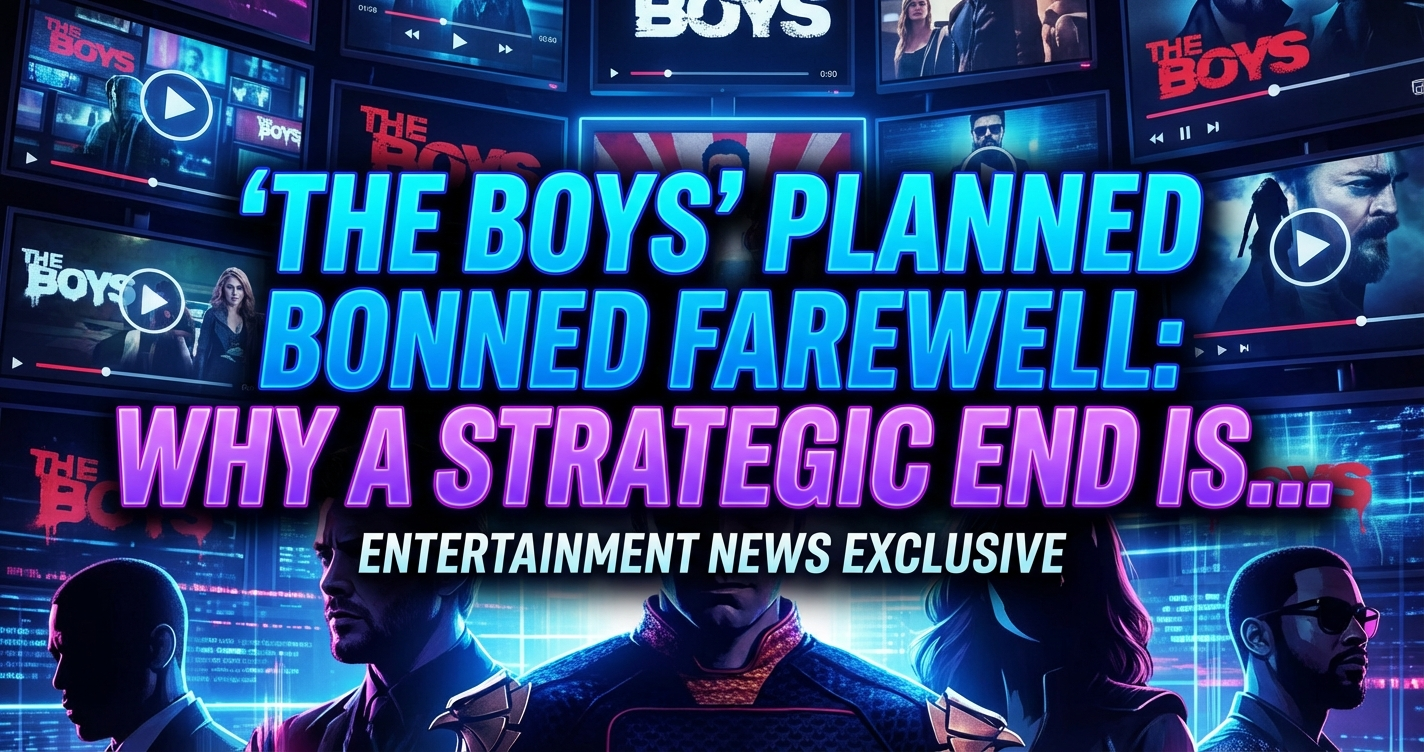
The Boys’ Planned Farewell: Why a Strategic End is TV’s New Gold Standard
In the ever-churning world of television, news of a show’s demise often sends shivers down fans’ spines, conjuring images of beloved characters left hanging by a network’s brutal axe. So, when headlines started circulating about The Boys wrapping up after its fifth season, many initially braced for impact. But here at DailyDrama.com, our industry radar picked up a very different signal: this isn’t a cancellation, it’s a meticulously planned conclusion. And frankly, it’s a move other series – and their platforms – should be taking notes from.
Showrunner Erik Kripke, the mastermind behind Amazon Prime Video’s subversive superhero smash, has been vocal about his vision for The Boys since its inception. From the jump, he envisioned a finite story arc, a complete narrative journey for Homelander, Butcher, Starlight, and the rest of Vought International’s complicated roster. This isn’t a show being cut short; it’s a story reaching its intended crescendo. In an era often defined by endless renewals and content bloat, Kripke’s steadfast commitment to a defined endpoint is a refreshing, even revolutionary, stance.
The Art of the Planned Goodbye: A Showrunner’s Vision
For too long, the default in television, particularly in genre fare, was to run a series until the audience, the creative team, or the budget simply gave out. Think about network darlings from yesteryear that limped to unsatisfying finales or, worse, were unceremoniously yanked off the air. The streaming era, while offering unprecedented creative freedom, initially seemed to double down on this ‘more is more’ philosophy, chasing subscriber numbers with an endless stream of content.
But the tides are turning. Audiences are savvier, and attention spans are shorter. A show with a clear beginning, middle, and end, one that doesn’t overstay its welcome, is increasingly valued. Kripke, who famously helmed Supernatural for its initial, more focused seasons before its epic 15-year run, understands the delicate balance. With The Boys, he’s leveraged the creative autonomy afforded by Amazon to deliver a tightly woven, impactful narrative that avoids the dreaded creative fatigue often associated with long-running series. Our sources close to the production indicate that Kripke has been working closely with Amazon from early on to chart this course, ensuring the story could build to a powerful, uncompromised finale.
Streaming’s Shifting Sands: Quality Over Quantity
Amazon Prime Video’s embrace of Kripke’s finite vision for The Boys speaks volumes about the evolving strategies of major streamers. While the initial land grab for content was about sheer volume, the industry is maturing. The focus is now shifting towards prestige, critical acclaim, and cultural impact – qualities that are much easier to achieve with a show that knows when to bow out gracefully. Look at the success of limited series like Chernobyl or The Queen’s Gambit; their self-contained nature amplified their impact.
This isn’t to say long-running hits are obsolete. But for a show like The Boys, which thrives on shocking twists, high-stakes character development, and biting social commentary, stretching the narrative too thin could dilute its power. The show consistently pushes boundaries, and maintaining that level of intensity and surprise over an indefinite period becomes exponentially harder. By setting a definitive endpoint, Kripke ensures that every season, every episode, contributes meaningfully to the overarching story, rather than filling time.
Beyond the Cape: What’s Next for Kripke & Co.?
The conclusion of The Boys in 2026 doesn’t mean the end of its universe, nor the end of Kripke’s influence. The established success of spin-offs like Gen V and the announced Mexico series demonstrates Amazon’s confidence in the franchise’s longevity. Kripke himself will likely remain an executive producer on these ventures, ensuring the satirical, no-holds-barred tone remains intact. For the talented cast – Karl Urban, Jack Quaid, Antony Starr, Erin Moriarty, and Jensen Ackles, to name a few – the planned ending frees them up for new, exciting projects without the uncertainty of an abrupt cancellation.
Industry whispers suggest Kripke is already eyeing new development deals, and his track record proves he’s a showrunner with a knack for creating compelling, long-lasting narratives. His ability to build vibrant worlds and populate them with complex characters makes him a highly sought-after creative force in Hollywood.
The Broader Landscape of 2026: Navigating the Renewal Gauntlet
While The Boys enjoys a controlled landing, many other shows heading into 2026 won’t be so lucky. The economic realities of streaming, the intense competition for audience eyeballs, and the ever-escalating costs of production mean that renewal decisions are more ruthless than ever. Platforms are scrutinizing viewership numbers, completion rates, and subscriber acquisition metrics with unprecedented rigor. Shows that don’t hit their targets, regardless of critical acclaim, often find themselves on the chopping block.
This creates a dichotomy: on one hand, we see the strategic, planned farewells of prestige shows; on the other, the abrupt, often heartbreaking cancellations of series that simply couldn’t justify their existence on a balance sheet. It’s a brutal game, but one that ultimately pushes creators to deliver their strongest, most impactful work. The pressure is on showrunners to not just tell a good story, but a *compelling* and *efficient* one.
What to Watch For Next: As The Boys marches towards its planned final bow, DailyDrama.com will be keenly observing how other major streamers follow suit. Will more showrunners be empowered to craft definitive endings? Or will the siren song of endless content continue to dominate? One thing is clear: the era of the planned ending is a sign of a maturing industry, one that understands the true value of a story well told, and well concluded.