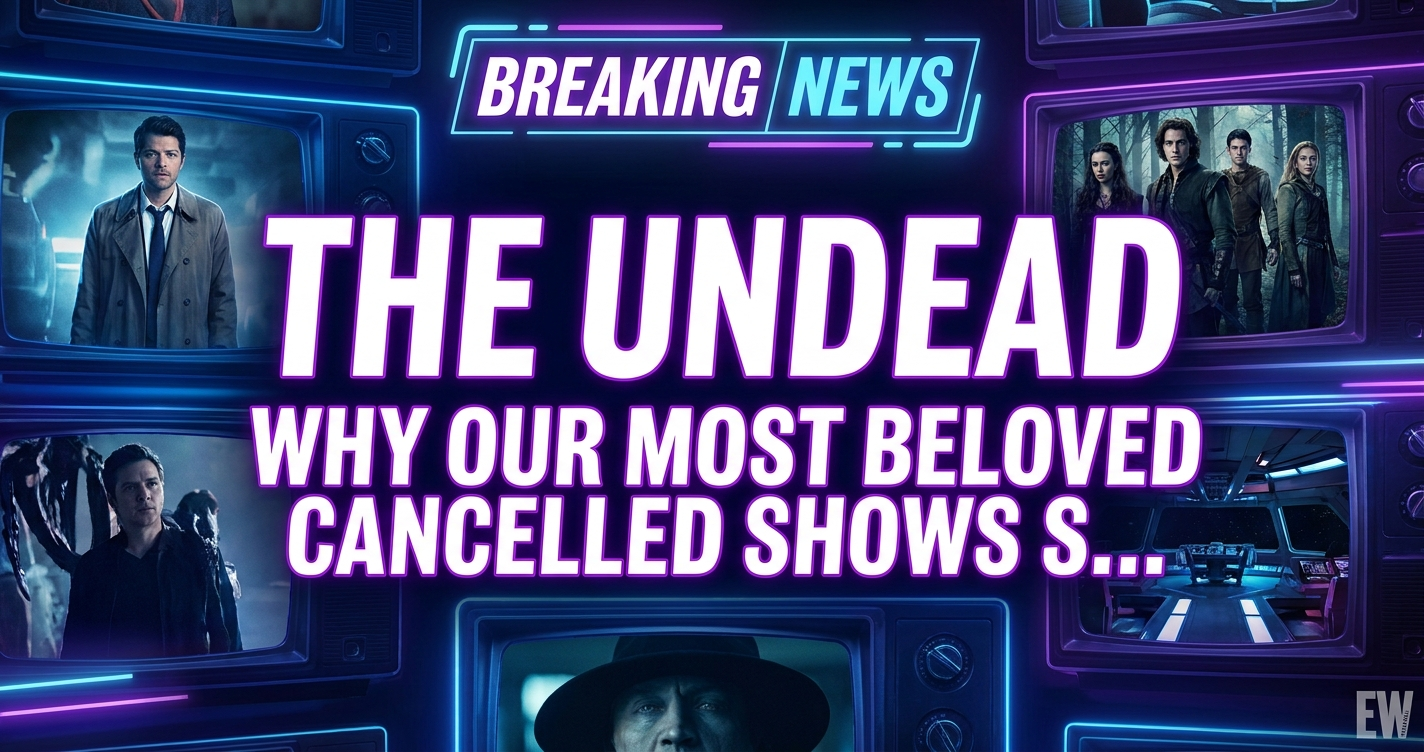
In the relentless churn of the entertainment industry, where new series debut weekly across a dizzying array of networks and streamers, there’s a unique kind of heartache reserved for the shows that ended too soon. Not the ones that ran their course and gracefully exited, but the ones ripped from our screens mid-story, leaving cliffhangers dangling and fan communities in perpetual mourning. It’s a phenomenon that transcends generations, from cult classics of the network era to prestige dramas cut short by the ruthless algorithms of the streaming wars. At DailyDrama.com, we constantly hear from readers and industry insiders alike about the series they wish would rise from the cancelled heap, a sentiment that only grows stronger as the landscape shifts.
The Lingering Ghosts of Peak TV
For years, we lived in an era of ‘Peak TV,’ where quantity often trumped longevity. Networks were fighting for eyeballs, streamers were building libraries, and the content spigot seemed wide open. But even then, some masterpieces were destined for an untimely demise. Think of Joss Whedon’s space-western Firefly. Cancelled by Fox after only 11 of its 14 episodes aired in 2002, it became the poster child for premature cancellation, its passionate fanbase — the Browncoats — famously fighting for years, eventually securing the feature film Serenity. It showed the nascent power of fan campaigns, but also the immovable force of network programming decisions.
Fast forward a decade, and Bryan Fuller’s visually stunning, psychologically dense Hannibal met a similar fate on NBC. Despite critical acclaim and a fiercely loyal, albeit niche, following, its complex narrative and often gruesome artistry proved a difficult fit for broadcast television’s broad demographic demands. It ended on a jaw-dropping cliffhanger in 2015, leaving Fannibals desperate for its return, a plea Fuller himself has often echoed, expressing hopes for a limited series revival that would finally conclude Will Graham and Hannibal Lecter’s twisted dance.
The Economics of “Too Soon”: Why Shows Die
While network cancellations often came down to live ratings and advertiser appeal, the streaming era introduced a new, often more opaque, calculus. Netflix, Amazon, Hulu, Max, and others operate on different metrics: subscriber acquisition, retention, completion rates, and global rights ownership. A show might be a critical darling but not ‘perform’ well enough to justify its ever-increasing production costs in the eyes of the bean counters.
Consider Netflix’s Mindhunter, a dark, atmospheric dive into the origins of criminal profiling, executive produced by David Fincher. After two critically lauded seasons, it was put on ‘indefinite hiatus’ in 2020. While not officially cancelled, the prognosis is grim. The reported reason? High production costs, a demanding shooting schedule, and Fincher’s own desire to focus on other projects. It’s a stark reminder that even with massive creative talent attached and a dedicated fanbase, the economics of streaming can be brutal. Another Netflix casualty, the beloved wrestling comedy GLOW, was famously renewed for a final season then un-renewed due to COVID-19 production complexities, a truly heartbreaking blow for its cast, crew, and devoted audience.
Fan Power vs. The Bottom Line
The digital age has amplified the voice of the aggrieved fan. Social media movements, petitions, and hashtags can generate significant buzz, sometimes even moving the needle. The #SaveLucifer campaign, for instance, famously brought the show from Fox to Netflix for multiple additional seasons. The cult success of Community, which bounced from NBC to Yahoo! Screen, then eventually inspired a movie, is another testament to fan tenacity.
However, industry insiders will tell you that while fan enthusiasm is crucial for building buzz and demonstrating potential, it rarely trumps cold, hard financial realities. “It’s a balance,” noted one veteran studio executive who preferred to remain anonymous. “We love to see passionate fans, but ultimately, we’re running a business. A small, vocal fanbase, no matter how dedicated, sometimes can’t justify a multi-million dollar per-episode budget when there are other shows competing for those slots.”
The Revival Renaissance: A Double-Edged Sword
The promise of a revival often keeps hope alive. We’ve seen successful returns like Veronica Mars on Hulu and Arrested Development on Netflix (though the latter’s reception was somewhat mixed). These projects demonstrate that there’s an appetite for returning to beloved worlds, offering creators a chance to provide closure or explore new narratives.
Yet, revivals aren’t without their risks. Can the magic be recaptured? Are the original cast and creative team available and willing? Does the story still resonate years later? For every triumphant return, there’s the potential for a misstep that tarnishes the original’s legacy. Showrunners like Hannibal’s Bryan Fuller have been careful, stating publicly that any return would need to be creatively justified and done right, rather than just for the sake of it.
What’s Next for the Almost-Were?
As the streaming landscape consolidates and companies focus more on profitability and subscriber efficiency, the chances for costly, niche revivals may become even slimmer. However, the rise of limited series and anthology formats offers a glimmer of hope. These shorter runs could provide the perfect vehicle for a beloved show to get a proper, contained ending without the pressure of an ongoing commitment.
Ultimately, the dream of seeing our favorite cancelled shows return remains a powerful one. It speaks to the enduring connection audiences form with characters and stories. While the industry continues its relentless march forward, the ghosts of the ‘almost-were’ will continue to haunt our watch lists, serving as a reminder that sometimes, the best stories are the ones that were never quite finished. We’ll be watching to see if any more of these specters find their way back to the land of the living.