HYBE’s Market Jolt: More Than Just a Concert Turnout?
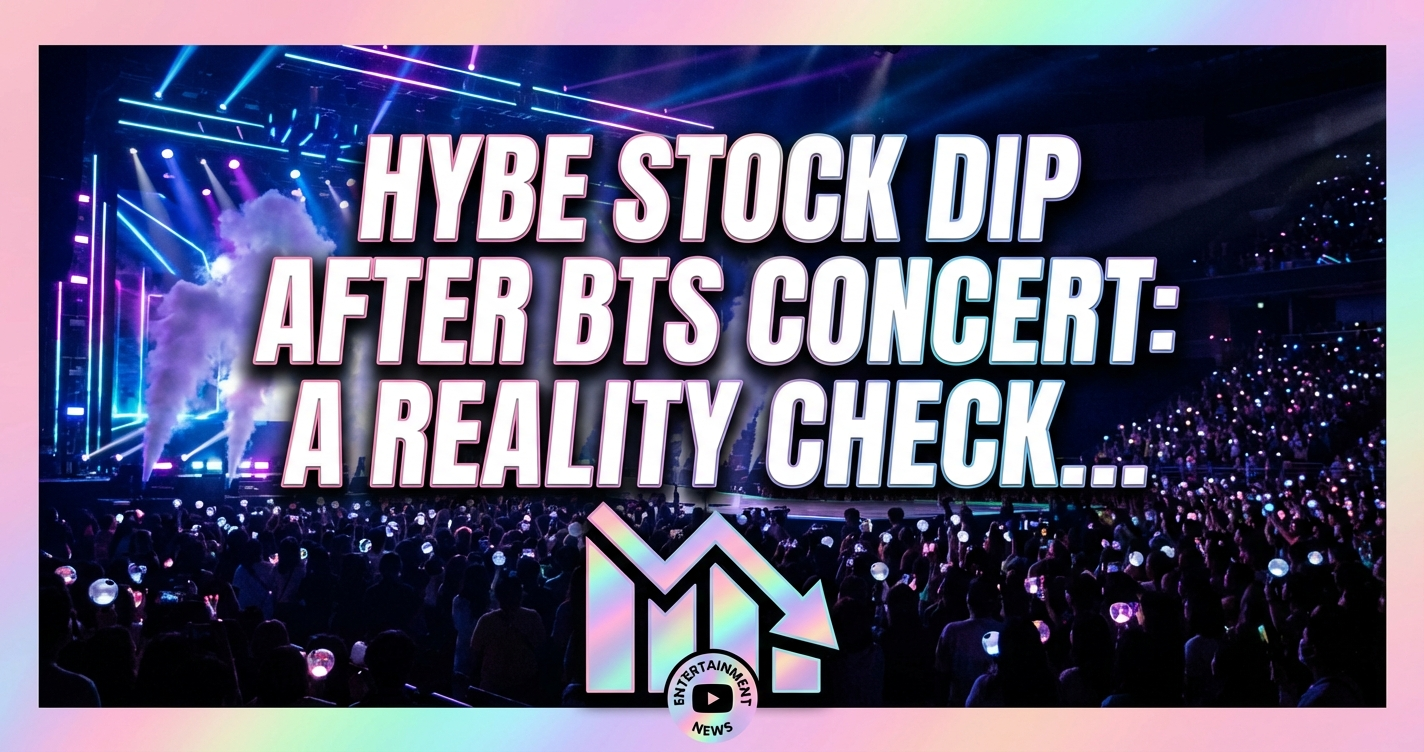
The entertainment world buzzed this week, but not with the usual celebratory notes. K-pop powerhouse HYBE Corporation, the agency behind global sensation BTS, saw its shares plummet by a significant 14.5% to a four-month low following a reported “weaker-than-expected turnout” at a recent BTS comeback concert. On the surface, it’s a straightforward narrative: an event underperforms, investor confidence wavers. But for those of us who’ve watched the intricate dance of K-pop and its financial markets for years, this isn’t just a blip; it’s a profound moment of reflection on the industry’s titans, their reliance on star power, and the ever-shifting sands of fan engagement.
To put it bluntly, expecting anything short of a record-shattering spectacle from BTS is like expecting the sun not to rise. This group redefined global music, broke every sales record imaginable, and built a fandom, ARMY, that is arguably the most dedicated and organized in history. So, for an event featuring BTS – even one amidst their staggered military hiatus – to be deemed “weaker than expected” by the market raises crucial questions. Was the turnout genuinely low, or were investor expectations simply astronomically out of touch with the current realities of a group navigating individual member activities and national service?
The BTS Factor: Unprecedented Heights and Inevitable Recalibration
BTS’s meteoric rise established an almost impossible benchmark for success. Their stadium tours sold out in minutes, their album sales dwarfed competitors, and their cultural impact transcended music. For years, HYBE’s valuation was inextricably linked to the ‘Bangtan Effect.’ But the reality of South Korea’s mandatory military service meant an inevitable, if temporary, pause in full group activities. While individual members like Jungkook, Jimin, V, and RM have continued to release solo projects to critical and commercial acclaim – Jungkook’s Golden and Jimin’s FACE being prime examples – the collective power of all seven members performing together is a different beast entirely.
Sources close to industry analysts suggest that while the concert itself might have been a success for fans, the market’s reaction reflects a deeper anxiety. “Investors, particularly those new to the volatile entertainment sector, often struggle to factor in the nuances of artist hiatuses or staggered comebacks,” one Seoul-based financial analyst, speaking off the record, indicated. “They see a ‘BTS concert’ and expect pre-hiatus levels of global saturation and immediate financial impact, even if the event’s scope was more localized or fan-centric.” The concert in question might have been designed as a special fan meeting or a specific promotional event, rather than a full-blown global tour kickoff, leading to a mismatch between its intended purpose and market expectations.
HYBE’s Strategic Diversification: A Shield Against Over-Reliance?
HYBE, to its credit, has long understood the inherent risks of relying too heavily on a single act, no matter how monumental. Their aggressive expansion strategy over the past few years has been a masterclass in building a multi-label empire. Acquisitions like Pledis Entertainment (home to SEVENTEEN) and Source Music (LE SSERAFIM), alongside the creation of new labels like ADOR (NewJeans) and Belift Lab (ENHYPEN), have cultivated a robust roster of incredibly successful, chart-topping groups.
NewJeans, with their refreshing ‘easy listening’ concept, have rapidly become a global phenomenon, breaking records for girl groups and proving HYBE’s ability to innovate beyond the BTS blueprint. SEVENTEEN continues to be a touring and selling powerhouse. TXT consistently performs well on global charts, and LE SSERAFIM and ENHYPEN are also strong contenders in the competitive K-pop landscape. This diversification was precisely designed to cushion the blows of any temporary slowdowns or shifts concerning BTS. The question now is: Is it enough to satisfy a market accustomed to the ‘BTS effect’ driving the lion’s share of revenue?
The Broader K-Pop Market and Investor Sentiment
This isn’t just about HYBE. The entire K-pop industry is facing a recalibration. The explosive growth seen during the pandemic, when digital content and global fan engagement soared, is settling into a more sustainable, albeit still robust, pace. Economic headwinds in various global markets also impact consumer spending on concert tickets, merchandise, and premium content. Investors, particularly those looking for quick returns, might be growing wary of the intense competition and the sheer cost of producing and promoting K-pop acts on a global scale.
This HYBE stock dip could be interpreted as a market correction, an overdue acknowledgement that while BTS remains invaluable, the company’s valuation needs to increasingly reflect the strength of its entire portfolio, not just its golden goose. It’s a challenge that other major K-pop agencies, like SM Entertainment, JYP Entertainment, and YG Entertainment, have navigated with their own flagship groups, understanding that the lifespan of even the biggest acts requires careful planning and succession strategies.
What’s Next for HYBE and K-Pop’s Future?
For DailyDrama.com, our take is clear: this stock dip, while jarring, is less a sign of impending doom for HYBE and more a necessary reality check for the market. HYBE’s strategic vision has been sound, and its roster of talent is undeniably strong. The true test will be how the agency continues to foster the individual careers of BTS members while nurturing its other burgeoning groups to reach their full potential, effectively proving that the whole is greater than the sum of its parts, even if those parts include the biggest band in the world.
What to watch for next: Keep a close eye on HYBE’s upcoming quarterly earnings reports to see the full financial impact of its diversified portfolio. Also, observe the continued solo successes of BTS members and how the market reacts to their eventual full group reunion. The health of other HYBE groups, particularly NewJeans and SEVENTEEN, will be crucial indicators of the company’s long-term resilience and its ability to sustain growth beyond the initial ‘BTS boom.’