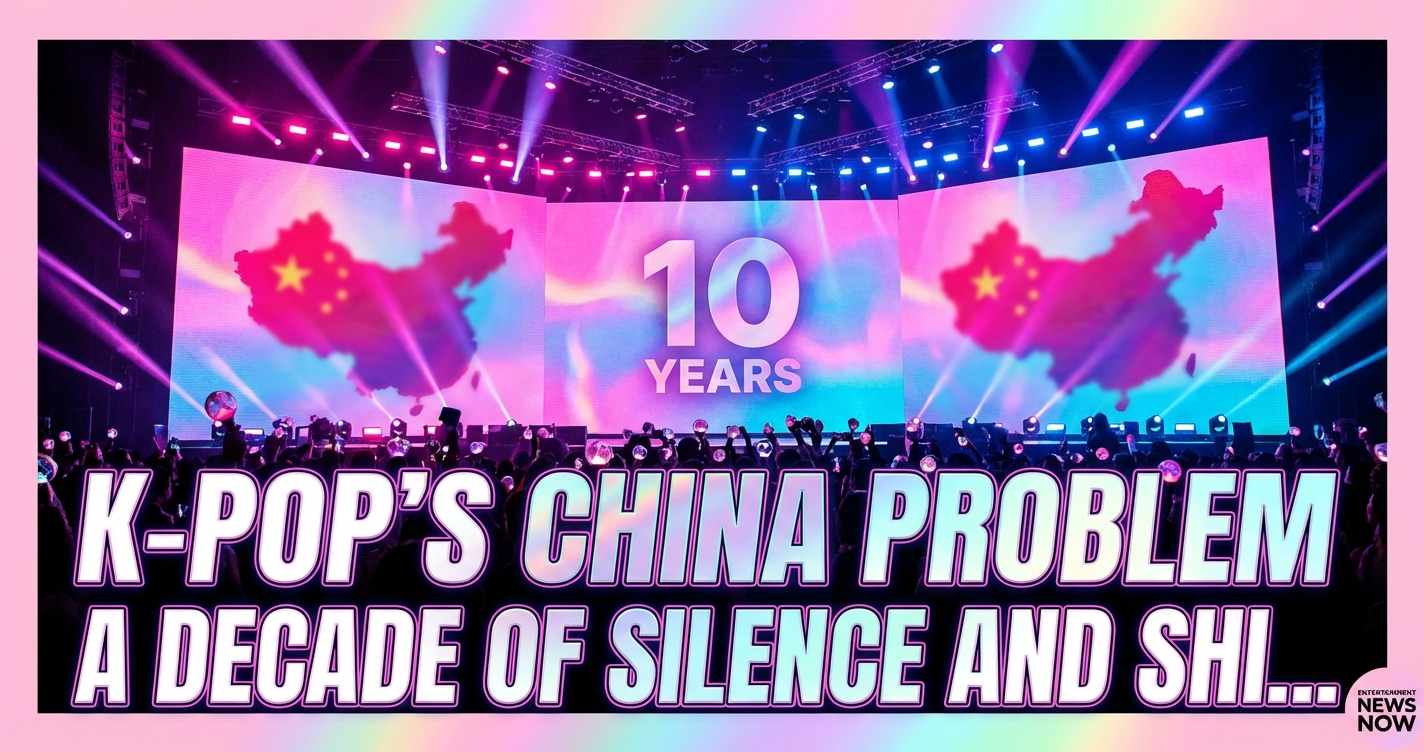
The glaring omission of China from BTS’s highly anticipated world tour isn’t just a scheduling quirk; it’s a stark reminder of a cultural iron curtain that has descended between two entertainment powerhouses for nearly a decade. What began as an unofficial, politically motivated freeze on Korean entertainment – colloquially known as the ‘Hallyu ban’ or ‘限韩令’ (han-han-ryung) – has calcified into a new normal, forever altering the landscape of K-Pop and its global ambitions.
For those of us who’ve tracked the ebbs and flows of Asian entertainment for years, the absence of K-Pop’s biggest acts from the lucrative Chinese market is a narrative pivot point. Once a primary driver of album sales, concert revenue, and brand endorsements, China’s doors remain largely shut, forcing Korean agencies to innovate, adapt, and look West – and South – for their next frontiers.
The Invisible Wall: A Decade of Disconnect
The roots of this cultural cold war can be traced back to 2016, when South Korea agreed to deploy the Terminal High Altitude Area Defense (THAAD) missile system in response to North Korean threats. China viewed this as a direct threat to its national security, prompting an immediate, albeit unannounced, retaliation across various sectors, with entertainment being one of the most visible casualties. Suddenly, K-dramas disappeared from streaming platforms, K-Pop concerts were canceled, and Korean celebrity endorsements vanished from Chinese advertising.
“It wasn’t a formal declaration, which made it all the more insidious,” one long-time industry analyst, who prefers to remain unnamed due to the sensitive nature of the topic, told DailyDrama.com. “No government official ever said, ‘Korean content is banned.’ But the permits stopped, the broadcasts ceased, and the collaborations dried up. It sent a very clear message.” This ambiguity made it difficult for Korean companies to navigate, leading to a mass exodus and a painful recalibration.
Shifting Sands: K-Pop’s Global Pivot
The silver lining, perhaps, is that the ban inadvertently pushed K-Pop to truly globalize. Forced out of their biggest adjacent market, agencies like HYBE, YG, SM, and JYP doubled down on strategies to conquer North America, Europe, and Southeast Asia. Groups like BTS and BLACKPINK, who rose to unprecedented global fame in the post-ban era, are prime examples of this pivot. Their success stories were written not in Beijing or Shanghai, but in Los Angeles, London, and Bangkok.
“It’s undeniable that the China ban accelerated K-Pop’s Western expansion,” a source close to a major K-Pop agency explained. “Before 2016, China was a guaranteed revenue stream. When that dried up, we had to sink or swim elsewhere. And swim we did.” This led to more English-language collaborations, strategic partnerships with Western labels, and meticulous cultivation of international fandoms through social media and global touring.
The result is a K-Pop industry that is less reliant on any single market. While China’s massive consumer base remains tantalizing, the industry has proven its resilience and adaptability, building robust fan bases in diverse regions, from Latin America to the Middle East.
China’s Own Idol Boom (and Bust?)
Coincidentally, or perhaps by design, the vacuum left by K-Pop’s exit allowed for the meteoric rise of C-Pop. Chinese talent shows like ‘Idol Producer’ (a local version of Korea’s ‘Produce 101’) and ‘Youth With You’ created domestic idol groups like NINE PERCENT and THE9, often with production values and concepts heavily inspired by their Korean counterparts. Companies like Tencent and iQIYI poured billions into building their own star systems.
However, this domestic boom also faced its own challenges. In 2021, the Chinese government launched a sweeping crackdown on what it deemed “irrational fandom culture,” targeting everything from excessive spending on idols to toxic fan behavior. This included restrictions on celebrity endorsements, limits on fan club activities, and even a ban on effeminate male aesthetics in media, effectively hitting the C-Pop idol industry just as it was hitting its stride.
“It’s a fascinating dichotomy,” observed a cultural commentator specializing in East Asian media. “China wanted to cultivate its own stars, but then panicked when the fan culture became too powerful or Western-influenced. It suggests a deep-seated desire for cultural control, regardless of the source of influence.”
More Than Music: The Broader Cultural Fallout
The Hallyu ban wasn’t confined to K-Pop. Korean dramas, films, variety shows, and even beauty products felt the chill. While some Korean beauty brands have managed to find niche markets or pivot to domestic Chinese competitors, the broader cultural exchange that flourished pre-2016 has largely ceased. This also impacted Chinese artists who had built careers in Korea or collaborated extensively with Korean partners, forcing many to return home and re-establish themselves.
The story of the K-Pop China ban is a potent reminder of how geopolitical tensions can dramatically reshape cultural landscapes. It transformed K-Pop from a regional phenomenon into a truly global one, while simultaneously creating a distinct, government-influenced C-Pop industry that now navigates its own set of unique regulations.
What’s Next for the Hallyu-China Divide?
Will the doors ever fully reopen? Industry insiders remain skeptical. While occasional, minor thawings have been observed – a K-Pop song playing briefly on a Chinese app, a Korean actor appearing in a niche web drama – a full return to the pre-2016 era seems unlikely without significant geopolitical shifts. For now, K-Pop continues its global march, proving that even without access to its largest neighbor, its cultural footprint is only growing larger.