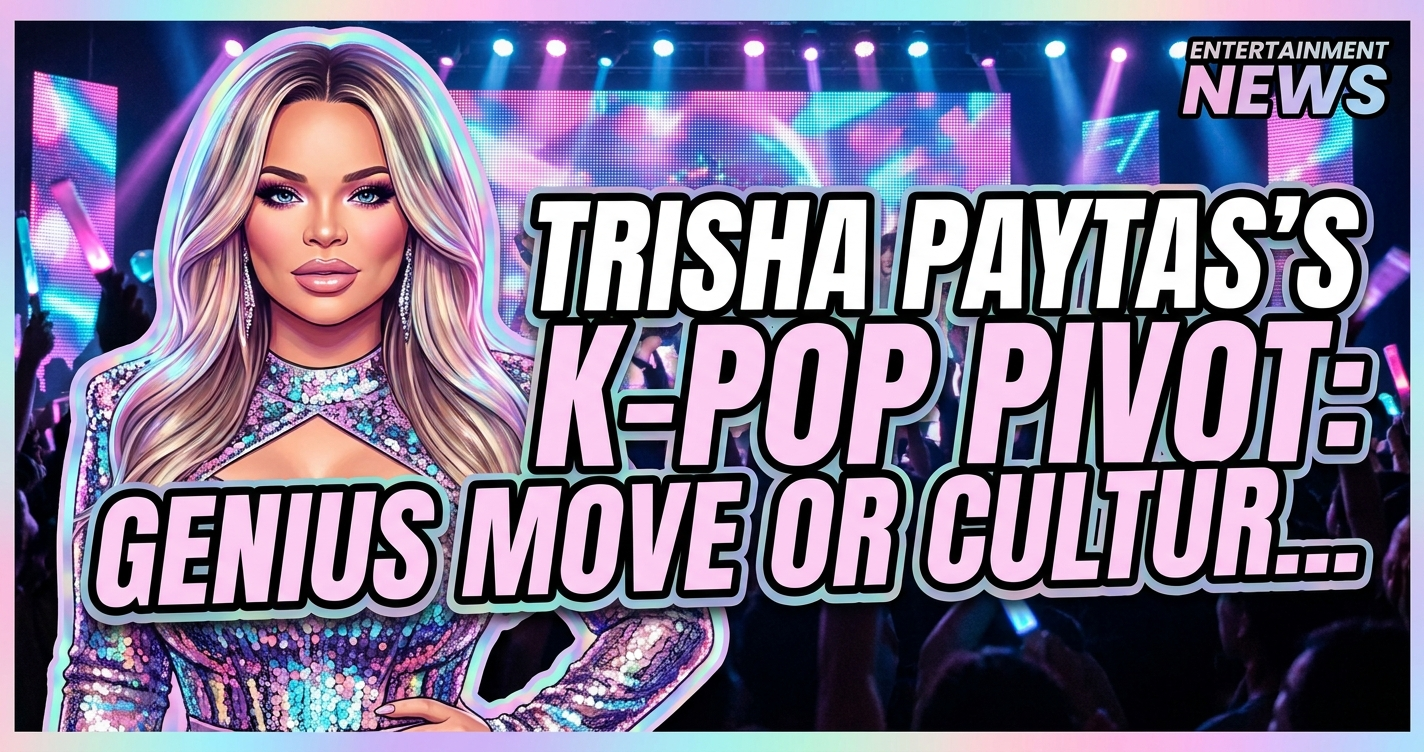
Trisha Paytas Unleashes K-Pop Single ‘Saranghae’: A New Era or Another Stunt?
Just when you thought you had a handle on Trisha Paytas, the internet’s most unpredictable provocateur has pulled another genre rabbit out of her hat. On May 18, 2026, Paytas officially launched her foray into the global phenomenon that is K-pop with the release of her debut Korean-language single, “사랑해 Saranghae” (meaning “I Love You”). The concise 2-minute-3-second track has, predictably, set the internet ablaze, sparking a fervent debate among fans, critics, and the notoriously passionate K-pop fandom. For those who’ve followed her tumultuous, ever-evolving journey, this isn’t just a song; it’s another meticulously crafted chapter in a career defined by shock, spectacle, and surprising artistic pivots.
“Saranghae”: A Brief Dip in the K-Pop Ocean
The single itself is a fascinating artifact. Sung entirely in Korean, “Saranghae” features the bubbly, synth-driven production often associated with the genre’s softer side, paired with Paytas’s distinctive vocal delivery. While some might dismiss it as a novelty, industry observers note a surprising level of commitment to the aesthetic, from the pronunciation – which, while not flawless, shows effort – to the track’s overall structure. Its brevity aligns with a trend in viral content, designed to be easily digestible and shareable. However, it also raises immediate questions: Is this a genuine artistic exploration of a new sound, or a calculated, if not audacious, attempt to tap into one of the most dedicated and commercially powerful fanbases in the world?
This isn’t Paytas’s first dance with global genres. Her discography, a wild tapestry of pop, rap, country, and even spoken word, has always been a reflection of her various personas. But K-pop, with its rigorous training, highly polished visuals, and deeply ingrained cultural nuances, presents a unique challenge and a potentially significant cultural tightrope walk.
The Empress of Evolution: Trisha’s Genre-Hopping History
To understand the ‘Saranghae’ release, one must look at the sprawling, often perplexing musical career of Trisha Paytas. From early viral hits like the unapologetically raw “Fat Chicks” and “Mia Khalifa” that cemented her as a YouTube sensation, to the surprisingly earnest “I Love You Jesus” and the country-tinged “I’m Done,” Paytas has never shied away from using music as another medium for self-expression, commentary, or often, deliberate provocation. Her earlier musical endeavors, while often critiqued for their raw production or controversial lyrics, always served their purpose: to generate conversation and keep her squarely in the public eye.
What differentiates this K-pop pivot from previous genre explorations is the global scale and cultural specificity of the target. K-pop is not just a musical genre; it’s a meticulously constructed industry built on years of idol training, aesthetic perfection, and a deep connection to Korean culture. Paytas’s entry into this space is arguably her boldest move yet, signaling a potential ambition beyond the confines of Western internet celebrity.
Navigating the K-Pop Landscape: Authenticity vs. Appropriation
The immediate reaction from the K-pop community has been, as expected, mixed. While some are embracing the sheer audacity and unexpectedness of the collaboration, many are raising concerns about cultural appropriation and the perceived lack of authenticity. The K-pop world is fiercely protective of its artists and heritage, and a Western internet personality, particularly one with Paytas’s history of controversy, entering the space raises legitimate questions about intent and respect.
“The K-pop industry is a machine built on years of dedication and rigorous training, not just a passing trend to dabble in,” one prominent K-pop critic, who asked not to be named, told DailyDrama.com. “While crossover appeal is great, there’s a fine line between appreciation and appropriation, especially when an artist hasn’t historically shown deep engagement with the culture.” This sentiment echoes past debates surrounding Western artists like Iggy Azalea or Katy Perry’s ventures into other cultural aesthetics. The success of “Saranghae” will likely hinge not just on its musical merit, but on how Paytas navigates these sensitive cultural waters moving forward.
The Trisha Paytas Brand: A Masterclass in Staying Relevant?
Beyond the cultural debate, this move is undoubtedly a shrewd play in the attention economy. Trisha Paytas has built a career not on consistent artistic quality, but on consistent relevance. Her ability to pivot, reinvent, and generate buzz – often through polarizing actions – is unparalleled in the digital sphere. Whether it’s her mukbangs, her reality TV stints, her podcasting, or her music, every move is a calculated chess piece in her ongoing game of staying famous.
Sources close to Paytas have often suggested her moves are less about genre mastery and more about cultural commentary and leveraging new platforms. “Saranghae” could be seen as a brilliant, if controversial, strategy to tap into K-pop’s massive global audience, generating millions of views and streams simply by existing as an unexpected entity in that space. It’s a testament to her enduring, if chaotic, brand power that even a two-minute K-pop single can dominate entertainment headlines.
What’s Next for the K-Pop Queen of Chaos?
So, what does this K-pop debut mean for Trisha Paytas’s future? Will “Saranghae” be a one-off viral moment before she transitions to her next “era,” perhaps polka or death metal? Or is this the beginning of a genuine, albeit unconventional, commitment to the K-pop genre? The entertainment world is holding its breath, waiting to see if Paytas will lean into the K-pop aesthetic with further releases, perhaps even a full EP, or if this is merely another fleeting, attention-grabbing performance in her ever-expanding repertoire of personas. One thing is for sure: with Trisha Paytas, predictability is the only thing you can never predict.